AI Insight
NASA astronaut Jessica Watkins conducted experiments aboard the International Space Station on October 9, 2026, working with the InSPA-Auxilium Bioprinter-Cell Printing investigation. The research involves mixing living cells with bioink and using 3D bioprinting technology to produce cartilage tissue in microgravity conditions, which appears to yield higher quality results than terrestrial production methods.
Why it matters
Successful cartilage bioprinting in microgravity could significantly improve treatment options for patients with cartilage damage on Earth and provide medical solutions for astronauts on extended space missions. This research demonstrates the potential of space-based biomanufacturing for producing superior tissue constructs that are difficult to achieve under Earth's gravity.
Understand the Science
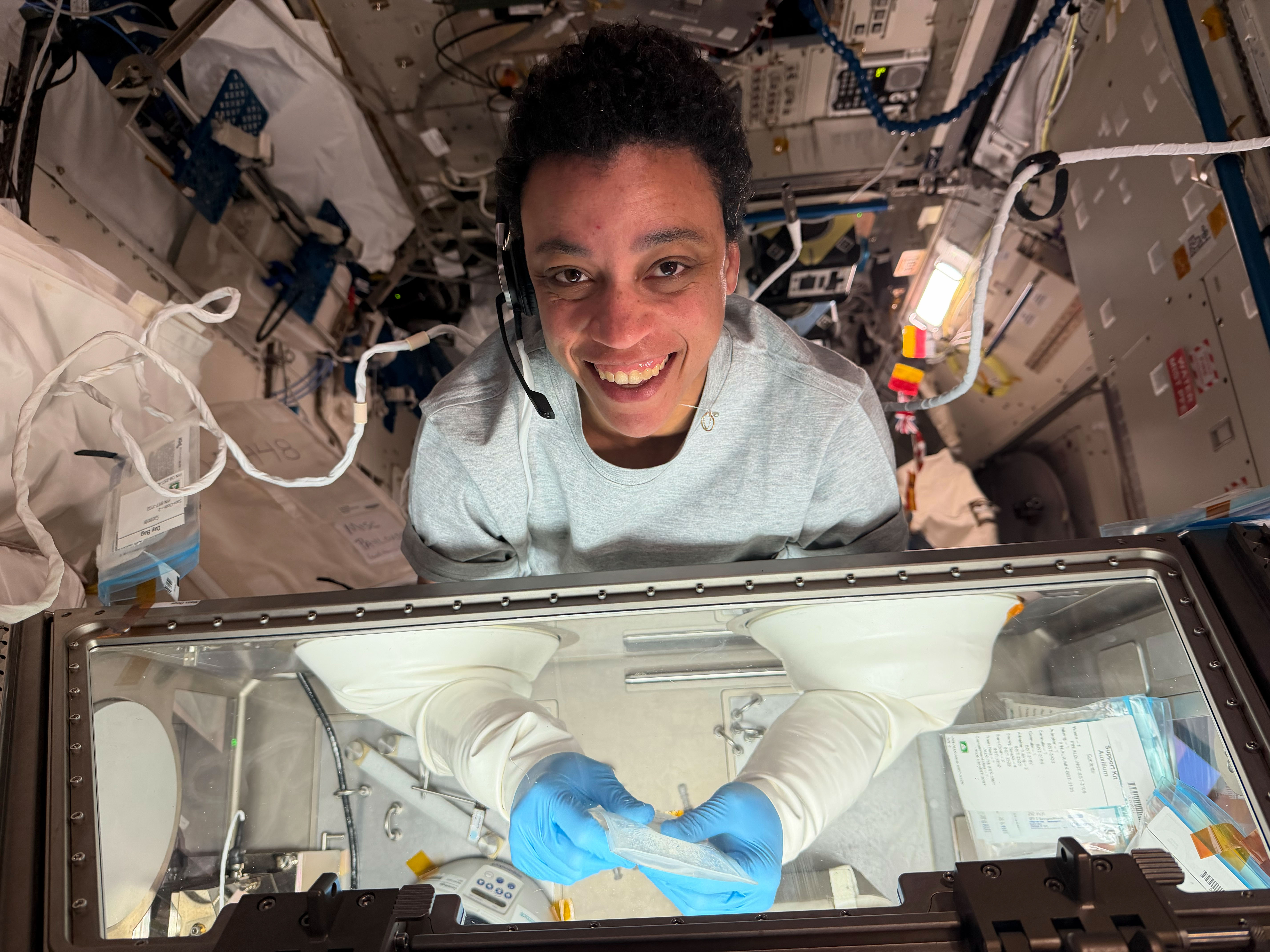
NASA astronaut and Expedition 75 flight engineer Jessica Watkins works inside the Kibo laboratory module’s Life Science Glovebox on Oct. 9, 2026, safely mixing living cell samples with a bioink and then filling a special cartridge with the cell‑ink mixture.
The advanced research operations were part of the InSPA‑Auxilium Bioprinter‑Cell Printing investigation, which explores 3D bioprinting cartilage tissue in microgravity of higher quality than that produced on Earth. Results may advance the ability to biomanufacture cartilage, benefiting patients on Earth and crew members on long‑duration space missions.
Image credit: NASA/Anil Menon
Source: Science on the Space Station with NASA Astronaut Jessica Watkins