AI Insight
Planetary scientists have observed a puzzling gap in exoplanet sizes around 1.8 times Earth's radius, with smaller "super-Earths" being rocky and larger "sub-Neptunes" being less dense. NASA has proposed a new mission called the Early eVolution Explorer (EVE) to investigate why this "radius valley" exists and what causes planets to evolve into these two distinct categories rather than forming a continuum of sizes.
Why it matters
Understanding the radius valley could reveal fundamental processes of planetary formation and evolution that determine whether worlds become rocky like Earth or gaseous like Neptune. This knowledge would improve our ability to predict which exoplanets might be potentially habitable and help explain how planetary systems, including our own, develop over time.
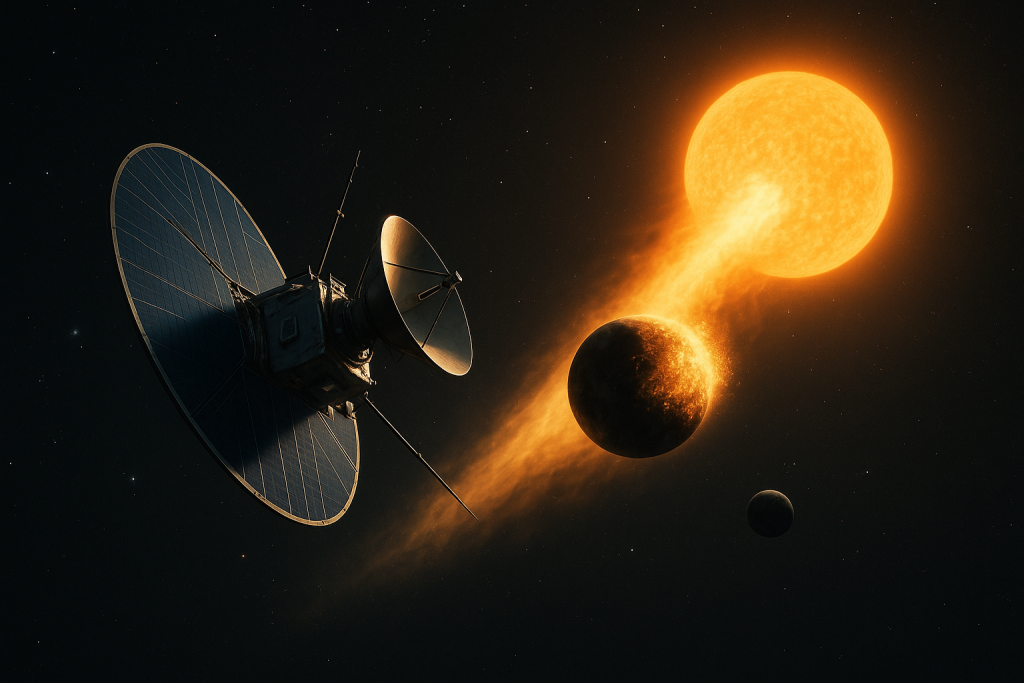
A debate has been raging among planetary scientists for more than a decade—why are there so few exoplanets with a radius of about 1.8 times that of Earth? Exoplanets are currently largely grouped into two distinct categories—”super-Earths” are below that size and have rocky interiors, whereas “sub-Neptunes” are above that size limit and appear puffier. But researchers don’t really understand why the path of planetary evolution forces this bifurcation. A new mission proposal, called the Early eVolution Explorer (EVE), wants to find out, and a draft of its concept can be found in preprint form on arXiv.
Source: NASA's proposed Early eVolution Explorer mission aims to solve the radius valley mystery