AI Insight
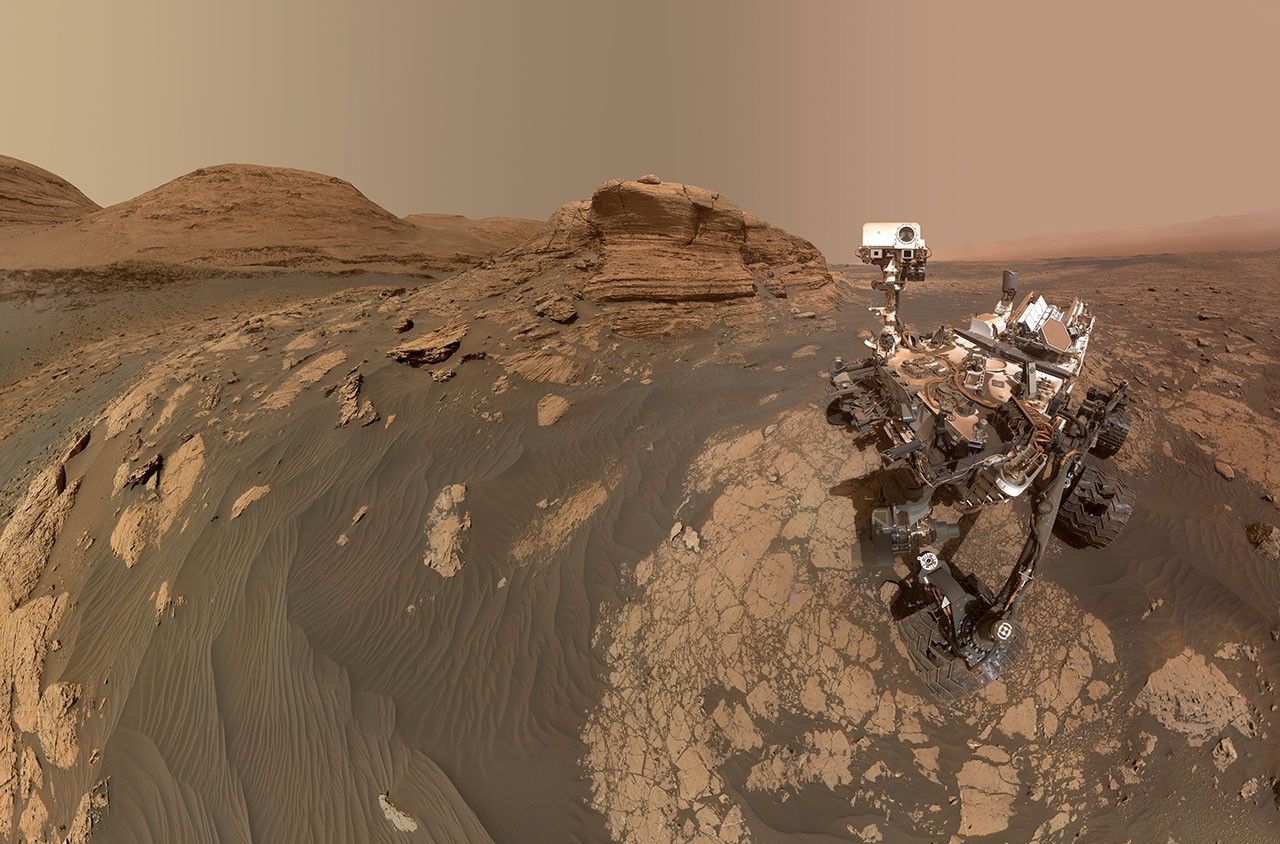
NASA's Curiosity rover reached a significant elevation milestone on August 26, 2026, climbing to 1 kilometer above the floor of Gale Crater after over a decade of exploration. The rover captured a panoramic view on September 5, 2026, looking back at the crater floor and rim while positioned on the lower foothills of Mount Sharp, a 5-kilometer-tall mountain it has been ascending since 2014. The image, composed of 95 individual photographs, shows geological features including a sand ridge that scientists will study to understand Martian surface formation processes.
Why it matters
This elevation achievement represents substantial progress in Curiosity's ongoing mission to study Mars' geological history and past habitability. The geological layering and sand composition data collected at various elevations helps scientists reconstruct the environmental conditions that shaped Gale Crater over billions of years.
Understand the Science
NASA’s Curiosity Looks Back After Reaching Elevation Milestone
NASA/JPL-Caltech/MSSS
Description
NASA’s Curiosity Mars rover captured this view looking back at the floor of Gale Crater, with the crater’s rim visible in the distance, on Sept. 5, 2026, the 5,006th Martian day, or sol, of the mission. Just nine days prior, on Aug. 26 (Sol 4,996), Curiosity set a mission milestone by reaching 1 kilometer of elevation above the crater floor. Since 2014, Curiosity has been climbing the lower foothills of Mount Sharp, a 3-mile-tall (5-kilometer-tall) mountain located within Gale Crater.
A sand ridge extends across the foreground of the image, and a trench left by the rover’s right front wheel is visible at right. Geologic layering inside the ridge, as well as the size and composition of its sand grains, will provide clues to how the feature formed.
This panorama is made up of 95 individual images taken by Curiosity’s Mast Camera, or Mastcam. The color in these images has been adjusted to match the lighting conditions as the human eye would see them on Earth.
Curiosity was built by NASA’s Jet Propulsion Laboratory, which is managed by Caltech in Pasadena, California. JPL leads the mission on behalf of NASA’s Science Mission Directorate in Washington as part of NASA’s Mars Exploration Program portfolio. Malin Space Science Systems in San Diego built and operates Mastcam.
To learn more about Curiosity, visit:
https://science.nasa.gov/mission/msl-curiosity/
Source: NASA’s Curiosity Looks Back After Reaching Elevation Milestone