AI Insight
NASA launched the Mars Global Surveyor on November 7, 1996, marking the agency's first Mars mission in nearly 20 years since the Viking missions of 1975. The orbiter discovered evidence of surface channels formed by running water, identified hematite minerals that typically form in water, and observed signs of possible climate change at Mars' south pole. The spacecraft also served as a communications relay for Mars rovers including Sojourner, Spirit, and Opportunity, transmitting over 240,000 images during its nine-year operational period before losing power in November 2006.
Why it matters
Mars Global Surveyor revolutionized understanding of Mars by providing comprehensive data on the planet's surface, atmosphere, and interior, and established the framework for modern Mars exploration by demonstrating the effectiveness of using orbiters as communication relays for surface missions. Its discovery of water-related features and minerals directly influenced landing site selection for subsequent rover missions.
Understand the Science
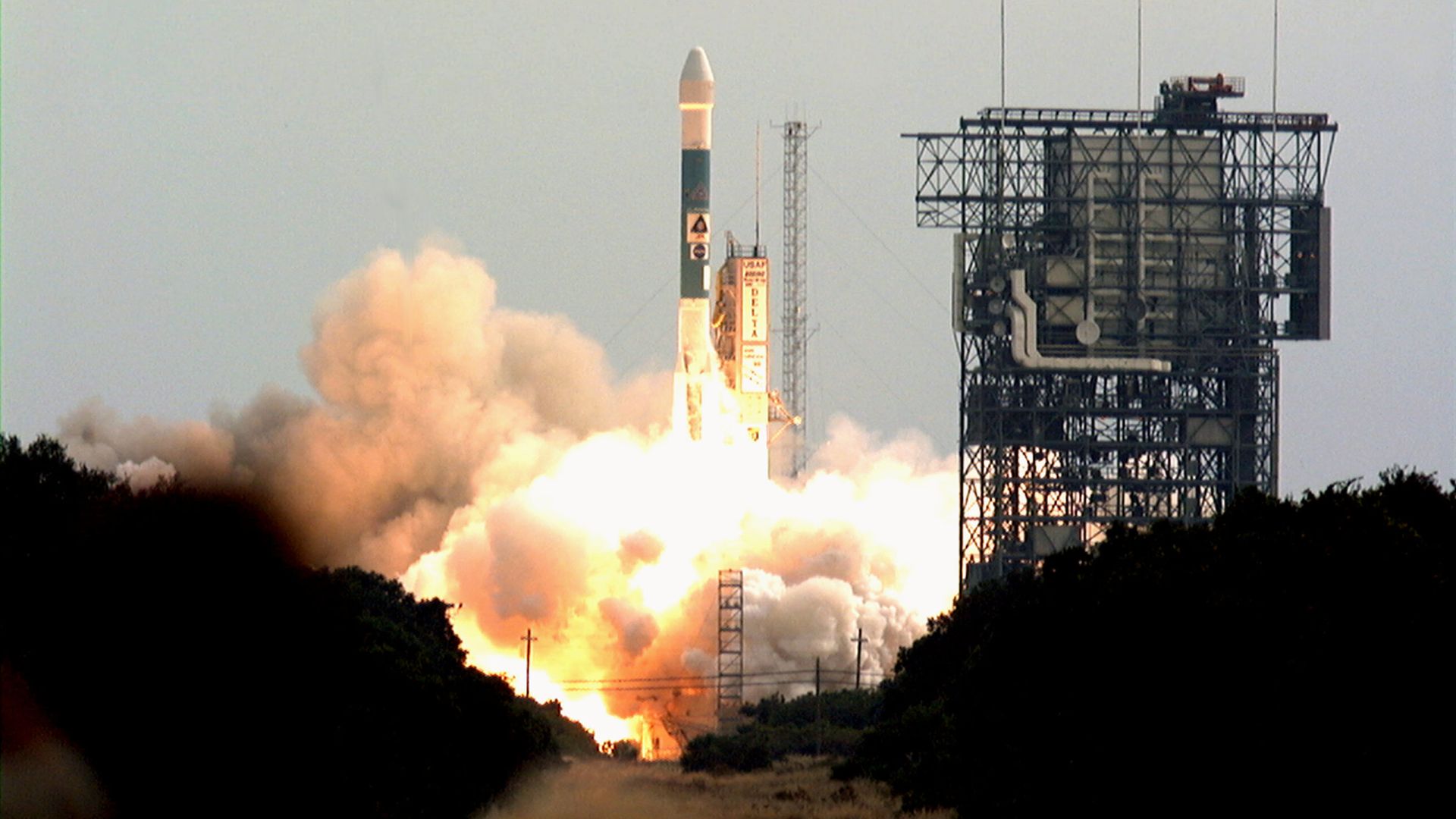
On Nov. 7, 1996, NASA launched its Mars Global Surveyor mission. This was the first mission NASA sent to Mars in almost 20 years!
The Mars Global Surveyor spacecraft was an orbiter. It transmitted data from NASA’s Mars rovers Sojourner, Spirit and Opportunity back to Earth. The spacecraft also did a lot of its own science. It found surface channels on Mars that appeared to have been created by running water.
Mars Global Surveyor looked at the south pole of Mars and saw signs of possible climate change. It also saw a mineral called hematite on Mars. Hematite usually forms in water. NASA then sent its Spirit and Opportunity rovers to look for the hematite, and both rovers found it near their landing sites.
Mars Global Surveyor survived much longer than expected. But a space maneuver accidentally exposed one of its batteries to the sun, and the spacecraft lost power. It fell silent forever in November 2006.
Why it mattered
As the first successful Mars mission since the two Viking launches in 1975, Mars Global Surveyor ushered in a new era of exploration of the Red Planet, not only through its own contributions to orbit-based science, but by serving a relay for surface-based rovers. As such, it became a primary pipeline for multiple concurrent Mars missions.
“The [Mars Global Surveyor] mission overhauled scientists’ understanding of Mars by studying the entire Martian surface, atmosphere and interior. Major findings included dramatic evidence that water still flows on Mars in short bursts down hillside gullies, and the identification of water-related mineral deposits leading to selection of a Mars rover landing site for a subsequent mission,” read a NASA description of the probe.
Mars Global Surveyor sent back more than 240,000 images to Earth during its nine active years.
Want more space history? Check out our full On This Day In Space Story archive and watch our On This Day In Space videos on YouTube.