AI Insight
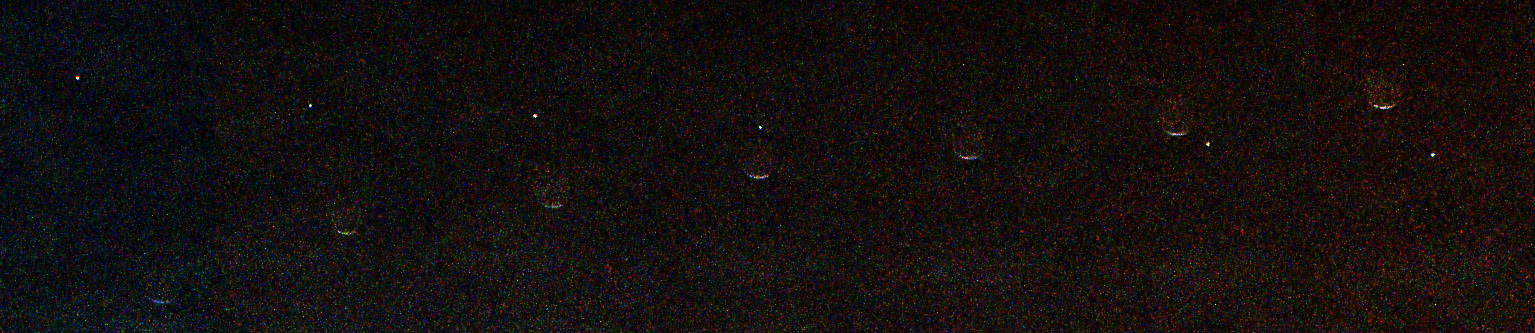
NASA's Perseverance rover captured a rare astronomical event on July 2, 2026, using its Mastcam-Z instrument to photograph Earth passing behind Mars' moon Phobos in an occultation. The composite image sequence shows Earth as a small bright dot moving across the Martian sky during twilight, approximately 40 minutes after sunset on the mission's 1,907th sol. This observation provides a unique perspective of Earth from the Martian surface, taken over 140 million miles away.
Why it matters
This observation demonstrates the advanced imaging capabilities of Mars surface missions and provides valuable data for understanding celestial mechanics from Mars' perspective. Such images also offer a profound view of Earth's position in the solar system and help refine our understanding of Phobos' orbit around Mars.
Understand the Science
NASA’s Perseverance Captures Phobos and Earth
NASA/JPL-Caltech/ASU/MSSS/SSI
Description
This composite of seven images from the Mastcam-Z instrument aboard NASA’s Perseverance Mars rover shows Earth, visible as a small bright dot moving from upper left to lower right, passing behind the Martian moon Phobos on July 2, 2026, 1,907th Martian day, or sol, of the mission.
The black background is the result of image processing that removed extraneous light in the background to enhance detail.
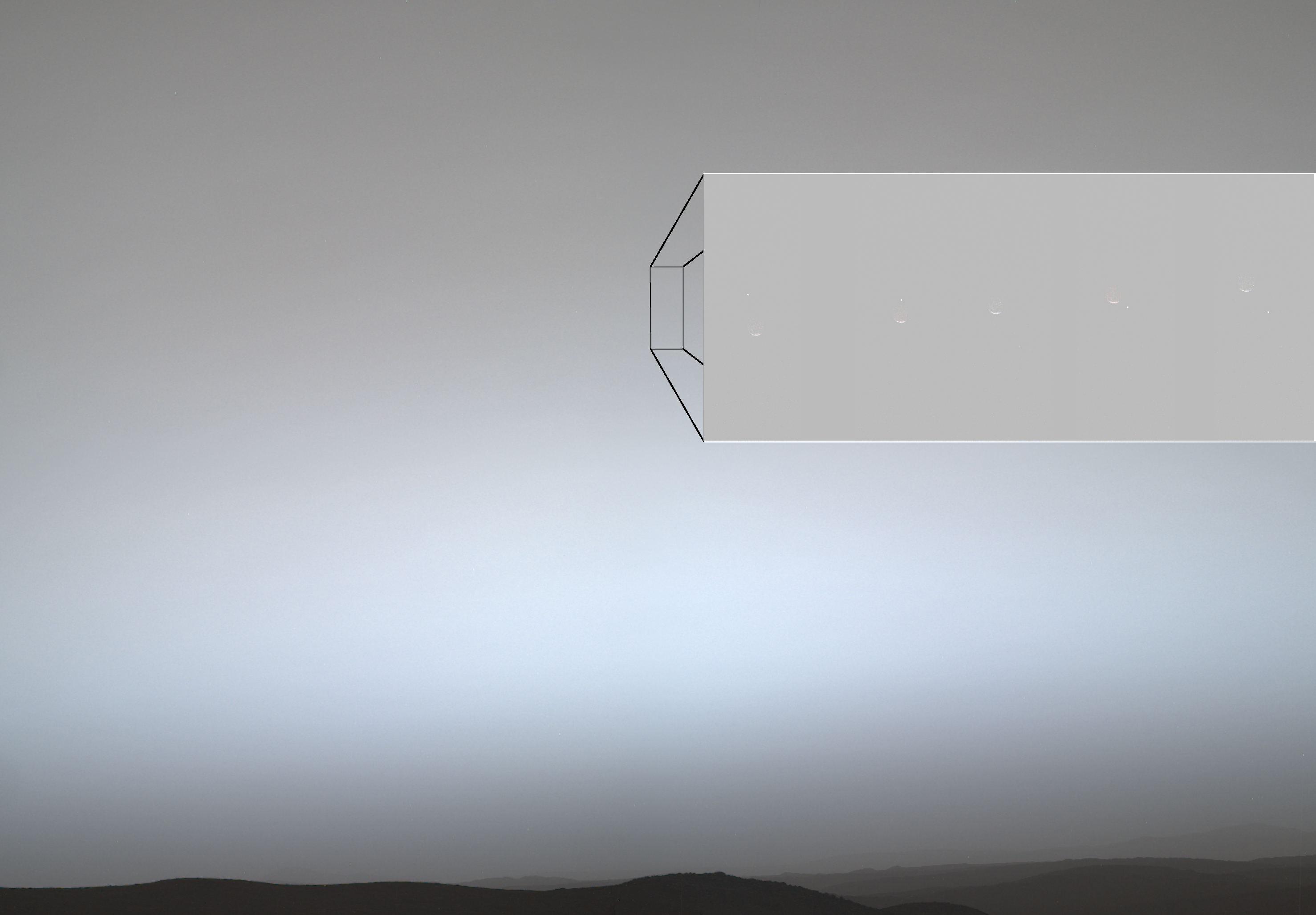
Figure A is an annotated composite of nine images taken by the Mastcam-Z instrument aboard Perseverance on July 2, 2026. The inset on the upper right, comprised of five images, shows Earth — the small bright dot moving from upper left to lower right — passing behind the Martian moon Phobos.
The rectangle outlined at the left in the annotation indicates the patch of sky that was imaged several times to capture Earth passing behind Phobos. In the larger rectangular inset, the images captured from that patch of sky are displayed in time order from left to right, with Phobos moving up and Earth moving down.
The gray of the Martian sky is the approximate true color of the twilight (about 40 minutes after sunset) on that sol. It is blue-gray lower, where it is brighter, and reddish gray above.
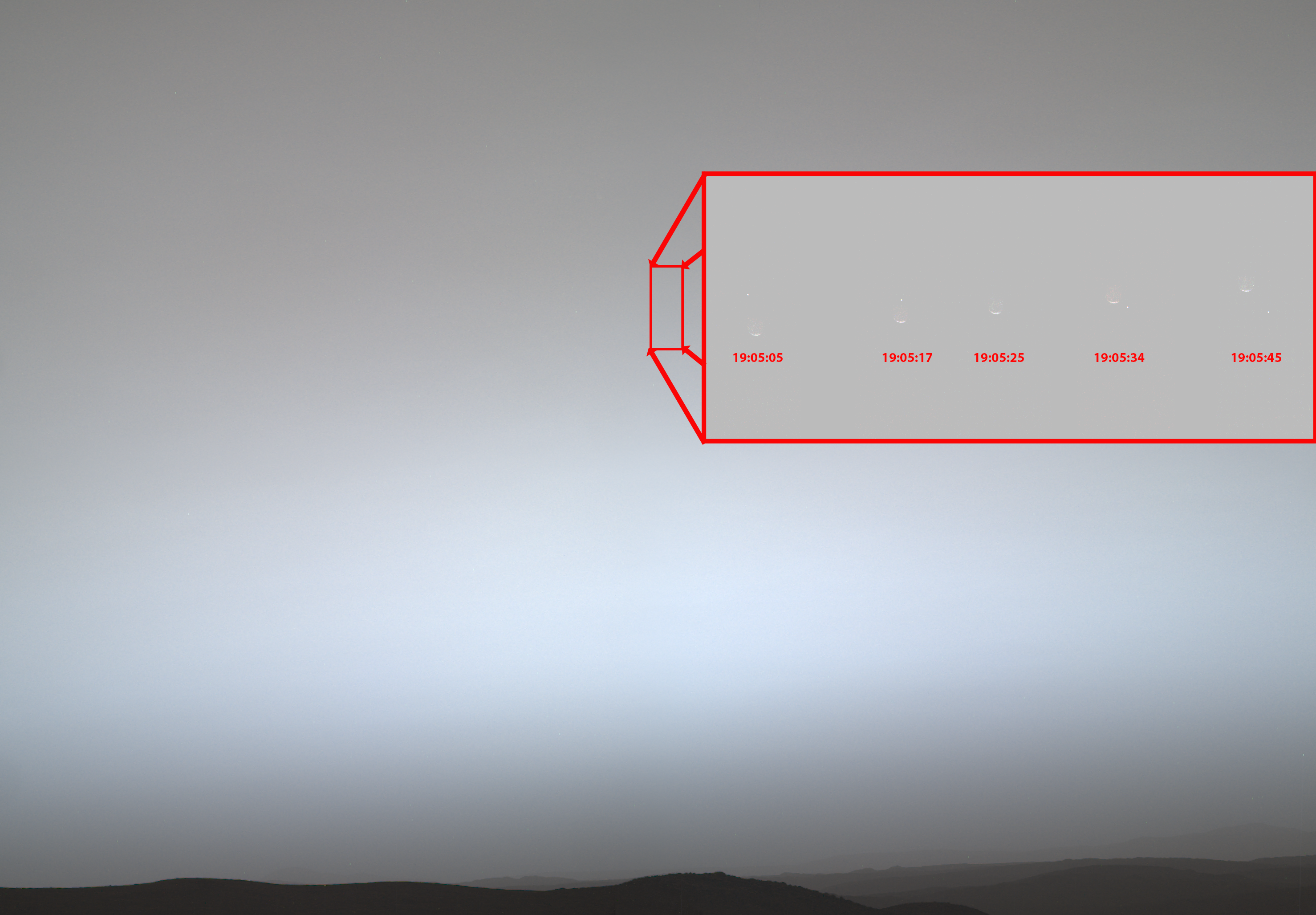
Figure B includes annotations showing the local solar time on Mars during which the five individual images that captured the occultation were taken.
NASA’s Jet Propulsion Laboratory in Southern California, which is managed by Caltech, built and manages operations of the Perseverance rover on behalf of the agency’s Science Mission Directorate in Washington, as part of NASA’s Mars Exploration Program portfolio. Arizona State University leads the operations of the rover’s Mastcam-Z instrument, working in collaboration with Malin Space Science Systems in San Diego, on the design, fabrication, testing, and operation of the cameras.
For more about Perseverance: