AI Insight
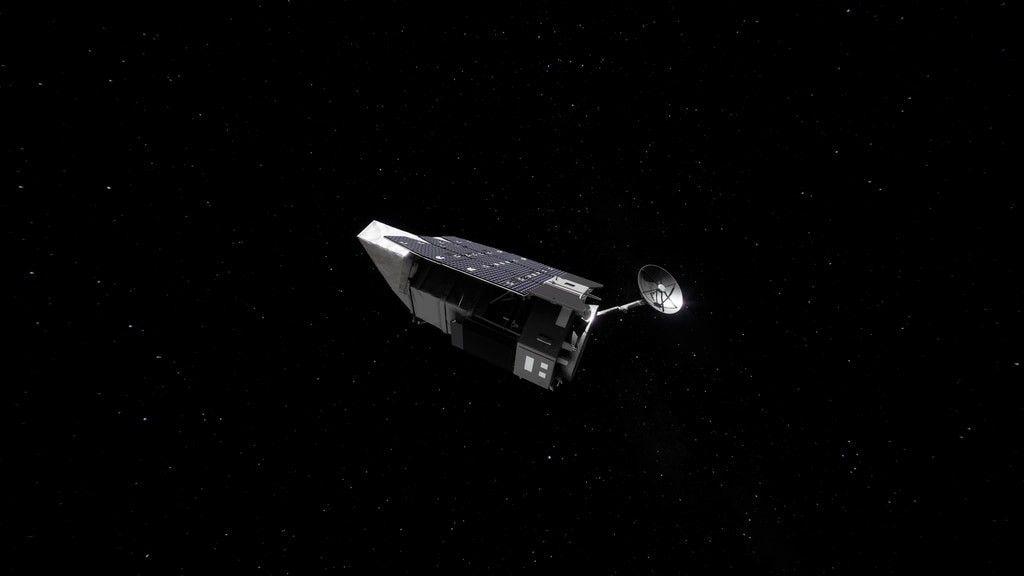
NASA's Roman Space Telescope is currently traveling to Sun-Earth Lagrange Point 2 (L2), approximately 1.5 million kilometers from Earth, during a three-month journey that began shortly after launch. The spacecraft is undergoing commissioning, a systematic process where all systems are activated, tested, calibrated, and prepared for scientific operations. Key deployments occurred within the first hours after launch, including solar panel and sunshade deployment, with the antenna and deployable aperture cover to follow in subsequent days.
Why it matters
The L2 location provides Roman with exceptional stability for infrared observations, an unobstructed view of large portions of the sky, and minimal thermal interference from Earth, Sun, and Moon. This positioning will enable Roman to conduct wide-field astronomical surveys and observations that would be difficult or impossible from other orbital locations.
Understand the Science
Roman Commissioning
NASA’s Goddard Space Flight Center/Conceptual Image Lab
Where is Roman?
Roman is making its three-month journey from Earth to Sun-Earth Lagrange Point 2, or L2. Along the way, Roman is undergoing a process called commissioning, where systems are turned on, adjusted, calibrated, and prepared for science operations. Commissioning is the time for scientists and engineers to make sure that Roman is performing as expected. The schedule is subject to change as the team assesses and adjusts as needed.
Deployments
An hour and 23 minutes after launch, Roman began to emerge from the tight configuration that allowed it to fit in the rocket fairing. The solar panels and sunshade deployed, shading the rest of the observatory and providing power to the systems. Within the upcoming days, the antenna will swing out and the visor-like deployable aperture cover will move into place to permanently reveal and shade the primary mirror.
Roman’s Orbit
This visualization shows the stable, halo orbit that Roman will have around L2. At this location, the gravity of the Sun and Earth, together with an object’s motion around the Sun, let it stay lined up with Earth as they orbit, allowing Roman to have a relatively steady orbit without using much fuel. This location also offers exceptionally stable optical performance and a constant, unobstructed view of a wide swath of the sky; Earth won’t block much of Roman’s view since it will be so distant. And at L2, heat from Earth, the Sun, and the Moon have less effect on infrared telescopes, which “see” heat.
Explore the Roman Systems
Learn more about the systems that are getting turned on, tested and calibrated.
3D View

Source: Roman Commissioning