AI Insight
SpaceX's Starship Flight 13 test launch was aborted at the last second on July 16, 2025, when something triggered an abort as the vehicle's 33 Raptor engines began firing. CEO Elon Musk indicated two Raptor engines will be removed and replaced, with launch rescheduled for early the following week. Flight 13 aims to test the upgraded Starship Version 3, with goals including controlled splashdowns of both the Super Heavy booster and Ship upper stage, plus deployment of 20 Starlink V3 satellites on a suborbital trajectory.
Why it matters
This test is crucial for advancing Starship toward operational status and demonstrating SpaceX's plan to deploy a 100,000-satellite Starlink V3 constellation using the megarocket. The flight marks the first space attempt for next-generation Starlink satellites and tests key reusability capabilities needed for future missions.
Understand the Science
Starship wasn’t quite ready to fly today (July 16).
SpaceX tried to launch the Starship megarocket on its 13th test flight today but couldn’t quite pull it off. Something went wrong just as the giant vehicle’s 33 first-stage Raptor engines started to fire up, and an abort was triggered.
“We’ll take some time, dig into what triggered that abort once the booster was igniting to launch, and then we’ll figure out what our path forward is going to be,” SpaceX’s Dan Huot said during the company’s launch webcast today.
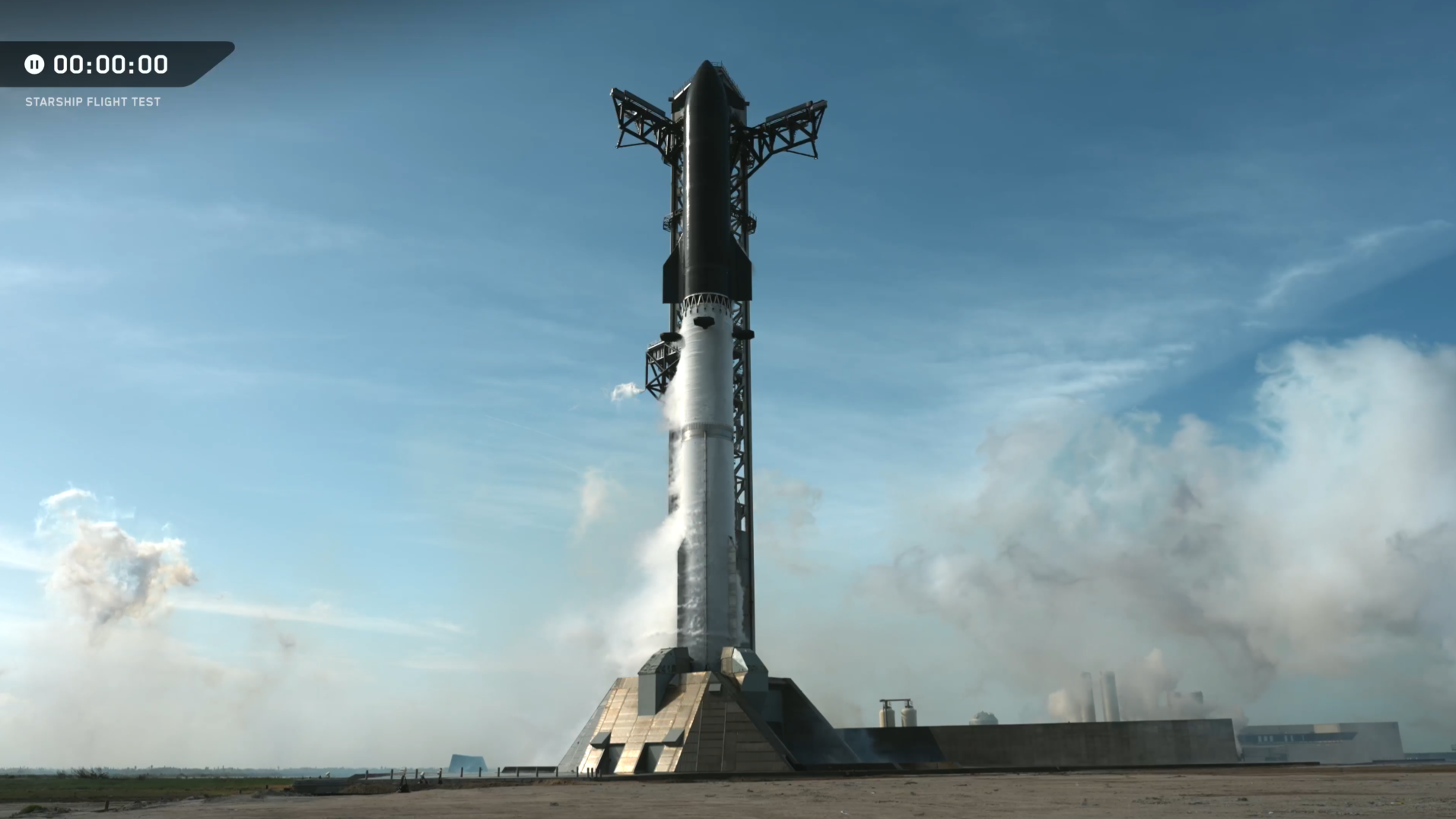
It didn’t take long for SpaceX to narrow in on the root cause and address it.
“To be confident of a good flight, 2 Raptors will be removed & replaced. Most probable launch timing is early next week,” company founder and CEO Elon Musk said this evening via X, the social media platform he owns.
Starship Flight 13 will fly from SpaceX’s Starbase site in South Texas. Today’s attempt occurred at 6:45 p.m. EDT (2245 GMT; 5:45 p.m. local time), right at the beginning of a 90-minute launch window.
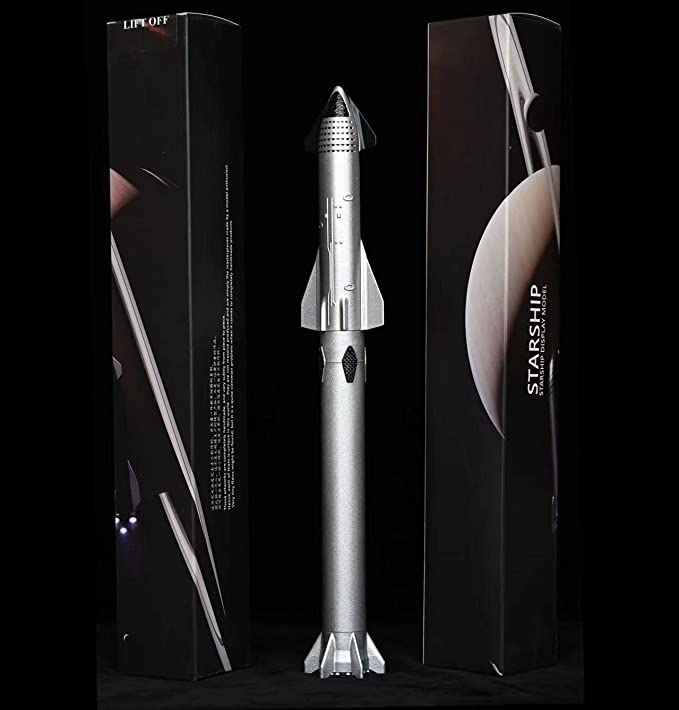
Starship Die Cast Rocket Model Was $47.99 Now $39.99 on Amazon.
Even if you can’t see SpaceX’s Starship in person, you can score a model of your own. Standing at 13.77 inches (35 cm), this is a 1:375 ratio of SpaceX’s Starship as a desktop model. The materials here are alloy steel and it weighs just 225g.View Deal
Flight 13 will be the second test launch of Starship Version 3 (V3), an upgraded variant of the megarocket designed to get it up to operational status.
V3’s first jaunt, Flight 12 on May 22, was mostly successful, but there were a few issues. For example, Starship’s Super Heavy first stage didn’t steer itself back for a controlled splashdown in the Gulf of Mexico as planned, and the Ship upper stage wasn’t able to relight one of its Raptor engines in space.
Starship V3 will get a second chance on Flight 13, whose goals are similar to those of Flight 12: Get Super Heavy down on target in the Gulf and send Ship most of the way around the world, for a controlled splashdown of its own off the coast of Western Australia. (Ship pulled that off on Flight 12.)
There are a few new objectives, however.
The most notable is the payload suite flying on Flight 13 — 20 of SpaceX’s next-gen Starlink V3 internet satellites. The company wants to build a constellation of 100,000 Starlink V3 spacecraft in low Earth orbit using Starship, and Flight 13 will mark the satellites’ first-ever trip to space.
They won’t stay up there, however; the spacecraft will be deployed on Ship’s suborbital trajectory and will crash back to Earth after about 20 minutes, according to SpaceX.
Six of the 20 Starlinks going up on Flight 13 will be equipped with cameras, to image Ship’s heat shield. SpaceX did this with a couple of V2 Starlinks on Flight 12 as well.
Editor’s note: This story was updated at 9:38 p.m. ET on July 16 with information from an Elon Musk X post.
Source: SpaceX's Starship Flight 13 test launch aborts at last second (video)