AI Insight
NASA's MAVEN mission has discovered that certain auroras on Mars form through mechanisms similar to those that create Earth's auroras. The study reveals that charged particles from solar storms interact with Mars' atmosphere, stripping away atmospheric particles while simultaneously generating aurora-like phenomena. This finding helps explain both atmospheric loss processes and aurora formation on the Red Planet.
Why it matters
Understanding Mars' atmospheric loss mechanisms is critical for determining the planet's historical habitability and climate evolution. These findings also contribute to our broader knowledge of how planetary atmospheres interact with solar activity, which has implications for assessing the habitability of exoplanets and protecting future Mars missions.
Understand the Science
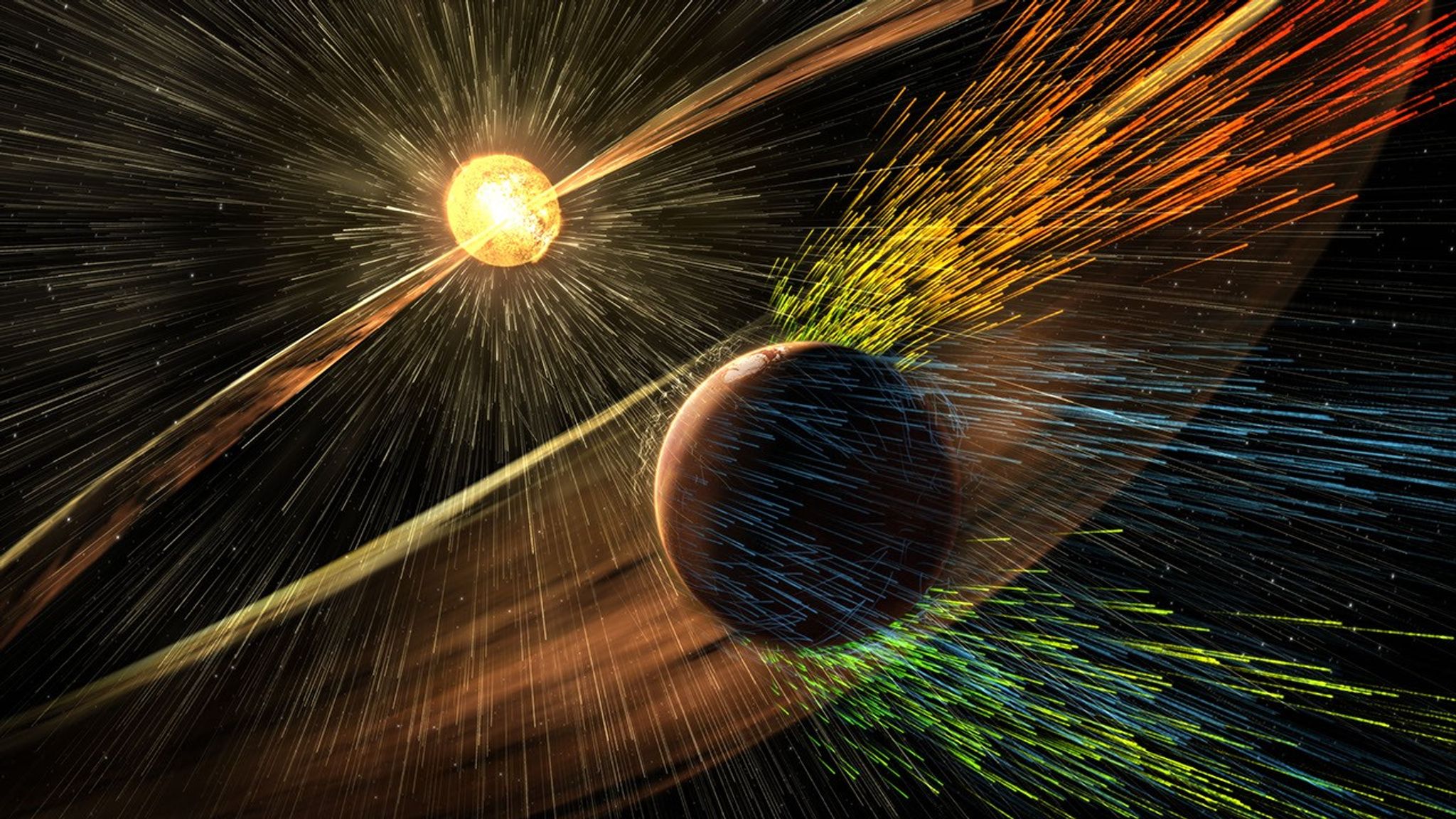
This July 23, 2026, illustration depicts charged particles from a solar storm stripping away charged particles of Mars’ atmosphere, one of the processes of Martian atmosphere loss studied by NASA’s MAVEN (Mars Atmosphere and Volatile Evolution) mission. NASA MAVEN mission scientists have found that certain types of auroras on Mars form in a similar way to Earth-based auroras.
Read more about this discovery.
Image credit: NASA