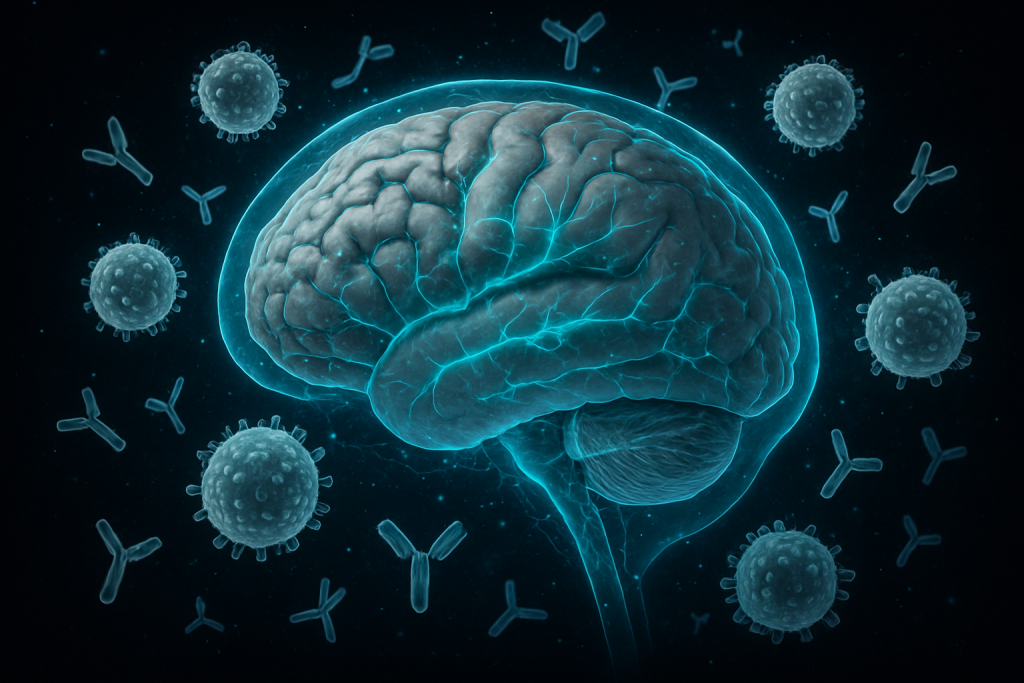
Image generated by AI
Your brain sits behind one of nature’s most selective security systems—a biological fortress so restrictive that most molecules in your bloodstream cannot enter, yet so permeable that infections somehow slip through anyway. This paradox lies at the heart of neuroscience: the brain needs protection from pathogens and toxins, but it also requires constant communication with the immune system that patrols the rest of your body. Understanding how the immune system both protects and occasionally harms the brain has become one of medicine’s most consequential pursuits, with implications for treating everything from Alzheimer’s disease to COVID-19 neurological complications.
Recent discoveries have fundamentally reshaped our understanding of brain immunity, revealing that the brain is not an immune-privileged fortress but rather a dynamically regulated organ that maintains its own specialized immune responses. This shift in perspective has catalyzed a new wave of research and therapeutic development, promising novel approaches to neurodegenerative diseases, psychiatric disorders, and neuroinflammatory conditions that affect millions worldwide. As we face emerging threats like long COVID neurological symptoms and rising rates of Alzheimer’s disease, the interplay between immune function and brain health has moved from the margins of neuroscience directly into the spotlight of urgent clinical practice.
What Is Immune System Function and Brain Protection?
The immune system’s relationship with the brain represents one of biology’s most intricate balancing acts. The brain requires protection from infectious agents and toxic molecules, yet it also depends on immune surveillance to clear cellular debris, damaged neurons, and dangerous pathogens. The blood-brain barrier (BBB) acts as this system’s primary gatekeeper—a highly selective membrane composed of tightly joined endothelial cells that permits essential nutrients to enter while excluding most pathogens and large molecules. Alongside this physical barrier, specialized immune cells called microglia reside within the brain itself, constantly patrolling neural tissue like microscopic sentinels. Additionally, the cerebrospinal fluid that bathes the brain contains immune molecules that provide chemical protection. Together, these mechanisms create an immune environment fundamentally different from the rest of the body.
The concept of brain immunity has evolved dramatically over the past two decades. For much of the twentieth century, scientists accepted the doctrine that the brain was “immune-privileged”—meaning it was largely isolated from immune activity and therefore protected but also vulnerable. This understanding shifted significantly around 2013, when researchers discovered that the lymphatic system extends into the brain, allowing immune cells to mount responses within neural tissue itself. Earlier work, dating back to the 1980s and 1990s, had established the role of microglia and the blood-brain barrier, but these discoveries about active lymphatic drainage fundamentally altered how neuroscientists conceptualize brain immunity. Today we understand the brain as possessing a specialized but fully functional immune system, distinct from peripheral immunity but intimately connected to it.
What the Research Shows
The blood-brain barrier operates through multiple overlapping mechanisms that work in concert to control what molecules and cells can cross into the brain. The physical structure consists of endothelial cells connected by tight junctions—protein complexes that form an impermeable seal—creating a barrier roughly 1000 times more restrictive than typical blood vessel walls. These cells actively transport beneficial molecules like glucose and amino acids through specific carrier proteins while actively pumping out potentially harmful substances. Surrounding the endothelial layer are pericytes and astrocytes—supporting cells that further regulate barrier function and immune responses. When the barrier is breached or inflamed, normally excluded immune cells can infiltrate brain tissue, sometimes causing beneficial immune responses against infections but sometimes triggering destructive inflammation that damages neurons.
Think of the blood-brain barrier like an airport’s customs system: routine passengers (glucose, oxygen) pass through efficiently via trusted checkpoints, while others (bacteria, large immune molecules) face rigorous screening. However, when a threat is detected—say, a viral infection—border security opens specific gates to allow specialized immune teams to enter. The problem emerges when the immune response becomes excessive or misdirected, turning the brain’s protectors into inadvertent destroyers. This happens in conditions like multiple sclerosis, where immune cells attack myelin, the insulation coating of nerve fibers, leading to progressive neurological damage. In Alzheimer’s disease, microglia—the brain’s resident immune cells—sometimes contribute to neuroinflammation that damages healthy neurons rather than clearing the toxic amyloid proteins they’re meant to eliminate.
What This Means for Patients and Science
Understanding immune-brain interactions has opened entirely new therapeutic avenues for conditions previously considered untreatable. When neuroinflammation drives disease—as in multiple sclerosis, Alzheimer’s disease, and autism spectrum disorder—targeting specific immune pathways offers hope where conventional neurology has failed. Monoclonal antibodies designed to modulate immune responses have already transformed multiple sclerosis treatment, reducing relapse rates by 60-70 percent in some patients. Similarly, emerging evidence suggests that anti-inflammatory approaches may slow cognitive decline in Alzheimer’s disease, leading to new clinical trials testing immune-modulating drugs as primary disease-modifying agents. For infectious diseases like meningitis and encephalitis, understanding how to promote protective immune responses while preventing immunopathology is literally the difference between recovery and permanent neurological disability.
The practical applications extend across multiple medical domains. Neurosurgeons now carefully manage perioperative neuroinflammation to reduce post-operative cognitive dysfunction—”brain fog” that can persist months after surgery. Psychiatrists are investigating whether immune dysregulation contributes to conditions like depression and schizophrenia, with some patients showing elevated inflammatory markers that could potentially be targeted with existing anti-inflammatory medications. In cancer treatment, researchers are developing CAR-T cell therapies that exploit the brain’s immune properties to attack glioblastomas, the deadliest primary brain tumor. Vaccine developers are applying immunological principles to create vaccines against neurodegenerative diseases, attempting to prime the brain’s immune system to clear pathogenic proteins before they accumulate and cause damage.
Recent Breakthroughs in Immune System Function and Brain Protection
The past three years have witnessed remarkable advances in understanding how the immune system’s initial response to the brain sets the tone for long-term outcomes. In 2023, researchers discovered that circulating monocytes—immune cells from the bloodstream—play a more critical role in early brain recovery than previously appreciated, suggesting that mobilizing the right immune cells early after stroke or injury could improve neurological outcomes. Studies on long COVID have revealed that some patients develop persistent neuroinflammation and microglial activation months after infection, offering a potential mechanistic explanation for cognitive symptoms like “brain fog” that had previously been dismissed as psychiatric. Additionally, groundbreaking work on the meningeal lymphatic system—those vessels discovered just over a decade ago—has shown that enhancing lymphatic drainage can improve cognitive function in aging mice and may offer a novel therapeutic angle for neurodegenerative diseases.
Current research frontiers include determining why immune responses sometimes protect the brain and sometimes harm it—what scientists call context-dependent immunity. Are there molecular signatures that distinguish between beneficial neuroinflammation and destructive neuroinflammation? How can we selectively activate microglia to clear pathogenic proteins without triggering neurotoxic effects? Emerging questions also surround how sex hormones influence brain immunity, potentially explaining why women have higher rates of autoimmune brain conditions like multiple sclerosis while men show steeper cognitive decline in aging. And perhaps most intriguingly, researchers are beginning to map the “neuroimmune axis”—the bidirectional communication between the central nervous system and the immune system—to understand how psychological stress, sleep deprivation, and chronic inflammation in the body can alter brain function and accelerate neurodegeneration.
Why Immune System Function and Brain Protection Matters for the Future
As our population ages and neurodegenerative disease incidence rises exponentially, understanding immune contributions to brain disease becomes not merely an academic exercise but a public health imperative. Alzheimer’s disease affects nearly 6 million Americans today and is projected to nearly triple by 2050, yet our current treatments offer at best modest slowing of decline. Evidence increasingly points to neuroinflammation as a driving force in this progression, suggesting that immune-targeting therapies might achieve what conventional approaches have not. Beyond aging, emerging threats like novel neurotropic viruses and long COVID underscore our need to better understand how the immune system responds to threats in the brain. The convergence of aging, inflammation, and cognitive decline represents perhaps the defining medical challenge of the twenty-first century, and immune-based interventions represent our most promising frontier.
Challenges remain formidable. The brain’s complexity means that what works in mouse models often fails in humans, requiring increasingly sophisticated clinical trial designs. The dual nature of neuroinflammation—sometimes protective, sometimes destructive—means that broadly suppressing inflammation might eliminate beneficial responses while targeting toxicity. We still lack reliable biomarkers to identify which patients will benefit from immune-targeting therapies and which might be harmed. Translating laboratory discoveries into practical medicines requires not only scientific insight but also regulatory navigation, manufacturing expertise, and economic viability—hurdles that have already derailed promising therapies. Perhaps most fundamentally, the blood-brain barrier itself remains a formidable drug delivery challenge, as most large biological molecules cannot cross to reach their targets in neural tissue.
Key Takeaways
- The brain possesses a specialized immune system distinct from peripheral immunity, featuring the blood-brain barrier, resident microglia, and newly discovered lymphatic drainage pathways.
- Neuroinflammation can be both protective against infection and harmful when excessive or misdirected, suggesting that therapeutic strategies must fine-tune immune responses rather than broadly suppressing them.
- Immune-modulating therapies have already revolutionized treatment for multiple sclerosis and show promise in Alzheimer’s disease, autism, depression, and cancer, representing one of neuromedicine’s most dynamic therapeutic frontiers.
- Recent discoveries about the brain’s lymphatic system, long COVID neuroinflammation, and microglia heterogeneity have fundamentally reshaped our understanding of brain immunity within just the past five years.
- As neurodegeneration becomes the defining health crisis of aging societies, understanding and therapeutically harnessing immune-brain interactions may provide our best hope for preventing or treating conditions currently considered inevitably progressive.
Explore TED Talks on Immune System Function and Brain Protection:
TED content is used under CC BY-NC-ND 4.0. © TED Conferences, LLC.
Frequently Asked Questions
How does the blood-brain barrier simultaneously protect the brain from pathogens while remaining permeable enough for immune communication?
The blood-brain barrier uses selective transport mechanisms and tight junctions between endothelial cells to block most molecules and pathogens, while specialized immune cells and signaling molecules can cross through regulated channels and active transport systems. This dynamic regulation allows the brain to receive immune surveillance without being flooded by potentially harmful substances from the bloodstream.
What is meant by the brain being 'not an immune-privileged fortress' in recent scientific understanding?
The brain was traditionally thought to be isolated from the immune system, but modern research shows it maintains its own specialized immune responses with resident microglia and other immune cells that actively patrol and respond to threats. This means the brain is immunologically active rather than passive, capable of mounting localized immune responses independent of systemic immunity.
Why can infections breach the blood-brain barrier even though it is highly restrictive?
Certain pathogens have evolved mechanisms to exploit or circumvent the blood-brain barrier's transport systems, potentially mimicking normal molecular structures or directly infecting barrier cells to gain entry. Additionally, severe systemic infections can trigger inflammatory responses that temporarily compromise barrier integrity, allowing pathogens to cross.
How might understanding brain immunity lead to treatments for neurodegenerative diseases like Alzheimer's disease?
By understanding how immune dysfunction contributes to neuroinflammation and neurodegeneration, researchers can develop therapies that either enhance protective immune responses or modulate harmful inflammatory pathways in the brain. This knowledge enables targeted interventions that address the immune component of disease progression rather than only treating symptoms.