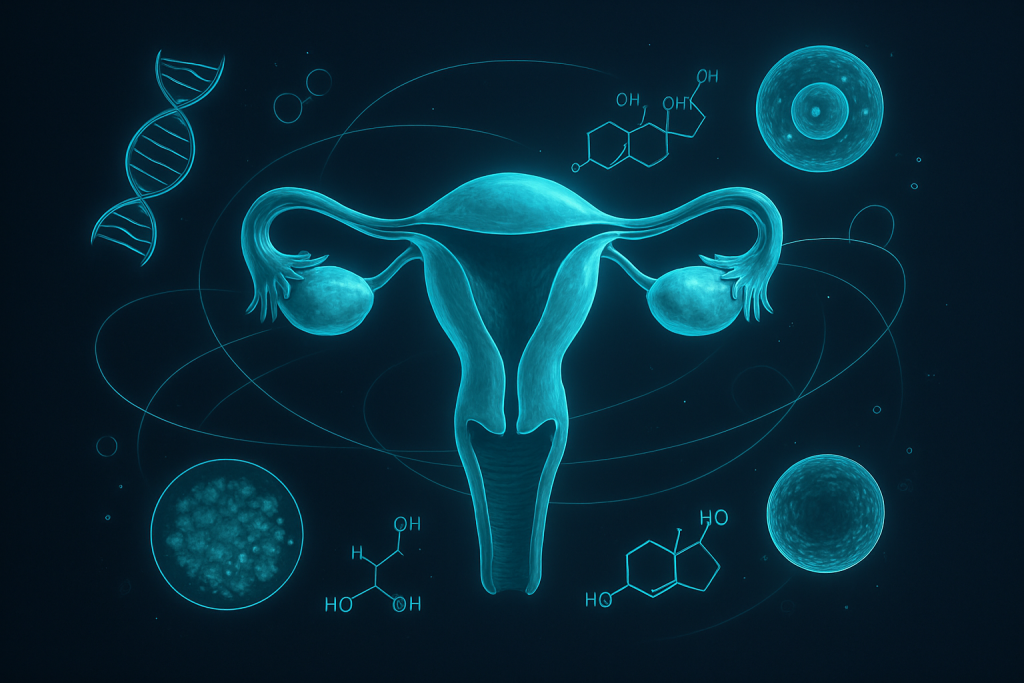
Image generated by AI
For decades, menstrual disorders have been dismissed as inevitable inconveniences or psychosomatic complaints, leaving millions of people suffering in silence. Yet recent advances in molecular biology and endocrinology have revealed that conditions like endometriosis, heavy menstrual bleeding, and polycystic ovary syndrome involve measurable biological dysfunction—not psychological weakness. This shift from stigma to science is opening unprecedented doors to understanding the menstrual cycle at a cellular level and developing targeted treatments that go far beyond the birth control pill.
Today, menstrual health has emerged as a critical frontier in personalized medicine, driven by converging forces: a growing recognition that half the population has been systematically excluded from medical research, an explosion of biomarker discoveries, and a new generation of technologies that can track hormonal patterns with precision. The global menstrual health market is expanding rapidly, reflecting both patient demand and significant clinical need. Understanding what we know about menstrual disorders and their treatments is essential not only for the approximately 773 million people menstruating globally, but also for the future of precision healthcare itself.
What Is Menstrual Health and Gynecological Treatments?
Menstrual health encompasses the biological and physiological processes of the menstrual cycle—the monthly cascade of hormonal changes that prepare the body for reproduction—along with the diagnosis and treatment of disorders that disrupt this cycle. The menstrual cycle is orchestrated by a intricate feedback system involving the hypothalamus, pituitary gland, and ovaries, which produce the hormones estrogen and progesterone in carefully timed sequences. Gynecological treatments refer to the medical and surgical interventions designed to manage conditions affecting the reproductive system, from hormonal contraceptives and intrauterine devices to surgical procedures for endometriosis or fibroids. Menstrual disorders themselves—characterized by heavy bleeding, irregular cycles, severe pain, or absent periods—are among the most common health complaints, yet remain deeply underdiagnosed and undertreated.
The scientific study of menstruation has a surprisingly recent origin story. While ancient physicians observed the menstrual cycle, the precise hormonal mechanisms remained mysterious until the early 20th century. In 1923, Edgar Allen and Edward Doisy isolated estrogen, earning recognition for their breakthrough work on ovarian hormones. Throughout the 20th century, endocrinologists gradually mapped the hypothalamic-pituitary-ovarian axis, the biological circuit that governs menstruation. The development of hormonal contraceptives in the 1960s was simultaneously a triumph and a turning point: while it granted reproductive autonomy, it also led to a century-long blind spot, as researchers often treated the menstrual cycle itself as something to be suppressed rather than understood.
What the Research Shows
The menstrual cycle operates through a delicate dance of hormonal signals that repeat roughly every 28 days, though individual variation is substantial and completely normal. The cycle begins with the follicular phase, when the pituitary gland secretes follicle-stimulating hormone (FSH), which triggers the ovaries to produce estrogen. Rising estrogen levels cause the uterine lining, called the endometrium, to thicken in preparation for pregnancy. Around day 14, a surge in luteinizing hormone (LH) triggers ovulation—the release of an egg. During the luteal phase that follows, the empty follicle transforms into the corpus luteum, which produces progesterone to further stabilize the uterine lining. If fertilization does not occur, progesterone and estrogen levels plummet, triggering menstruation—the shedding of the endometrial lining.
Think of the menstrual cycle like a finely calibrated heating and cooling system for the uterus. Estrogen acts as the initial thermostat, slowly turning up the heat by stimulating endometrial growth. Ovulation is the critical trigger—the moment the system switches strategies. Progesterone then becomes the stabilizer, keeping everything at a constant temperature. When the signal for pregnancy never arrives, the system crashes deliberately, shedding the prepared lining and resetting for the next cycle. When any component of this system malfunctions—whether from hormonal imbalance, structural abnormalities, or inflammatory responses—menstrual disorders develop.
What This Means for Patients and Science
Understanding the physiological mechanisms of menstruation has direct implications for how we diagnose and treat common menstrual disorders. Endometriosis, affecting approximately 10% of menstruating people, involves the abnormal growth of endometrial tissue outside the uterus, triggering an inflammatory cascade that causes severe pain. Polycystic ovary syndrome (PCOS), which affects 6-20% of reproductive-age people depending on diagnostic criteria, involves hormonal imbalance characterized by elevated androgens and insulin resistance, disrupting normal ovulation. Adenomyosis, increasingly recognized as distinct from endometriosis, involves endometrial tissue invading the uterine muscle itself, causing heavy bleeding and dysmenorrhea. Heavy menstrual bleeding, affecting 30% of menstruating people, can result from multiple causes—structural (fibroids, polyps), coagulation disorders, or endometrial dysfunction.
These insights are reshaping clinical practice in tangible ways. For endometriosis, traditional treatment relied on suppressing the cycle with hormonal contraceptives; now, anti-inflammatory approaches and targeted immunosuppression are under investigation. For PCOS, the recognition of metabolic dysfunction alongside hormonal abnormality has led to personalized approaches combining lifestyle modification, inositol supplementation, and selective hormone regulation. Diagnostic tools are evolving too: ultrasound imaging, biomarker testing, and non-invasive endometrial sampling are replacing or supplementing the diagnostic laparoscopy that was once standard.
Recent Breakthroughs in Menstrual Health and Gynecological Treatments
The past three years have witnessed remarkable progress in menstrual health research. In 2023, a landmark study published in Cell revealed that endometriosis involves a pathological immune response characterized by increased macrophage infiltration and altered NK cell dysfunction, opening possibilities for immunotherapy approaches. Simultaneously, research into the role of neuroinflammation in dysmenorrhea has identified specific nerve fiber density changes in the endometrium of people with severe menstrual pain, suggesting that pain in menstrual disorders is not psychogenic but rather a consequence of quantifiable tissue remodeling. The discovery of pregnancy-associated plasma protein A (PAPP-A) as a biomarker for endometriosis severity has enabled non-invasive stratification of disease, potentially allowing targeted treatment selection before surgical intervention. Furthermore, studies on the “window of implantation”—the precise timeframe when the endometrium can accept an embryo—have revealed that this window is shifted in people with certain menstrual disorders, with implications for both fertility and contraceptive efficacy.
Researchers are currently investigating several promising frontiers. Organoid models—three-dimensional tissue cultures derived from patient endometrium—are enabling drug testing specific to individual endometrial pathology. Phase 2 trials of elagolix, a GnRH antagonist with a more favorable side-effect profile than traditional GnRH agonists, show promise for endometriosis-associated pain. The microbiota of the reproductive tract is emerging as a critical factor; dysbiosis of the uterine microbiome has been associated with both endometriosis and recurrent implantation failure, raising questions about whether probiotic or antimicrobial interventions could improve outcomes. One major unresolved question remains: Why does endometrial tissue grow outside the uterus in endometriosis? The leading theory—retrograde menstruation—explains only part of the phenomenon, and alternative mechanisms involving stem cell dysfunction and hormonal sensitivity are still being explored.
Why Menstrual Health and Gynecological Treatments Matters for the Future
Advancing menstrual health science has implications that extend far beyond reproductive medicine. The endometrium itself is a remarkable biological system—it regenerates completely with each cycle, making it an ideal model for understanding tissue regeneration, inflammation, and immunology more broadly. Insights from menstrual biology are informing research on wound healing, cancer biology, and immune tolerance. Furthermore, the historical exclusion of menstruating people from clinical trials has skewed our understanding of drug metabolism, efficacy, and side effects; correcting this bias by studying how hormonal fluctuations affect drug absorption, distribution, and efficacy is reshaping pharmacology. The development of precision medicine approaches for menstrual disorders—tailoring treatment based on individual biomarkers, imaging findings, and microbiome profiles—serves as a prototype for personalized healthcare more generally.
Significant challenges remain to be overcome. The biological heterogeneity within diagnostic categories is substantial; not all endometriosis cases follow the same inflammatory pattern, and PCOS encompasses multiple distinct phenotypes. This complexity means that many “one-size-fits-all” treatments fail for substantial subsets of patients. Access disparities are also profound: people in low- and middle-income countries often lack access to even basic diagnostics and contraceptive options, let alone advanced treatments. Finally, the long-standing trivialization of menstrual complaints in medical culture means that even with better evidence, implementation into clinical practice remains slow, and many people with significant menstrual disorders remain undiagnosed.
Key Takeaways
- Menstrual disorders are highly prevalent biological conditions affecting one-third to one-half of all menstruating people, involving measurable dysfunction in hormonal signaling, immune response, or tissue structure.
- The menstrual cycle is controlled by a precise feedback system involving the hypothalamus, pituitary gland, and ovaries, producing estrogen and progesterone in carefully orchestrated patterns that prepare the uterus for pregnancy.
- Recent discoveries—including immune biomarkers for endometriosis, neuroinflammatory changes in dysmenorrhea, and the role of microbiota dysbiosis—are enabling more targeted, personalized treatment approaches beyond traditional hormonal suppression.
- Current research is advancing rapidly through organoid models, novel drug classes like selective GnRH antagonists, and biomarker-driven stratification, though fundamental questions remain about disease mechanisms.
- Menstrual health research is crucial for the future of precision medicine, informing not only reproductive health but also broader understanding of tissue regeneration, immune tolerance, and sex-based differences in disease and drug response.
Explore TED Talks on Menstrual Health and Gynecological Treatments:
TED content is used under CC BY-NC-ND 4.0. © TED Conferences, LLC.
Frequently Asked Questions
What molecular and biological mechanisms underlie conditions like endometriosis and polycystic ovary syndrome?
These conditions involve measurable biological dysfunction at the cellular level, including abnormal hormone signaling, inflammatory processes, and tissue proliferation patterns that can now be studied through molecular biology techniques. Rather than being psychosomatic, they represent genuine physiological disorders with identifiable biomarkers that researchers can measure and target.
How do modern technologies enable more precise tracking of menstrual health compared to traditional methods?
Contemporary precision technologies can now monitor hormonal patterns with unprecedented accuracy, allowing clinicians to identify biomarkers and individual variations in endocrine function that were previously undetectable. This technological advancement supports personalized medicine approaches tailored to each patient's specific hormonal profile and menstrual characteristics.
Why has the exclusion of menstruating individuals from medical research historically limited our understanding of menstrual disorders?
Systematic exclusion of approximately half the population from clinical studies has prevented adequate data collection on menstrual physiology, hormone-disease relationships, and treatment efficacy specific to menstruating bodies. This research gap has delayed the discovery of biomarkers and development of targeted therapeutic interventions beyond generalized approaches like birth control pills.
Can menstrual health advances contribute to broader developments in personalized medicine?
Yes; menstrual health represents a critical frontier in personalized medicine because understanding individual hormonal variation and cellular-level dysfunction in menstrual disorders provides models for precision diagnosis and targeted treatment applicable across medicine. The biomarker discoveries and precision tracking technologies developed for menstrual conditions can inform personalized therapeutic strategies in other endocrine and reproductive health domains.