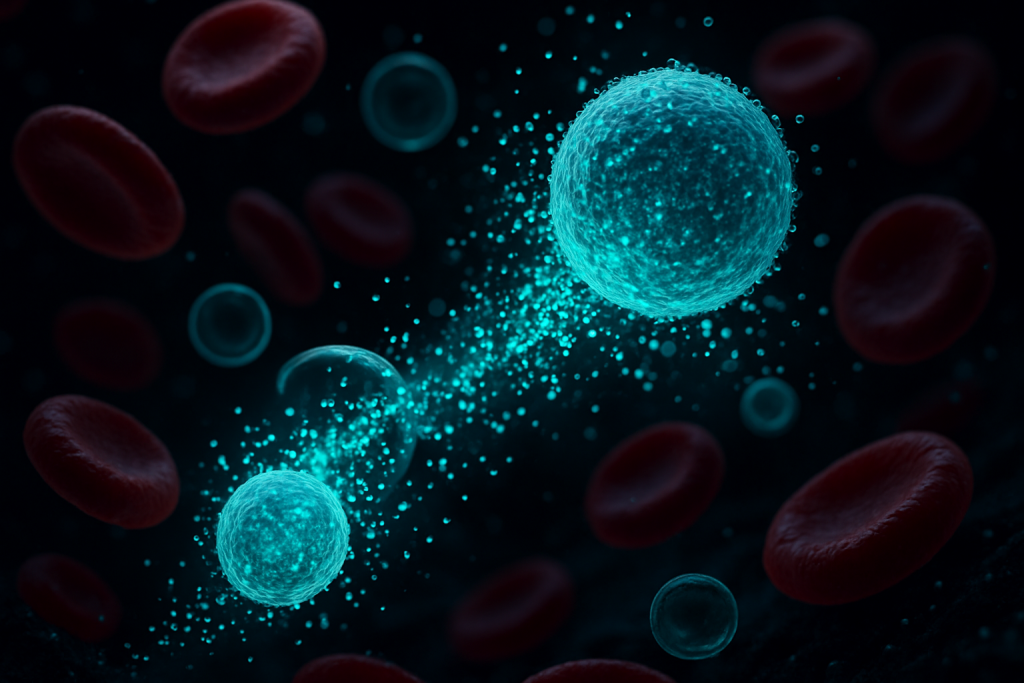
Image generated by AI
Imagine a pharmaceutical assassin so precise that it could slip past your body’s defenses, navigate through your bloodstream undetected, and strike only the cancer cells it was designed to kill—leaving healthy tissue untouched. This is not science fiction. Nanoparticles, objects so small they measure billionths of a meter across, are being engineered to do exactly that. Yet despite decades of research and billions in investment, the promise of nanomedicine remains largely unfulfilled, with only a handful of nanoparticle-based drugs approved for human use. The question isn’t whether this technology works—it does—but why getting it from the laboratory to the pharmacy has proven so devilishly difficult.
Drug delivery and nanoparticle technology represent one of the most consequential frontiers in modern medicine, with implications that extend far beyond treating cancer. The COVID-19 pandemic thrust this field into the spotlight when lipid nanoparticles became the unexpected heroes carrying messenger RNA vaccines into billions of human cells worldwide. Today, researchers are racing to expand nanoparticle applications to treat everything from neurodegenerative diseases to genetic disorders, addressing a fundamental problem in medicine: how to get the right drug to the right place at the right time. Understanding this technology is essential for grasping the future of personalized medicine, regenerative therapy, and our capacity to combat diseases once deemed incurable.
What Is Drug Delivery and Nanoparticle Technology?
Drug delivery refers to the methods and systems used to transport pharmaceutical compounds through the body to their intended targets. Nanoparticle technology, in this context, involves engineering particles typically between one and one hundred nanometers in diameter—roughly the size of a virus or large protein molecule—to serve as sophisticated delivery vehicles. These nanoparticles can be composed of various materials: metals like gold and iron oxide, polymers like chitosan and polyethylene glycol, lipids similar to those in cell membranes, or silica. The revolutionary aspect of nanoparticle-based drug delivery is that it transforms how medications interact with the body, converting passive diffusion into active, targeted transport with unprecedented precision and control.
The concept emerged in earnest during the 1970s and 1980s, when researchers including pioneering scientist Patrick Couvreur began exploring whether tiny particles could overcome the body’s natural barriers to drug absorption. Early work focused on simple liposomal formulations—fatty spheres encapsulating drugs—which eventually led to the FDA approval of Doxil in 1995, a liposomal form of the chemotherapy drug doxorubicin. This milestone proved that nanoscale engineering wasn’t merely theoretical; it could meaningfully improve patient outcomes. Since then, the field has expanded exponentially, driven by advances in materials science, computational modeling, and our deepening understanding of how the body recognizes and processes foreign particles at the nanoscale.
How It Works in Nature
To understand how nanoparticle drug delivery operates, we must first recognize that the human body has evolved sophisticated systems to protect itself from foreign invaders. The blood-brain barrier, for instance, is a highly selective membrane that permits essential nutrients to pass while blocking most large molecules and pathogens. Similarly, the body’s innate immune system constantly patrols for particles that don’t belong, engulfing them through a process called phagocytosis. Nanoparticles exploit a fascinating loophole in these systems: by mimicking the size and surface properties of naturally occurring biological entities, they can slip past immune surveillance and cellular barriers that would stop conventional drugs in their tracks. Researchers coat nanoparticles with polyethylene glycol (PEG) or other “stealth” polymers to make them appear invisible to immune cells, dramatically extending their circulation time in the bloodstream.
Consider the journey of a therapeutic nanoparticle as analogous to a Trojan horse entering an ancient city. When injected into the bloodstream, the nanoparticle—coated in a camouflaging layer—circulates for hours or even days before accumulating at the target tissue through one of several mechanisms. Some nanoparticles are passively targeted through the enhanced permeability and retention (EPR) effect, whereby leaky blood vessels surrounding tumors allow small particles to extravasate and accumulate preferentially in cancer tissues. Others are actively targeted with antibodies or ligands attached to their surface that recognize and bind to receptors overexpressed on disease cells. Once at the target site, the nanoparticle can release its payload through various triggers: changes in pH, enzymatic cleavage, temperature shifts, or external stimuli like heat or magnetic fields. This multi-stage precision represents a fundamental departure from traditional medicine, where drugs circulate throughout the entire body, potentially causing widespread side effects.
Medical and Scientific Relevance
The clinical applications of nanoparticle drug delivery span nearly every major disease category. In oncology, where traditional chemotherapy’s toxicity remains a serious limiting factor, nanoparticles encapsulating anticancer agents can reduce damage to healthy tissues while increasing drug concentration at tumor sites. In neurology, researchers are designing nanoparticles capable of penetrating the blood-brain barrier to deliver therapeutics for Alzheimer’s disease, Parkinson’s disease, and other neurodegenerative conditions that have historically resisted pharmacological intervention. Infectious disease represents another frontier: nanoparticles can deliver antimicrobial agents with exceptional efficacy, addressing the growing crisis of antibiotic-resistant bacteria. Additionally, regenerative medicine researchers are exploring nanoparticles that deliver growth factors and genetic material to stimulate tissue repair and regeneration.
Real-world applications already exist in clinical practice. Abraxane, an albumin-bound nanoparticle formulation of paclitaxel, has become a standard treatment for breast cancer and pancreatic cancer, improving efficacy compared to conventional formulations. The mRNA vaccines developed by Pfizer-BioNTech and Moderna—which revolutionized pandemic response—rely on ionizable lipid nanoparticles to shield fragile RNA molecules and facilitate their entry into cells. Iron oxide nanoparticles are being used as contrast agents in magnetic resonance imaging, improving diagnostic precision. Lipid-based nanoparticles are in clinical trials for gene therapy applications, offering hope to patients with genetic diseases previously untreatable. These examples demonstrate that nanoparticle technology is not speculative; it is actively reshaping medical practice across multiple specialties.
Recent Breakthroughs in Drug Delivery and Nanoparticle Technology
The period from 2021 to 2024 has witnessed remarkable acceleration in nanoparticle therapeutics. The success of mRNA nanoparticle vaccines validated the platform for delivering nucleic acids, spurring massive investment in expanding this approach beyond infectious disease. Researchers have designed next-generation nanoparticles with improved targeting capabilities, incorporating artificial intelligence and machine learning to optimize particle composition and surface chemistry. One particularly exciting development involves programmable nanoparticles that can respond to multiple biological signals simultaneously, enabling unprecedented specificity in distinguishing disease cells from healthy ones. Additionally, researchers have made progress in manufacturing scale-up, addressing a critical bottleneck that previously prevented nanoparticle therapies from reaching widespread clinical adoption.
Current research frontiers include combination therapy approaches, where nanoparticles simultaneously deliver multiple therapeutic agents to overcome drug resistance and improve efficacy. Immunotherapy integration represents another major focus: scientists are engineering nanoparticles that not only deliver drugs but also activate the immune system to recognize and destroy cancer cells. The field of “theranostics”—combining therapy with diagnosis—is gaining momentum, with nanoparticles that can simultaneously treat disease while providing real-time imaging to monitor treatment response. Fundamental questions remain unanswered: How can we better predict which nanoparticle designs will succeed in humans after animal testing? How can we achieve more precise control over particle behavior in the complex physiological environment of a living organism? What long-term safety considerations should guide nanoparticle design?
Why Drug Delivery and Nanoparticle Technology Matters for the Future
The trajectory of medicine increasingly depends on our capacity to deliver therapeutics with spatial and temporal precision. Climate change, antimicrobial resistance, and the emergence of novel pathogens will demand medical innovations that can respond quickly and effectively. Nanoparticle technology provides a platform for rapid vaccine development and therapeutic adaptation—a capability demonstrated vividly during the pandemic. Beyond infectious disease, aging populations will require treatments for complex, multifactorial diseases where conventional approaches have failed. Personalized medicine, tailored to individual genetic profiles, will require sophisticated delivery systems capable of targeting disease mechanisms with extraordinary specificity. Nanoparticles offer a pathway to translate genomic discoveries into clinical benefits. Furthermore, as we develop therapies for rare genetic diseases affecting small patient populations, nanoparticle platforms may prove economically viable where traditional pharmaceutical development would not.
Nevertheless, formidable challenges remain. Manufacturing nanoparticles with consistent quality and reproducibility at industrial scale continues to strain pharmaceutical companies’ capabilities and economics. The long-term safety profile of nanoparticles in human tissues remains incompletely understood, particularly regarding potential accumulation in organs and delayed toxicity. Regulatory frameworks struggle to keep pace with the technology, creating uncertainty for developers. Immunogenicity—unwanted immune responses to the nanoparticles themselves—can paradoxically reduce efficacy in repeated treatments. The astronomical development costs, often exceeding $2 billion per drug, mean that only well-funded companies and institutions can participate in nanoparticle therapeutic development, potentially limiting innovation and creating healthcare disparities. These obstacles ensure that despite the remarkable potential of nanoparticle technology, translating laboratory successes into broadly accessible, clinically superior treatments remains an extraordinarily complex challenge.
Key Takeaways
- Nanoparticle drug delivery systems are engineered vehicles, typically one to one hundred nanometers in diameter, designed to transport medications precisely to diseased tissues while minimizing damage to healthy cells.
- These nanoparticles exploit the body’s natural physiology by mimicking biological entities, enabling them to evade immune detection and penetrate biological barriers like the blood-brain barrier through passive or active targeting mechanisms.
- The most promising near-term applications include cancer chemotherapy, gene therapy for genetic disorders, and next-generation vaccines, with mRNA nanoparticle vaccines already demonstrating transformative clinical impact.
- While several nanoparticle-based drugs have received FDA approval and many more are in clinical trials, the field remains in relatively early stages, with major challenges in manufacturing scale-up, long-term safety assessment, and regulatory standardization.
- Nanoparticle technology represents a fundamental shift in how medicine can address complex diseases, offering potential solutions for conditions currently considered untreatable, though realizing this potential depends on solving manufacturing, economic, and regulatory challenges.
Explore TED Talks on Drug Delivery and Nanoparticle Technology:
TED content is used under CC BY-NC-ND 4.0. © TED Conferences, LLC.
Frequently Asked Questions
How do nanoparticles evade the body's immune system to reach their target cells?
Nanoparticles are engineered with surface coatings (often polyethylene glycol) that make them appear invisible to immune cells, allowing them to circulate through the bloodstream without triggering an inflammatory response. This 'stealth' property enables them to reach diseased tissue before being recognized and eliminated by the body's defenses.
What role did lipid nanoparticles play in COVID-19 mRNA vaccines, and how do they work mechanically?
Lipid nanoparticles encapsulate mRNA cargo in a protective shell composed of ionizable lipids, cholesterol, and polyethylene glycol, preventing degradation and enabling cellular uptake. Once inside cells, the lipid bilayer releases the mRNA into the cytoplasm where it can be translated into the spike protein that triggers immune recognition.
Why has it been difficult to translate nanoparticle drug delivery from laboratory success to approved clinical treatments?
Challenges include manufacturing reproducibility at scale, unpredictable biodistribution in complex human physiology, regulatory approval requirements for safety and efficacy, and the difficulty of achieving consistent targeting specificity across diverse patient populations. Additionally, the manufacturing costs and shelf-life stability of nanoparticle formulations add significant hurdles to commercialization.
Can nanoparticles be designed to target specific cell types, and what mechanisms enable this selectivity?
Yes, nanoparticles can be functionalized with targeting ligands (antibodies, peptides, or receptors) on their surface that bind specifically to markers overexpressed on cancer or diseased cells. This active targeting allows the nanoparticle to preferentially accumulate at pathological sites while minimizing exposure to healthy tissue, though passive targeting through enhanced permeability and retention (EPR) in tumor environments also contributes to selectivity.