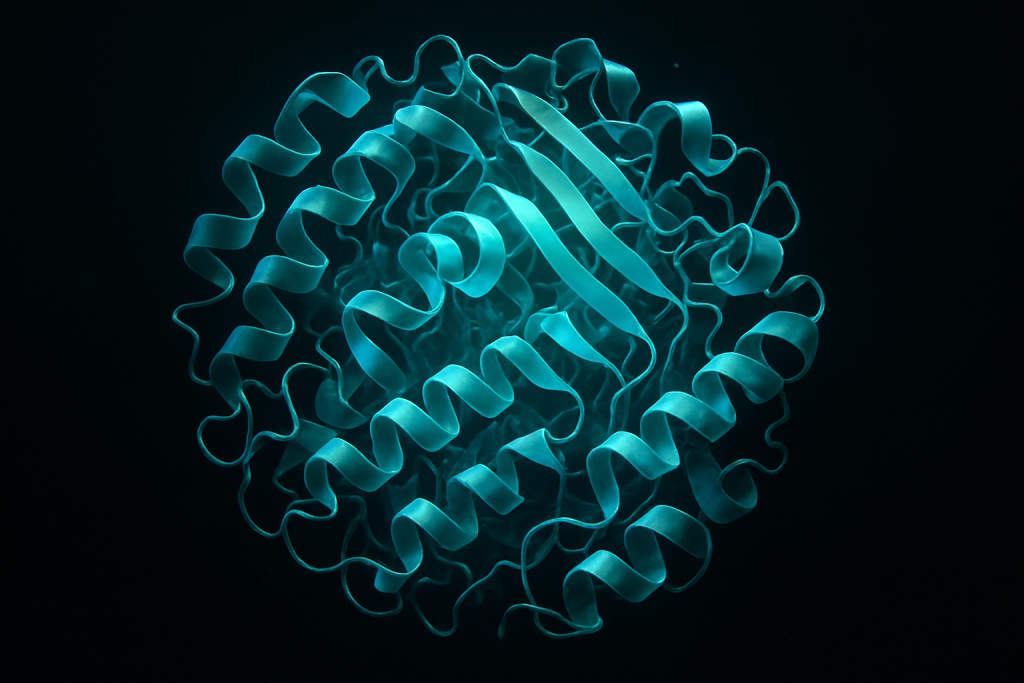
Image generated by AI
AI Insight
Proteins are complex three-dimensional structures built from chains of 20 different amino acids that fold into specific shapes determined by chemical interactions including hydrogen bonds, electrical attractions, and hydrophobic forces. The precise three-dimensional structure of a protein directly determines its biological function, enabling proteins to perform essential cellular roles such as catalyzing chemical reactions, transporting molecules, and providing structural support. When proteins misfold, they can cause diseases ranging from Alzheimer's to cystic fibrosis, making protein structure understanding critical for drug design and therapeutic development.
Why it matters
Understanding protein structure has enabled major medical breakthroughs including monoclonal antibody therapies for cancer and autoimmune diseases, and the rapid development of COVID-19 vaccines based on viral spike protein structure. This knowledge allows scientists to design targeted drugs that correct misfolded proteins or block disease-causing proteins, transforming treatment approaches for previously intractable conditions.
Understand the Science
Proteins are the molecular machines that run every living cell, yet most of us never think about them beyond the chicken breast on our plate. These intricate three-dimensional structures are responsible for everything from digesting food to fighting infections, making them arguably the most important biomolecules in biology. Understanding how proteins fold and function has become central to modern medicine and our quest to combat disease.
How It Works in Nature
Proteins are built from amino acids, 20 different molecular building blocks that link together in precise sequences encoded by our DNA. But a string of amino acids is just the beginning—the real magic happens when this chain folds into a specific three-dimensional shape. This shape is determined by chemical interactions between amino acids: hydrogen bonds, electrical attractions, and hydrophobic forces all pull and push the chain into its final form. The structure matters enormously because it determines what the protein can do—an enzyme that breaks down lactose, for instance, has a shape that perfectly fits its target molecule, like a key in a lock. Proteins perform countless roles: they speed up chemical reactions, provide structural support, transport molecules across cell membranes, and regulate virtually every biological process from metabolism to muscle contraction.
Medical and Scientific Relevance
When proteins misfold, disease often follows. Alzheimer’s disease involves proteins accumulating in tangled clumps in the brain, while cystic fibrosis results from a misfolded membrane protein that can’t function properly. By understanding protein structure, scientists can design drugs that correct these misfolded states or block problematic proteins entirely. This knowledge has revolutionized medicine: monoclonal antibodies—engineered proteins that target specific disease molecules—have become some of our most powerful cancer and autoimmune treatments. The COVID-19 vaccines represent another triumph of protein structural biology; scientists mapped the virus’s spike protein structure and used that information to engineer vaccines that train the immune system to recognize and attack it. In evolutionary terms, protein diversity explains how organisms adapt and diverge; slight changes in protein structure across species lead to functional differences that accumulate over generations.
Key Takeaways
- Proteins fold into precise three-dimensional shapes that determine their function, making structure inseparable from biology itself.
- Misfolded proteins cause many human diseases, from neurodegenerative disorders to genetic conditions, making protein structure central to drug development.
- Understanding proteins has enabled breakthrough therapies, vaccines, and diagnostics that have transformed modern medicine and saved countless lives.
Explore TED Talks on Protein Structure and Function:
TED content is used under CC BY-NC-ND 4.0. © TED Conferences, LLC.
Frequently Asked Questions
How do the 20 different amino acids determine a protein's final three-dimensional shape?
Amino acids link together in sequences encoded by DNA, and their chemical properties—including hydrogen bonds, electrical attractions, and hydrophobic forces—interact to fold the chain into a specific 3D structure. This folding is determined by which amino acids are present and in what order, as each amino acid has different chemical properties that either repel or attract other amino acids in the chain.
Why is protein structure so critical to how proteins function in cells?
A protein's three-dimensional shape creates the precise active site or binding region needed to perform its specific function—like an enzyme whose shape perfectly fits its target molecule. Without the correct structure, a protein cannot interact with other molecules or perform its biological role, even if it contains all the correct amino acids.
What happens at the molecular level when a protein misfolds, and how does this lead to disease?
When a protein misfolds, it adopts an incorrect three-dimensional shape and cannot perform its intended function, or worse, may gain toxic properties. Misfolded proteins can accumulate in cells (as occurs in Alzheimer's disease) and interfere with normal cellular processes, causing tissue damage and disease symptoms.
How does an enzyme's shape allow it to speed up chemical reactions?
An enzyme's three-dimensional structure forms an active site with a precise shape that fits its substrate molecule like a lock and key, positioning reactant molecules in the optimal way to lower the activation energy needed for the reaction. This specific fit allows enzymes to catalyze reactions far faster than would occur spontaneously in cells.