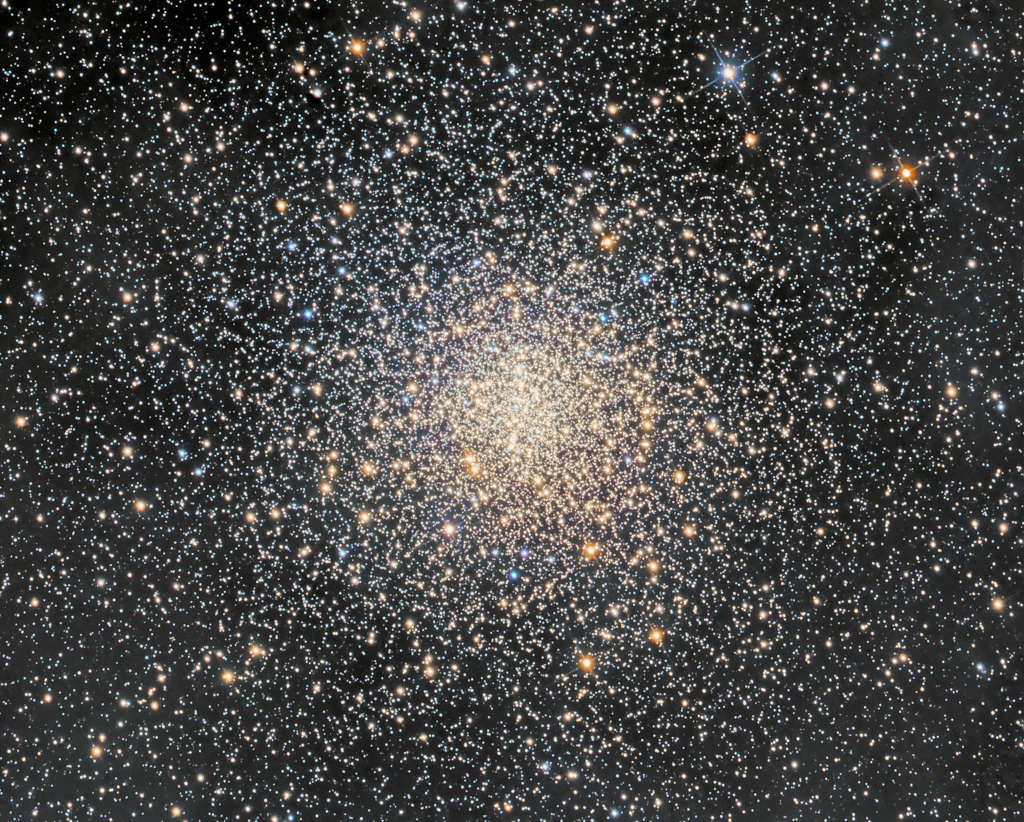
Image: NASA
Imagine standing on a world orbiting a distant star, gazing up at an alien sky. That atmosphere above you—its color, composition, and thickness—holds secrets about whether life could exist there. Yet here on Earth, we’ve never set foot on any exoplanet, and we likely never will within our lifetimes. Instead, astronomers have developed an extraordinary ability: they can now read the chemical signatures of planetary atmospheres light-years away, and in some cases, detect the invisible magnetic fields that shield these worlds from stellar radiation. This remarkable achievement represents one of the most profound shifts in how we understand our place in the cosmos.
The study of exoplanet atmospheres and magnetic fields has moved from theoretical speculation to empirical science in just the past two decades. As of 2024, astronomers have characterized the atmospheres of over 50 exoplanets and identified magnetic field candidates around several dozen more. This growing catalog is fundamentally changing how we search for potentially habitable worlds and how we understand planetary formation across the galaxy. The implications stretch far beyond pure curiosity: understanding these distant planetary environments could revolutionize our search for extraterrestrial life and force us to reconsider what conditions make a world suitable for biology.
What Is Exoplanet Atmospheres and Magnetic Fields?
An exoplanet atmosphere is the layer of gases surrounding a distant world beyond our solar system. These atmospheres vary dramatically—some are thick clouds of hydrogen and helium surrounding gas giants, while others are thin, rocky shells around Earth-sized worlds. Magnetic fields are invisible regions of magnetic force that extend from planetary interiors into space, created by moving charged particles within the planet’s core or in its magnetosphere. Together, these two features define a planet’s habitability and evolutionary history. Magnetic fields protect a planet’s atmosphere from being stripped away by stellar winds, while the atmosphere itself determines surface temperature, chemistry, and the possibility of life. Understanding both requires sophisticated physics spanning from plasma dynamics to atmospheric chemistry.
The first exoplanet was discovered in 1995 when Michel Mayor and Didier Queloz detected a gas giant orbiting the star 51 Pegasi using the radial velocity method—watching for the wobble a planet causes in its star’s motion. For years, this was the only way to detect exoplanets. The breakthrough in atmospheric characterization came with the launch of the Spitzer Space Telescope in 2003, which could measure the infrared light passing through an exoplanet’s atmosphere during a transit—when the planet crosses in front of its star from our perspective. This transit transmission spectroscopy technique revealed the first atmospheric compositions of distant worlds. Magnetic field detection has proven more elusive, relying on indirect evidence from aurora observations, planetary radio emissions, and theoretical modeling of planetary dynamics.
What We Know So Far
An exoplanet’s atmosphere forms and evolves through a complex interplay of physics and chemistry. When a star’s ultraviolet light hits an atmosphere, it heats the upper layers and can ionize atoms into charged particles. A strong magnetic field deflects these charged particles, protecting the atmosphere from escaping into space. Without this protection, stellar winds can gradually erode an atmosphere, a process called atmospheric escape. For planets orbiting close to their stars—the hot Jupiters discovered in the 1990s—this process happens dramatically, sometimes causing a planet to lose hydrogen at rates exceeding millions of tons per second. The atmosphere that remains tells us about the planet’s past: what it was made of when formed, how much mass it’s lost, and whether the right conditions might exist for life.
Consider Jupiter in our own solar system as an analogy. Its powerful magnetic field, generated by liquid metallic hydrogen in its interior, deflects the solar wind and creates a massive magnetosphere. Within this protective bubble, Jupiter maintains a thick atmosphere of hydrogen and helium. If Jupiter had no magnetic field, that atmosphere would be far more vulnerable. Now imagine scaling this scenario to distant worlds: an Earth-sized planet with a strong magnetic field and a carbon dioxide atmosphere might maintain stable surface conditions for billions of years. One without such protection might lose its atmosphere in just a few hundred million years, transforming from potentially habitable to a barren, airless rock. This dynamic interplay between magnetism and atmosphere determines a world’s long-term fate.
The Future of Exploration
The detection and characterization of exoplanet atmospheres and magnetic fields has become central to the search for habitable worlds and biosignatures—chemical signs of life. Current research focuses on identifying atmospheric compositions that might indicate biological activity, such as oxygen combined with methane, which would persist only if constantly replenished by living organisms. The James Webb Space Telescope, launched in 2021, has already begun detecting atmospheric features in exoplanets, identifying water vapor, carbon dioxide, and methane in unprecedented detail. Future missions like the Habitable Worlds Observatory, planned for the early 2030s, will extend this capability to smaller, Earth-sized planets in the habitable zones of nearby stars. Magnetic field detection remains more challenging but equally important; new techniques analyzing radio emissions and stellar wind interactions are beginning to reveal the magnetospheres of distant worlds.
Technological applications emerging from this research extend beyond basic astronomy. Magnetometer designs developed for space missions now help detect subsurface water on icy moons. Atmospheric modeling techniques inform climate science on Earth by providing new frameworks for understanding planetary-scale physics. The spectrographic instruments built to analyze exoplanet atmospheres have spillover applications in environmental monitoring, materials science, and industrial chemistry. Universities and research institutions worldwide are training new generations of scientists in these techniques, creating expertise pipelines for space agencies and private aerospace companies developing the next generation of space telescopes and probes.
Recent Breakthroughs in Exoplanet Atmospheres and Magnetic Fields
Between 2022 and 2024, several major discoveries have accelerated our understanding of these distant worlds. In 2023, the James Webb Space Telescope revealed the atmosphere of K2-18b, a sub-Neptune world 124 light-years away, detecting water vapor and potentially dimethyl sulfide—a compound associated with biological activity in Earth’s oceans. While not definitive proof of life, this finding demonstrated that JWST could probe the atmospheric chemistry of small, potentially habitable planets far more effectively than previously thought possible. Simultaneously, researchers analyzing radio emissions from the hot Jupiter HD 209b detected evidence of auroral activity consistent with a magnetic field interaction with its star’s wind, marking one of the first direct detections of a magnetic signature around an exoplanet. These discoveries showcase how dramatically our observational capabilities have improved.
Current research focuses on several open questions that keep astronomers awake at night. How common are Earth-like magnetic fields around rocky planets? What atmospheric compositions are most likely to harbor life, and how do we distinguish true biosignatures from false positives caused by geological processes? Can we detect magnetic fields around smaller, rocky planets beyond the current detection limits? How does stellar activity and evolution change atmospheric retention over billions of years? International collaborations are now systematically surveying nearby star systems, building catalogs of atmospheric and magnetic properties that will eventually answer these questions. The next five years will likely see the characterization of dozens more exoplanet atmospheres, each providing clues to the broader picture of planetary habitability.
Why Exoplanet Atmospheres and Magnetic Fields Matters for the Future
The broader implications of this research fundamentally reshape how we approach the question of life’s prevalence in the universe. If we find that habitable-zone planets commonly possess protective magnetic fields and stable atmospheres with signs of chemical disequilibrium suggesting biological activity, the probability that life exists elsewhere would skyrocket. Conversely, if such conditions prove rare, it would suggest Earth’s combination of features is unusually fortunate. Either outcome revolutionizes our self-understanding. Beyond philosophy, practical applications are emerging: understanding exoplanet magnetic fields informs our knowledge of planetary core dynamics, which might help us develop better models of Earth’s geomagnetic field and predict its future behavior. Climate models calibrated against diverse exoplanet atmospheres become more robust tools for understanding Earth’s climate change.
Significant challenges remain before we achieve definitive answers. Most exoplanet atmospheres are extremely tenuous—detecting their chemical signatures requires instruments of staggering sensitivity, and even JWST occasionally struggles with the faintest signals. Magnetic field detection around small, rocky planets remains technically beyond current capabilities, though new ground-based techniques using radio telescopes show promise. Distinguishing genuine biosignatures from abiotic processes that can also produce oxygen and methane requires understanding planetary geology, atmospheric chemistry, and photochemistry more deeply than we currently do. The sheer diversity of worlds discovered—from planets orbiting in weeks to those in decades-long orbits, from scorching infernos to frozen ice worlds—means each discovery expands our understanding of planetary physics in ways we’re still struggling to comprehend.
Key Takeaways
- Exoplanet atmospheres are layers of gas surrounding distant worlds, detectable through transit transmission spectroscopy, while magnetic fields are invisible protective shields generated by planetary interiors that prevent atmospheric escape.
- Magnetic fields shield exoplanet atmospheres from stellar winds, and strong fields enable planets to retain thick atmospheres over billions of years—a critical requirement for habitability.
- The most promising real-world application is using atmospheric and magnetic field signatures to identify potentially habitable worlds and search for biosignatures indicating extraterrestrial life.
- Current research has characterized atmospheres for over 50 exoplanets and identified magnetic field candidates around several dozen, with the James Webb Space Telescope dramatically improving our detection capabilities since 2021.
- Understanding exoplanet atmospheres and magnetic fields matters because it could answer whether life exists elsewhere in the universe and reveals the universal principles governing how worlds form, evolve, and remain habitable.
Explore TED Talks on Exoplanet Atmospheres and Magnetic Fields:
TED content is used under CC BY-NC-ND 4.0. © TED Conferences, LLC.
Frequently Asked Questions
How do astronomers detect the chemical composition of exoplanet atmospheres from light-years away?
Astronomers analyze the light from a star as it passes through an exoplanet's atmosphere during transit, measuring which wavelengths are absorbed by specific gases—a technique called transmission spectroscopy. The distinctive chemical signatures in this filtered light reveal the atmospheric composition without requiring direct observation of the planet itself.
Why are magnetic fields important for determining if an exoplanet could support life?
Magnetic fields shield planets from harmful stellar radiation and charged particles that would otherwise strip away atmospheres and damage potential biological molecules. A strong magnetic field is considered a key factor in planetary habitability because it helps preserve the atmospheric conditions necessary for life.
What does the atmospheric composition of an exoplanet tell us about its potential habitability?
Atmospheric composition reveals whether a planet has conditions suitable for life, such as the presence of water vapor, oxygen, or other biosignatures, as well as the planet's capacity to maintain a stable climate. It also indicates whether the atmosphere is thick enough to support liquid water and protect against extreme temperature variations.
How many exoplanet atmospheres have astronomers successfully characterized so far?
As of 2024, astronomers have characterized the atmospheres of over 50 exoplanets and identified magnetic field candidates around several dozen more. This growing catalog represents a major expansion in our ability to study distant planetary environments empirically rather than theoretically.