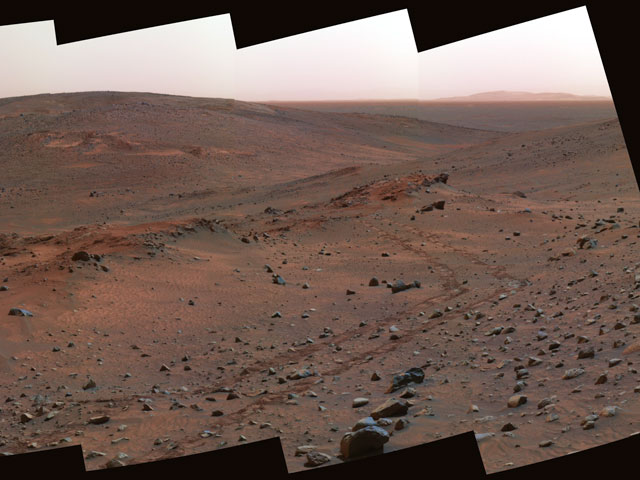
Image: NASA
Every day, NASA scientists and engineers are pushing the boundaries of human knowledge, sending robots to Mars, telescopes to the edge of the observable universe, and spacecraft to places no human has ever ventured. Yet most people have only a vague sense of what NASA actually does—beyond the famous Apollo moon landings of the 1960s. NASA’s modern portfolio encompasses dozens of simultaneous missions, each designed to answer fundamental questions about our planet, our solar system, and the cosmos itself. These programs represent some of humanity’s most ambitious scientific undertakings, requiring decades of planning, billions in funding, and the collaboration of thousands of scientists and engineers.
Understanding NASA’s missions and programs is essential for grasping humanity’s current relationship with space and our place in the universe. In an era where climate change, asteroid impacts, and the search for extraterrestrial life have moved from science fiction to legitimate scientific concerns, NASA’s work touches everything from our immediate survival to our deepest existential questions. The agency has become a cornerstone of 21st-century science, informing policy decisions, inspiring technological innovation, and fundamentally shaping how we understand reality itself.
What Is NASA Missions and Programs?
NASA—the National Aeronautics and Space Administration—operates a diverse portfolio of scientific missions and long-term programs designed to explore Earth, the solar system, and the universe beyond. These initiatives range from Earth observation satellites that monitor climate and weather patterns to deep-space probes searching for signs of past microbial life on Mars, from the iconic Hubble Space Telescope that revolutionized our understanding of the cosmos to the International Space Station, humanity’s foothold in orbit. Each mission typically involves designing specialized hardware, developing new technologies, launching vehicles into space, and collecting data from environments ranging from our own atmosphere to regions billions of miles away. The programs are organized into multiple divisions: Earth Science, which studies our home planet; Aeronautics Research, which develops aviation technologies; Planetary Science, which explores the solar system; and Astrophysics, which investigates distant galaxies and fundamental physics.
NASA was established on July 20, 1958, in response to the Soviet Union’s successful launch of Sputnik—the first artificial satellite—the previous year. The original mission was largely geopolitical: to demonstrate American technological superiority during the Cold War. However, within roughly a decade, NASA had evolved into something far more profound: an organization dedicated to pure scientific discovery. The Apollo program, which culminated in humans walking on the Moon in 1969, represented the pinnacle of this mission-oriented approach. Since then, NASA has undergone periodic transformations, adapting to changing political priorities, budget constraints, and scientific opportunities. The agency has shifted from a singular focus on human spaceflight to a more balanced approach that pairs ambitious human missions with sophisticated robotic exploration and Earth-based science.
What We Know So Far
NASA missions operate according to a well-established process that typically takes a decade or more from conception to data collection. Scientists identify a scientific question worth answering—perhaps “Is there evidence of ancient life on Mars?” or “How do black holes affect spacetime?”—and then design a mission to address it. This involves selecting appropriate instruments, choosing a spacecraft design, planning the trajectory and launch window, and developing the organizational infrastructure to manage the mission across its entire lifetime. Some missions, like the Parker Solar Probe, push technological boundaries by venturing into extreme environments where temperatures exceed one million degrees Fahrenheit. Others, like the JWST (James Webb Space Telescope), represent unprecedented engineering achievements, with thousands of components that must function together flawlessly across vast distances where repairs are impossible.
To understand the scale of this work, consider the Curiosity rover, which has been exploring Mars since 2012—far longer than its original two-year mission. The rover is the size of a car, equipped with ten scientific instruments, powered by radioactive decay, and controlled by engineers on Earth operating with a communication delay of up to 20 minutes. Every command sent to Curiosity must be perfectly planned, because there is no possibility of real-time correction. The rover has driven over 30 kilometers across the Martian surface, taken hundreds of thousands of photographs, and collected data that fundamentally changed our understanding of Mars’ past habitability. Yet Curiosity is just one of dozens of active NASA missions, each requiring similar levels of precision and planning.
The Future of Exploration
NASA’s future programs are shaped by several overarching goals that reflect both scientific ambition and practical necessity. The Artemis program aims to return humans to the Moon by the mid-2020s, establishing a sustainable presence that could eventually serve as a stepping stone to Mars. Simultaneously, the agency is developing increasingly sophisticated Mars exploration strategies, with a particular focus on finding evidence of past or present microbial life—perhaps the most profound scientific question of our era. The James Webb Space Telescope, which launched in late 2021 and has already begun revealing the universe’s earliest galaxies, represents a new era in observational astronomy. Looking further ahead, NASA is investigating concepts for interstellar probes, studying the feasibility of manned missions to Mars, and expanding its Earth science capabilities to better understand climate change and environmental monitoring.
These programs have cascading effects across multiple industries and fields. The technology developed for space missions—advanced materials, miniaturized electronics, autonomous systems, and data processing algorithms—routinely finds applications in medicine, telecommunications, transportation, and consumer products. For instance, technologies developed for NASA missions have led to innovations in prosthetic limbs, water purification systems, memory foam, and cordless tools. The International Space Station serves as a laboratory for conducting experiments in microgravity that could lead to new pharmaceuticals, stronger materials, and a better understanding of how the human body adapts to space. Furthermore, NASA’s Earth observation programs provide critical data for climate modeling, disaster response, agricultural planning, and urban development.
Recent Breakthroughs in NASA Missions and Programs
The past two to three years have witnessed several transformative developments in NASA’s mission portfolio. The James Webb Space Telescope achieved full operational capability in mid-2022 and has since delivered images of unprecedented clarity and depth, detecting galaxies from the very early universe—some existing just a few hundred million years after the Big Bang. These observations are forcing astronomers to reconsider theories about galaxy formation and the timeline of cosmic evolution. Simultaneously, NASA’s ARTEMIS program successfully conducted the Artemis I uncrewed test flight in 2022, demonstrating that the Space Launch System—the most powerful rocket ever built by NASA—could successfully carry the Orion spacecraft toward the Moon. The mission verified critical systems and paved the way for Artemis II, an uncrewed lunar flyby scheduled for the mid-2020s, which will eventually lead to crewed lunar landings through Artemis III.
Current research initiatives include the study of atmospheric chemistry on Venus through the DAVINCI and VERITAS missions, scheduled to launch in the coming years, which promise to revolutionize our understanding of why Venus became inhospitable while Earth remained habitable. The Perseverance rover on Mars continues collecting samples that will eventually be returned to Earth, potentially providing definitive evidence about whether life ever existed on the Red Planet. NASA scientists are also working on sophisticated methods to detect biosignatures—chemical or physical evidence of past life—which could be found in Martian rocks or even in the icy moons of Jupiter and Saturn. Open questions remain about the best strategies for human-robot collaboration in space exploration, the optimal locations for establishing lunar bases, and whether the detection of life beyond Earth would require us to fundamentally reconsider biology and biochemistry.
Why NASA Missions and Programs Matter for the Future
NASA missions and programs represent humanity’s best attempt at systematic, large-scale scientific discovery. By pushing the boundaries of what we can explore and measure, these initiatives expand the frontiers of human knowledge and capability. The discovery of thousands of exoplanets through NASA telescopes has revealed that planetary systems are ubiquitous, with potentially billions of worlds in our galaxy alone—a discovery that reshapes our understanding of our place in the cosmos. Earth science missions monitor our climate, helping policymakers understand and respond to environmental change. The pursuit of these missions also drives technological innovation and inspires millions of people—particularly young people—to pursue careers in science, technology, engineering, and mathematics, creating a ripple effect throughout education and industry.
However, significant challenges remain. NASA’s budget, while substantial in absolute terms, is tiny compared to the scale of space exploration—roughly 0.5% of federal spending. This limitation means difficult decisions about priorities: Should resources focus on Mars exploration, asteroid detection, climate monitoring, or deep-space astronomy? Technical challenges also persist, from developing reliable life support systems for multi-year crewed missions to Mars, to miniaturizing instruments without sacrificing scientific capability, to managing the vast engineering complexity required for billion-dollar missions with no possibility of in-space repair. Furthermore, as NASA increasingly works with private space companies, questions arise about the division of responsibilities, the role of commercialization in scientific exploration, and how to maintain the long-term vision required for transformative scientific discoveries when funding and political priorities can shift with election cycles.
Key Takeaways
- NASA operates a diverse portfolio of missions spanning Earth observation, planetary science, astrophysics, and human spaceflight, each designed to answer specific scientific questions about our universe.
- These missions follow a rigorous process of scientific design, technological development, launch, and data collection that typically spans a decade or more and requires unprecedented engineering precision.
- Technologies and knowledge generated by NASA missions have broad real-world applications across medicine, industry, climate science, and environmental monitoring, generating benefits far beyond space exploration itself.
- Recent breakthroughs including the James Webb Space Telescope and the Artemis program represent a new era in space exploration, with missions designed to answer fundamental questions about the early universe and establish human presence beyond Earth.
- NASA’s work will be essential for humanity’s future, whether addressing existential threats like asteroid impacts, understanding our changing climate, or pursuing the profound question of whether life exists elsewhere in the universe.
A solar-powered adventure — Bertrand Piccard →
TED content is used under CC BY-NC-ND 4.0. © TED Conferences, LLC.
Frequently Asked Questions
How do NASA's robotic rovers on Mars contribute to our understanding of the planet's past habitability?
Mars rovers like Curiosity and Perseverance collect geological samples, analyze atmospheric composition, and search for signs of ancient microbial life by studying rock formations and chemical signatures. These missions help scientists determine whether Mars once had conditions suitable for life, such as liquid water and organic chemistry.
What scientific questions are NASA's space telescopes designed to answer about the universe?
Telescopes like the James Webb Space Telescope observe the formation of the earliest galaxies, study exoplanet atmospheres for biosignatures, and measure cosmic expansion to understand dark energy. These missions address fundamental questions about the origin, structure, and evolution of the universe itself.
Why does NASA monitor Earth from space, and what specific scientific data does this provide?
NASA's Earth observation missions track climate patterns, ocean temperatures, atmospheric composition, and land-use changes to understand global warming and environmental impacts. This satellite data informs climate models, weather prediction, and policy decisions regarding climate change mitigation.
How do NASA's asteroid detection and tracking programs help protect Earth from impact hazards?
NASA identifies near-Earth objects (NEOs) by mapping their trajectories and compositions, allowing scientists to assess collision risks decades in advance. Programs like the Planetary Defense mission test technologies to deflect or mitigate potential asteroid impacts, turning planetary defense from theory into practical science.