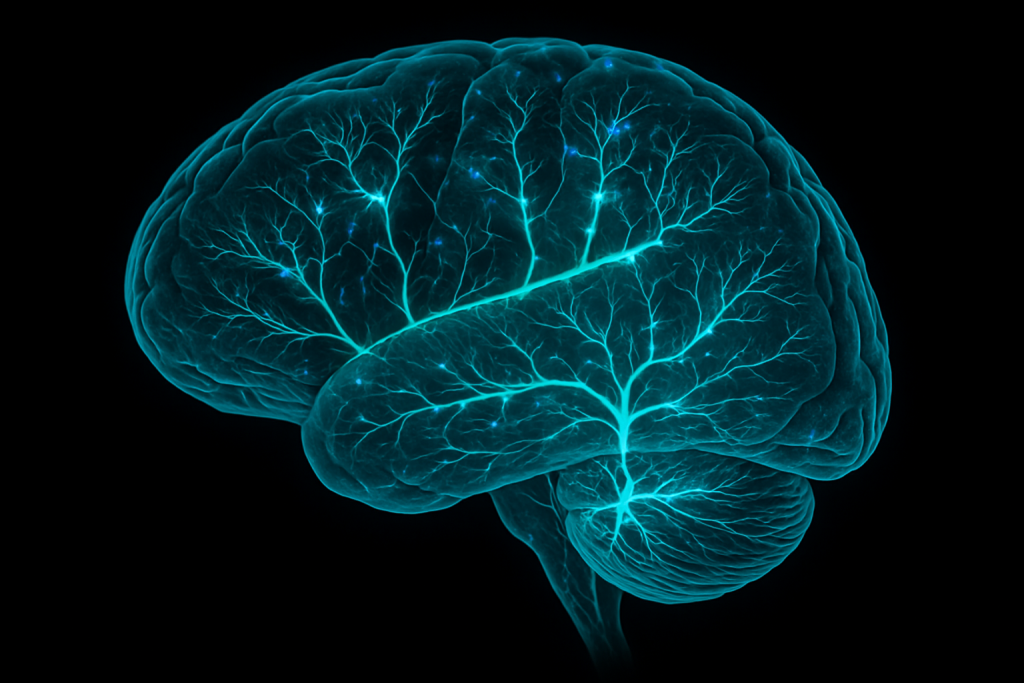
Image generated by AI
Your brain is not fixed. This revelation, which would have scandalized neuroscientists just fifty years ago, is now one of the most transformative discoveries in modern biology. Neuroplasticity—the brain’s ability to physically rewire itself, forge new neural connections, and reorganize its functional architecture in response to experience—means that learning a new language, recovering from a stroke, or mastering a musical instrument actually changes the physical structure of your brain. The question is no longer whether the brain can change, but rather how we can harness this remarkable capacity to heal ourselves and unlock human potential.
In an era of epidemic neurological disorders, psychiatric conditions affecting nearly one billion people globally, and aging populations facing cognitive decline, understanding how the brain develops and adapts has become one of medicine’s most urgent frontiers. From rehabilitation after traumatic brain injuries to treating depression, from early childhood education to preventing Alzheimer’s disease, neuroplasticity offers a scientific foundation for interventions that seemed impossible just a generation ago. As artificial intelligence researchers attempt to model the brain’s learning mechanisms and educators redesign curricula around how our brains actually develop, the practical implications of neuroplasticity have extended far beyond the laboratory into medicine, technology, and society itself.
What Is Neuroplasticity and Brain Development?
Neuroplasticity refers to the brain’s fundamental ability to physically alter its structure and function throughout life in response to experience, learning, and environmental demands. At the cellular level, this involves the formation of new neural connections (synapses), the pruning of unused connections, the migration of neurons to new locations, and even the generation of entirely new neurons in specific brain regions. The brain achieves this through multiple mechanisms operating across different timescales: rapid changes in the strength of existing connections can occur within seconds, while structural remodeling of neural circuits unfolds over weeks and months, and developmental reorganization of major brain regions occurs across years. Crucially, neuroplasticity is not a single phenomenon but rather a collection of overlapping processes that operate continuously from fetal development through old age, each governed by distinct molecular and cellular mechanisms.
The scientific understanding of neuroplasticity emerged gradually over more than a century, though most neuroscientists resisted the idea until remarkably recently. In the nineteenth century, Santiago Ramón y Cajal, the Spanish anatomist who won the Nobel Prize for demonstrating that the nervous system is composed of individual cells (neurons), speculated that experience might alter connections between neurons. However, the prevailing dogma throughout the twentieth century held that the adult brain was essentially static—fixed in its wiring after childhood, unable to generate new neurons, and fundamentally unchangeable. This view began to crack in the 1960s when neuroscientist Paul Bach-y-Rita demonstrated through experimental work that stroke patients could recover lost functions by retraining, suggesting that the brain could reorganize itself. The real transformation came in the 1990s and 2000s, when new imaging technologies, molecular markers, and experimental techniques allowed researchers to directly observe the brain changing in real time, finally providing compelling evidence for what Cajal had intuited more than a century before.
How It Works in Nature
The mechanism underlying neuroplasticity begins at the synapse, the tiny gap between neurons where chemical communication occurs. When neurons fire together repeatedly—when two neurons are activated in temporal proximity—the connection between them strengthens through a process called long-term potentiation (LTP). Conversely, when neurons rarely fire together, their connections weaken through long-term depression (LTD). These synaptic changes are mediated by molecular cascades involving calcium ions, neurotransmitter receptors, and immediate early genes that turn on specific patterns of protein synthesis. Over time, repeated patterns of neural activity literally reshape the physical brain: dendritic spines (the receiving ends of neural connections) grow larger or smaller, new synapses form, old ones disappear, and entire neural circuits reorganize to reflect the brain’s ongoing experience of the world.
Consider the well-studied example of London taxi drivers learning to navigate one of the world’s most complex street networks. When researchers compared the brains of experienced taxi drivers to control subjects, they discovered that the taxi drivers had measurably larger hippocampi—the brain region crucial for spatial memory—proportional to how many years they had spent memorizing the city’s 25,000 streets. The London cabby’s brain literally grew in response to the demands placed upon it. Remarkably, the hippocampi of retired taxi drivers actually shrank back toward normal size, demonstrating that neuroplasticity works both ways: use it, and your brain develops those structures; stop using it, and your brain reabsorbs the biological investment. This isn’t metaphorical change—it’s actual biological reorganization, driven by the repeated activation patterns that navigation demands.
Medical and Scientific Relevance
The practical medical applications of neuroplasticity have revolutionized rehabilitation and treatment approaches for numerous conditions. Stroke patients who previously had no hope of recovering lost motor or speech function now benefit from intensive retraining protocols designed to activate and reorganize remaining brain tissue, often recovering remarkable abilities months or even years after their initial injury. Patients with chronic pain conditions are being treated with reconditioning therapies based on understanding that pain representation in the brain can be rewired. Individuals with phantom limb pain—who experience pain in limbs that have been amputated—have found relief through mirror therapy and other neuroplastic interventions that target the brain’s body maps rather than treating the missing limb itself. Beyond rehabilitation, neuroplasticity research is transforming treatment of depression, anxiety, and other psychiatric disorders by revealing how maladaptive neural patterns can be interrupted and replaced through targeted therapy combined with behavioral practice.
Current clinical applications extend from physical medicine to mental health to pediatric development. Constraint-induced movement therapy, which forces stroke patients to rely on their weakened side, leverages neuroplasticity to restore lost motor function in ways that seemed impossible before we understood the mechanism. Cognitive-behavioral therapy for depression works partly by engaging neuroplasticity—repeated practice of new thought patterns and behaviors gradually rewires the brain’s emotional regulation circuits. Educational interventions for dyslexia and dyscalculia are increasingly designed around neuroplastic principles, targeting the specific neural systems underlying these learning disabilities. Meanwhile, neurofeedback technologies—systems that show people real-time visualizations of their own brain activity—represent a cutting-edge approach to helping individuals consciously shape their neural activity patterns.
Recent Breakthroughs in Neuroplasticity and Brain Development
The past few years have witnessed several landmark discoveries that have dramatically expanded our understanding of how the brain develops and rewires itself. In 2022 and 2023, researchers made major advances in understanding adult neurogenesis—the generation of new neurons in the adult brain—revealing that this process is far more extensive in humans than previously believed and may continue well into old age in specific brain regions. Simultaneously, advances in single-cell RNA sequencing have allowed scientists to identify previously unknown types of neurons and glial cells that play crucial roles in synaptic plasticity, revealing an unexpected diversity of cellular mechanisms supporting learning and memory. High-resolution brain imaging combined with machine learning has enabled researchers to decode and even predict which individuals will successfully recover function after brain injury, based on early structural and functional changes in the brain. Additionally, research has clarified the molecular mechanisms by which sleep, exercise, and social interaction trigger plasticity, providing scientific grounding for lifestyle interventions that enhance brain health.
Current research frontiers are exploring several tantalizing questions about the limits and mechanisms of neuroplasticity. How can we enhance neuroplasticity in aging brains that show declining capacity for change? Can we combine neuroplasticity-based therapies with pharmaceutical interventions to produce larger or more lasting improvements in neurological conditions? What role does neuroinflammation play in limiting plasticity in neurodegenerative diseases, and can targeting inflammation restore plasticity? Researchers are also investigating the genetic factors that influence individual differences in neuroplasticity—why some people recover remarkably well after brain injury while others with similar injuries show little improvement. These questions are attracting massive international research investments, with major funding initiatives from the National Institutes of Health, the European Research Council, and private foundations all prioritizing neuroplasticity research.
Why Neuroplasticity and Brain Development Matters for the Future
The implications of neuroplasticity extend far beyond clinical neurology into fundamental questions about human nature, education, aging, and artificial intelligence. If the adult brain can be fundamentally reshaped by experience, then educational approaches must focus not on fixed abilities but on cultivating the practices and environments that promote positive plasticity. For aging societies, understanding how to maintain and optimize neuroplasticity throughout the lifespan becomes critical—potentially the difference between active, independent aging and cognitive decline. The discovery that neuroplasticity is driven by specific molecular processes has opened entirely new therapeutic possibilities: could drugs that enhance the molecular machinery of plasticity accelerate recovery from brain injuries or prevent neurodegenerative disease? Simultaneously, neuroplasticity research is informing how we design artificial intelligence systems, with deep learning algorithms inspired by the brain’s own learning mechanisms through synaptic adjustment.
Yet significant challenges remain in translating neuroplasticity insights into broadly effective clinical interventions. Individual variation in neuroplasticity is enormous—some people’s brains reorganize readily while others show remarkable resistance to change, and we still don’t fully understand the factors that determine this variation. The critical periods during development when certain types of plasticity are most pronounced appear to close with maturation, potentially limiting what can be achieved through retraining in adulthood, though our understanding of these windows continues to evolve. Scaling neuroplasticity-based interventions to reach populations that need them most remains a practical challenge, particularly when effective treatments require intensive, sustained engagement over months or years. Furthermore, ethical questions loom about enhancement uses of neuroplasticity—the brain’s malleability raises concerns about psychological manipulation and the psychological impacts of neuroplastic interventions in non-clinical contexts.
Key Takeaways
- Neuroplasticity is the brain’s ability to physically rewire itself throughout life by strengthening and weakening neural connections in response to experience, learning, and environmental demands.
- The mechanism operates through synaptic changes where repeatedly co-activated neurons strengthen their connections while inactive ones are pruned, with repeated activity patterns physically reshaping brain structures over time.
- Clinical applications in stroke rehabilitation, psychiatric treatment, and learning disabilities represent the most promising near-term uses of neuroplasticity research for treating currently intractable conditions.
- Current research is expanding our understanding of adult neurogenesis, identifying new cell types involved in plasticity, and revealing how sleep, exercise, and social interaction trigger brain rewiring at the molecular level.
- Neuroplasticity fundamentally changes how we think about brain development, education, aging, and treatment of neurological conditions, suggesting that human potential remains malleable and improvable throughout life.
Explore TED Talks on Neuroplasticity and Brain Development:
TED content is used under CC BY-NC-ND 4.0. © TED Conferences, LLC.
Frequently Asked Questions
What is the mechanism by which neuroplasticity allows the brain to physically rewire itself?
Neuroplasticity works through the formation of new neural connections (synaptic plasticity) and the reorganization of existing neural networks in response to experience, learning, or injury. When neurons are repeatedly activated together through practice or exposure, the synaptic connections between them strengthen, while unused connections may weaken or be eliminated—a process summarized as 'neurons that fire together wire together.'
How does neuroplasticity enable recovery from traumatic brain injuries or strokes?
After brain injury, undamaged regions can assume functions previously controlled by damaged areas through compensatory neuroplasticity, where neural circuits reorganize and form new connections to restore lost abilities. This process occurs through both structural changes (new neuron growth) and functional remapping, though recovery depends on factors like injury severity, age, and rehabilitation intensity.
Why is neuroplasticity particularly important for understanding brain development in early childhood?
The developing brain exhibits heightened neuroplasticity during critical periods in childhood when neural circuits are being actively formed and refined in response to environmental stimuli and experiences. This window of enhanced plasticity means early learning experiences, education, and environmental enrichment have outsized effects on shaping brain structure and function that can persist throughout life.
Can neuroplasticity reverse cognitive decline associated with aging and neurodegenerative diseases like Alzheimer's?
While neuroplasticity diminishes with age, evidence suggests that targeted cognitive stimulation, learning, and physical activity can maintain and potentially slow cognitive decline by promoting new neural connections and compensatory network reorganization. However, neuroplasticity cannot currently reverse the underlying neurodegeneration; rather, it may help preserve remaining cognitive function and build neural reserve against disease progression.