AI Insight
A study by Jennifer Jacquet and colleagues at the University of Miami analyzed 1,233 environmental claims made by 33 of the world's largest meat and dairy corporations between 2021 and 2024. They found that 98 percent of these claims could be classified as greenwashing, with more than two-thirds lacking supporting evidence and only three claims backed by peer-reviewed scientific literature. Concrete sustainability actions identified in the reports were largely negligible in scale relative to the companies' total operations, while net-zero targets frequently relied on carbon offsets rather than actual emissions reductions.
Why it matters
Animal agriculture accounts for at least 16.5 percent of global greenhouse gas emissions, making accurate and enforceable corporate climate commitments essential to meaningful climate action. This analysis highlights a systemic gap between industry sustainability messaging and verifiable action, which has direct implications for consumer decision-making, regulatory oversight, and climate policy.
Understand the Science

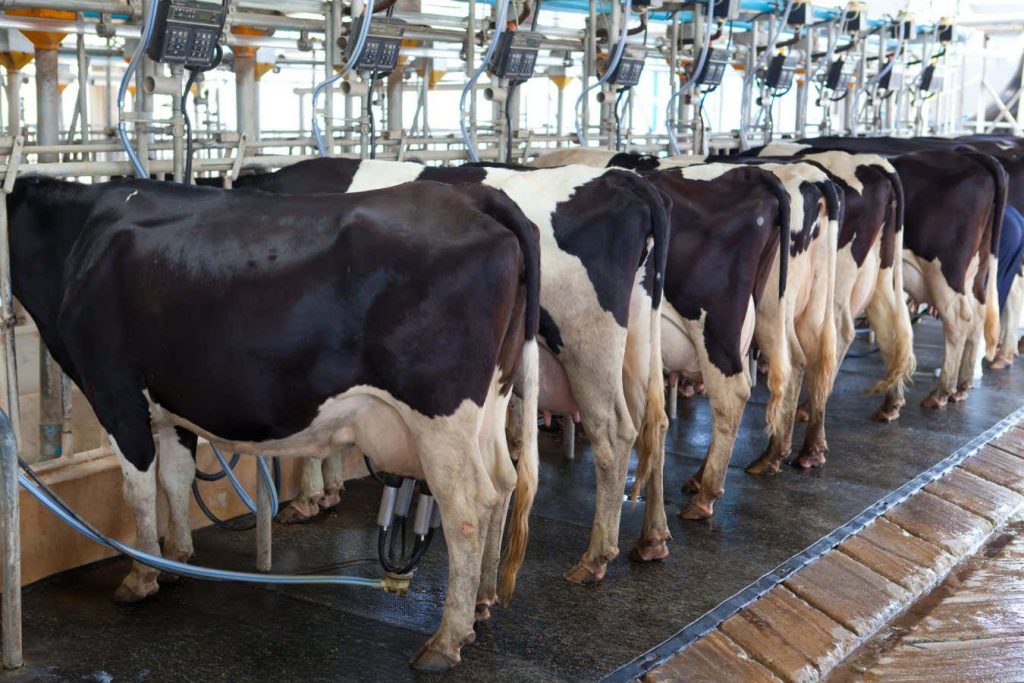
The dairy industry’s green claims are under scrutiny
Witthaya/Getty Images
The world’s biggest meat and dairy companies are flooding the public with promises to tackle global warming, but almost all are greenwashing, a new analysis claims.
Animal agriculture is a major driver of climate change, responsible for at least 16.5 per cent of all global greenhouse gas emissions. In response to scrutiny, the industry has responded with a slew of sustainability pledges.
To evaluate these efforts, Jennifer Jacquet at the University of Miami and her colleagues analysed the most recent sustainability reports and consumer-facing websites of 33 of the world’s largest meat and dairy corporations between 2021 and 2024. “We’re really trying to understand what is real and what is PR,” she says.
Advertisement
The team identified 1233 environmental claims. “Almost all of them – 98 per cent – could be classified as greenwashing,” says Jacquet – claims that are deceptive or intentionally misleading by, for example, providing a vague promise of future climate commitments without offering a clear plan to achieve it. More than two-thirds of the statements lacked any supporting evidence, and only three claims were backed by scholarly scientific literature.
Currently, 17 of the 33 companies evaluated have set net-zero targets. Yet, much like the fossil fuel sector, the claims appear distant and rely on carbon offsets rather than reducing actual emissions.
Those more concrete measures touted by firms were much less significant in magnitude than the grand future-facing claims. One regenerative agriculture pilot involved just 24 farms, representing a microscopic 0.0019 per cent of the firm’s total global operations. Other companies promoted negligible packaging tweaks, including reducing the width of the tape used on packs of sausages by a mere 3 millimetres.
“The authors convincingly illustrate how many of the industry’s claims amount to not much more than window dressing,” says Marco Springmann at the University of Oxford.
Pete Smith at the University of Aberdeen, UK, who co-developed the greenwashing framework used to analyse the companies’ claims, says the findings “don’t come as a surprise to me”.
Greenwashing remains common within the industry, say other experts. “Given the power of large companies, and the constrained ability to change within the current market norms, this leads to incentives to over-promise, to appear more progressive than they are, and to lobby for the status quo,” says Tim Benton at the University of Leeds, UK. “Inevitably, as with tobacco and fossil fuels, there are also market actors who will use spin and misinformation to protect their businesses.”
Topics: