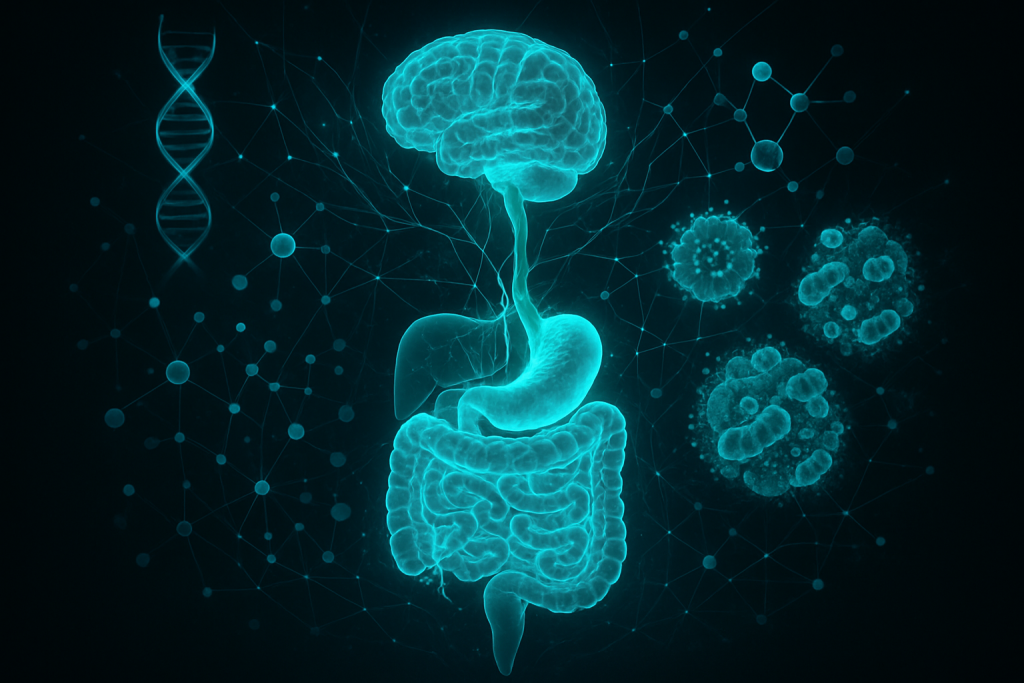
Image generated by AI
AI Insight
The gut microbiota consists of trillions of microorganisms that actively influence human health through complex interactions with multiple biological systems. Research in this field requires interdisciplinary collaboration among microbiologists, geneticists, immunologists, neuroscientists, and nutritionists to understand how these organisms affect immune function, brain chemistry, metabolism, and disease. The discovery of the gut-brain axis has revealed that microbial byproducts like short-chain fatty acids can directly influence neurological function and behavior, demonstrating connections between bacterial metabolism and mental health.
Why it matters
Understanding individual microbiota profiles could enable personalized medicine approaches including targeted dietary recommendations, probiotic interventions, and new treatments for conditions ranging from inflammatory bowel disease to depression and obesity. This research exemplifies how complex modern health challenges require seamless collaboration across traditional scientific disciplines.
Understand the Science
The trillions of microorganisms living in your digestive system aren’t just passengers—they’re active participants in your health, influencing everything from your immune system to your mental state. This recognition has sparked one of the most exciting interdisciplinary collaborations in modern science, bringing together researchers from microbiology, neuroscience, immunology, genetics, and nutrition to understand a hidden ecosystem that shapes human biology.
Across the Sciences
Studying the microbiota requires expertise that no single discipline can provide. Microbiologists identify and classify the bacterial species present, while molecular geneticists sequence their DNA to understand which genes are expressed under different conditions. Immunologists investigate how gut bacteria train our immune cells to distinguish between harmful pathogens and beneficial microbes, revealing mechanisms that could explain autoimmune diseases and allergies. Neuroscientists, investigating the gut-brain axis, have discovered that microbial byproducts like short-chain fatty acids directly influence brain chemistry and behavior. Simultaneously, nutritionists and biochemists examine how diet shapes microbial communities, creating feedback loops that affect metabolism and weight regulation. Even clinical physicians now recognize that understanding a patient’s microbiota may be essential for treating conditions as diverse as inflammatory bowel disease, depression, and obesity.
This convergence isn’t merely additive—it’s transformative. When researchers from different fields collaborate on microbiota questions, they generate insights impossible within disciplinary silos. For instance, discovering that certain bacteria produce neurotransmitters required collaboration between microbiologists and neuroscientists; neither field alone would have recognized the significance of the finding.
Why This Matters for the Future
The microbiota represents a frontier where precision medicine could genuinely transform healthcare. Understanding individual microbial profiles could enable personalized dietary recommendations, targeted probiotic interventions, and even preventive treatments for conditions that currently seem intractable. Pharmaceutical companies are already developing therapies that manipulate the microbiota, while diagnostic companies race to create microbiota-based biomarkers for disease risk.
Beyond medicine, this research exemplifies how modern biological challenges demand interdisciplinary thinking. Climate change, infectious disease, and aging—tomorrow’s most pressing health issues—will similarly require seamless collaboration across traditional scientific boundaries. Training the next generation of scientists who can speak multiple scientific languages has become as important as any individual discovery.
Key Takeaways
- Gut microbiota research integrates microbiology, neuroscience, immunology, genetics, and nutrition into a unified framework.
- The gut-brain axis demonstrates how microbial metabolism directly influences neurological function and behavior.
- Interdisciplinary microbiota science is already yielding clinical applications and will drive personalized medicine forward.
Explore TED Talks on Health & Disease Research:
TED content is used under CC BY-NC-ND 4.0. © TED Conferences, LLC.
Frequently Asked Questions
How do short-chain fatty acids produced by gut bacteria influence brain chemistry and behavior?
Short-chain fatty acids, such as butyrate, cross the blood-brain barrier and act as signaling molecules that affect neurotransmitter production and regulate neuroinflammation. These microbial metabolites can influence brain function through both direct chemical effects and indirect immune system modulation, representing a key mechanism of the gut-brain axis.
What role do gut bacteria play in training the immune system to distinguish between harmful pathogens and beneficial microbes?
Commensal bacteria interact with immune cells in the gut mucosa, promoting the development of regulatory T cells and tolerogenic dendritic cells that establish immune tolerance to beneficial microbes. This training process helps prevent inappropriate immune responses that can lead to autoimmune diseases and allergies.
Why is studying the microbiota considered an interdisciplinary challenge that requires multiple scientific fields?
The microbiota's influence spans microbial identification, gene expression, immune regulation, neurochemistry, and metabolic pathways—areas requiring expertise from microbiology, genetics, immunology, neuroscience, and nutrition respectively. No single discipline possesses all the tools and knowledge needed to fully understand these complex, interconnected mechanisms.
How does diet shape microbial communities and create feedback loops affecting metabolism and weight regulation?
Different dietary components selectively promote the growth of specific bacterial species; for example, dietary fiber feeds beneficial bacteria that produce metabolites improving insulin sensitivity and satiety signaling. This creates a feedback loop where microbial composition influences metabolic efficiency and appetite regulation, which then determines subsequent food choices.