AI Insight
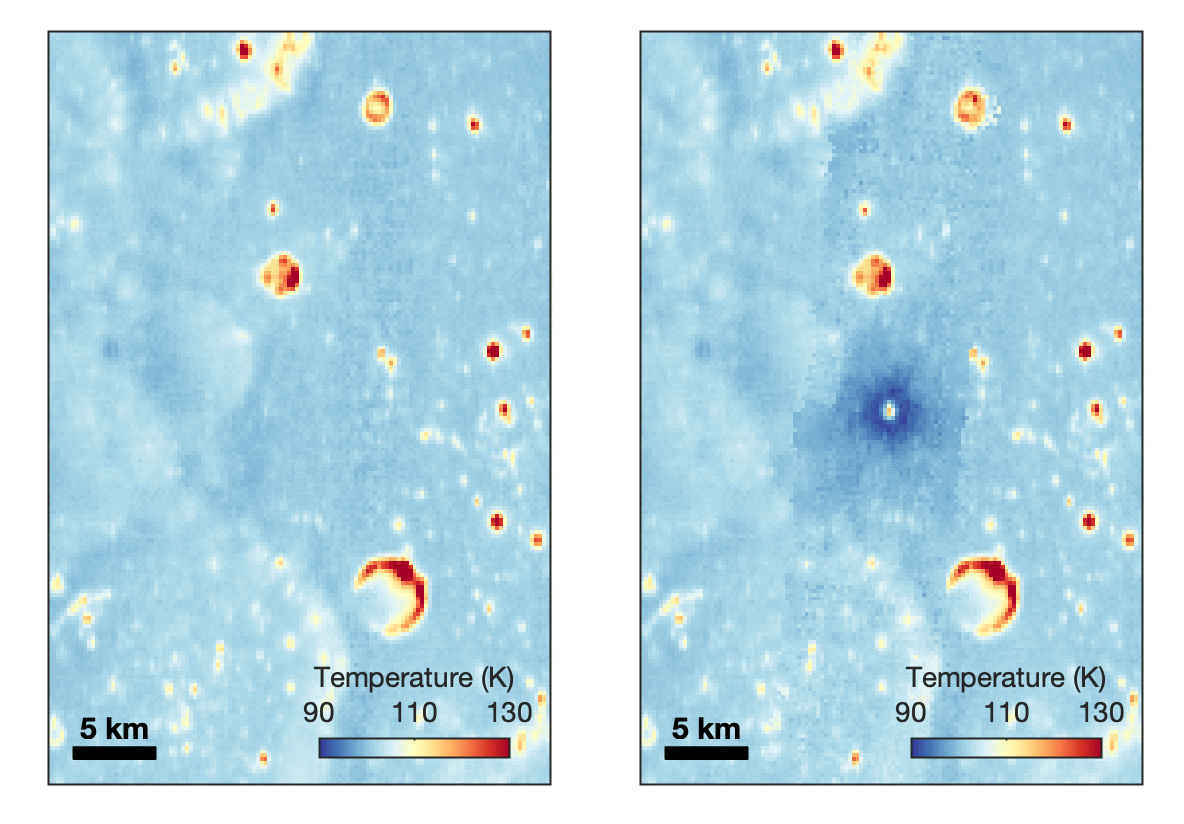
A comet or asteroid approximately 10-20 meters in diameter struck the Moon between April and May 2024, creating a crater named McGetchin that spans approximately 200 meters across. The Lunar Reconnaissance Orbiter documented the surface before and after impact, revealing not only the crater but also a surrounding cold spot caused by disturbed lunar regolith that retains less heat. Such impacts of this magnitude are statistically expected only once every 132 years on the Moon.
Why it matters
This rare observed impact event provides valuable data for understanding how celestial bodies collide with airless worlds and how lunar surface materials respond to such impacts. The findings will improve models of surface evolution on the Moon and other bodies while highlighting the protective role Earth's atmosphere plays in preventing similar-sized objects from reaching our surface.
Understand the Science
APOD
Astronomy Picture of the Day
Discover the cosmos! Each day a different image or photograph of our fascinating universe is featured, along with a brief explanation written by a professional astronomer.


A New Lunar Crater: McGetchin
Explanation: A once-in-a-lifetime crater has appeared on the Moon! A comet or asteroid roughly the size of a humpback whale (approximately 10-20 meters, 30-60 feet) crashed into the Moon sometime between April and May of 2024. The Lunar Reconnaissance Orbiter (LRO), with its monthly monitoring of the Moon, captured today’s images of the lunar surface before and after the event. The resulting crater, named after Apollo-era lunar scientist McGetchin, is two soccer fields across. Craters of this size are only expected once every 132 years! Follow up thermal imaging revealed a large cold spot that surrounds the warm crater. Surface impacts will puff up the loose lunar sediment, or regolith, making it less dense and harder to retain heat. This event affected an area much larger than the visible crater, which will inform humanity’s understanding of surface impacts and the evolution of the Moon’s surface. It also reminds us all to be thankful for Earth’s atmosphere.
APOD’s submission email has changed. Please see APOD Submissions.
APOD’s main NASA site is moving: From apod.nasa.gov to science.nasa.gov/apod
Tomorrow’s picture: the great unknown
| Date: | September 23, 2026 |
|---|---|
| Credit: | NASA/GSFC/Intuitive Machines |
| Authors & editors: | Keighley Rockcliffe, Robert Nemiroff, Jerry Bonnell, Cecilia Chirenti |
| A service of: |
ASD at NASA / GSFC, NASA Science Activation & Michigan Tech. U. |
Source: APOD: 2026 September 23 – A New Lunar Crater: McGetchin