AI Insight
Astronomers using NASA Hubble data have discovered chemical evidence suggesting the white dwarf star HS 0209+0832 may host a second-generation planet. The planet would have formed from the gas and dust expelled when the original star died and shed its outer layers, rather than forming alongside the star's initial birth. This unusual chemical signature distinguishes second-generation planets from those that form during a star's early stages.
Why it matters
This discovery expands our understanding of planet formation beyond conventional scenarios, showing that planetary systems can potentially form even after a star's death. It opens new avenues for studying how materials recycled from dying stars might create fundamentally different types of planetary bodies with distinct chemical compositions.
Understand the Science
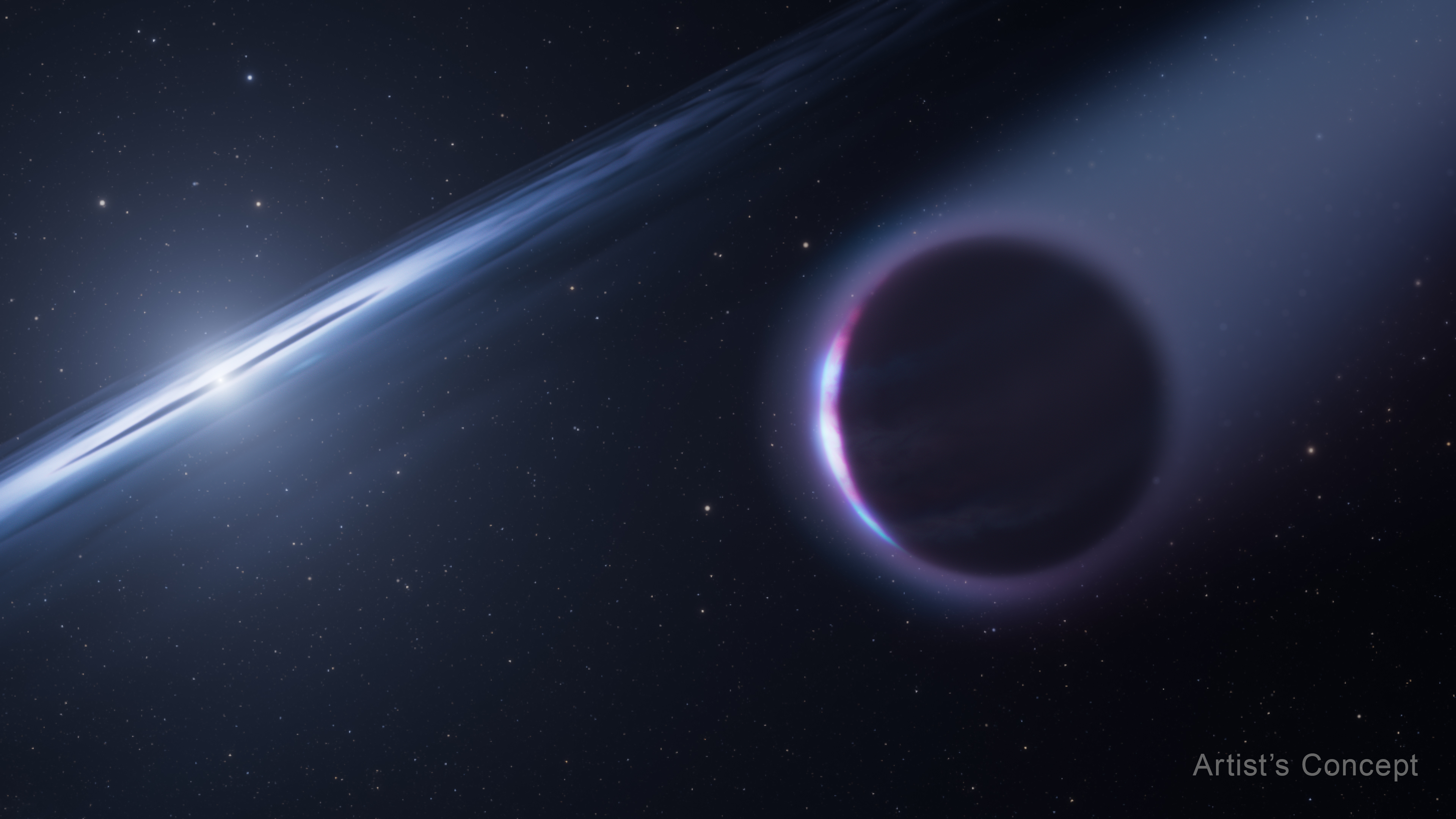
Diligent sleuthing by astronomers uncovered a surprising chemical clue that indicates the white dwarf star HS 0209+0832 may host a second-generation planet. This artist’s concept released on Oct. 5, 2026, depicts that possible explanation.
The white dwarf is the “dead” core of a star that burned through all of its nuclear fuel and lost its outer envelope of gas and dust to space. The second-generation planet formed from that cast-off gas and dust, which is why its chemical content is very different from a planet that formed as its host star was forming.
Learn more about this scientific discovery.
Image credit: NASA, ESA, Leah Hustak (STScI)
Source: Astronomers Solve Cosmic Cold Case with NASA Hubble Data