AI Insight
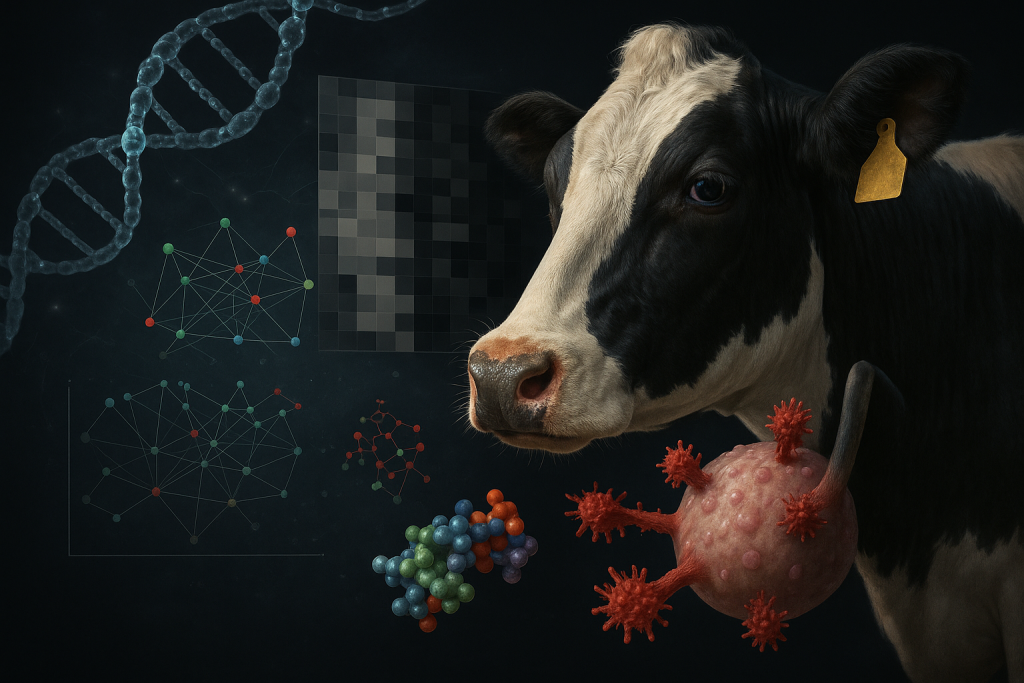
This bioinformatics study analyzed differentially expressed genes and protein interaction networks in dairy cattle to identify molecular markers associated with both clinical and subclinical mastitis. Three key genes, CDKN1A, FKBP5, and SLC7A5, were identified as shared biomarkers across both disease forms, with relevant biological processes including cell population proliferation regulation and protein binding. Machine learning algorithms were applied to validate these candidate biomarkers, and potential drug repurposing targets were proposed based on the commonly dysregulated genes.
Why it matters
Mastitis is a leading cause of economic loss in the dairy industry due to reduced milk yield and poor milk quality, and identifying reliable biomarkers and drug targets could improve early diagnosis and treatment strategies. This work contributes to the foundation of precision veterinary medicine by offering computational frameworks that may reduce dependency on broad-spectrum antibiotics and support more targeted therapeutic approaches.
Understand the Science
by Md. Rabiul Auwul
Mastitis in dairy cattle is a serious issue that affects not just the animals but also has broad social, cultural, economic, and human consequences. It does in a wide variety of ways and the most remarkable of which are reduced milk yield and produce poor milk quality. This study takes an approach of bioinformatics to track down new targets and biomarkers which can be used to diagnose the clinical and subclinical forms of mastitis and at the same time find the way to treat and manage the disease. Comparing genes that express at a different level and the protein network, we identified three key genes (CDKN1A, FKBP5 and SLC7A5) and pathways that mastitis includes both in clinical and subclinical form. In functional term, multicellular organismal process regulation, cell population proliferation, protein binding are identified as critical biological processes. Additionally, machine learning algorithms applied to validate the identified candidate biomarkers. Potential repurposing drug targets are identified based on the commonly selected differentially expressed genes. This integrative approach not only provides insights into the molecular mechanisms underlying mastitis but also offers a robust framework for developing targeted therapies and diagnostic tools, ultimately contributing to better herd health and productivity. The findings from this study pave the way for precision veterinary medicine, with the ability to decrease the impact of the economic burden of mastitis on the dairy industry.