How Jupiter’s Moon Ganymede Melted Its Core
A new model explains how Ganymede got its molten core — which in turn has given Jupiter’s largest moon its magnetic field.
The post How Jupiter’s Moon Ganymede Melted Its Core appeared first on…
A new model explains how Ganymede got its molten core — which in turn has given Jupiter’s largest moon its magnetic field.
The post How Jupiter’s Moon Ganymede Melted Its Core appeared first on…
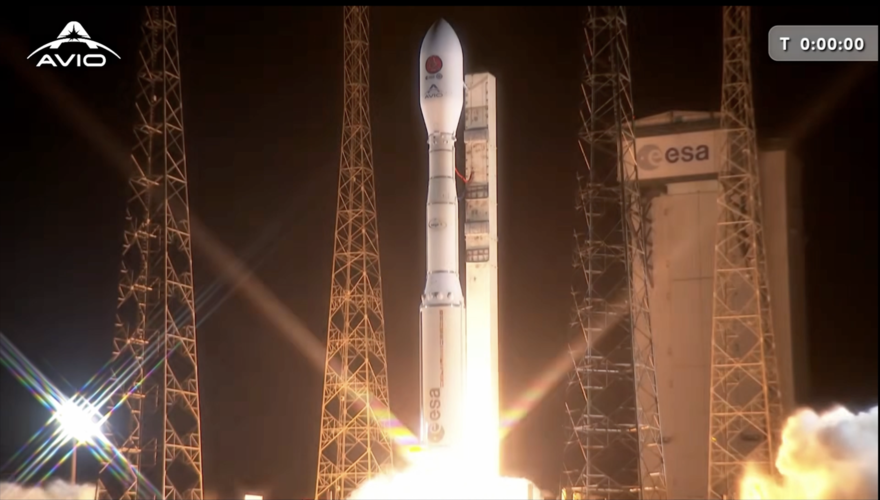
Video:
00:04:00
ESA’s Smile satellite launched aboard a Vega-C rocket from Europe’s Spaceport in French Guiana. The rocket lifted off on at 04:52 BST / 05:52 CEST (00:52 local time) on…
An innovative new mission will probe the mystery of how the Earth’s magnetosphere interacts with the solar wind.
The post SMILE: European Space Weather Mission Launches appeared first on Sky &…
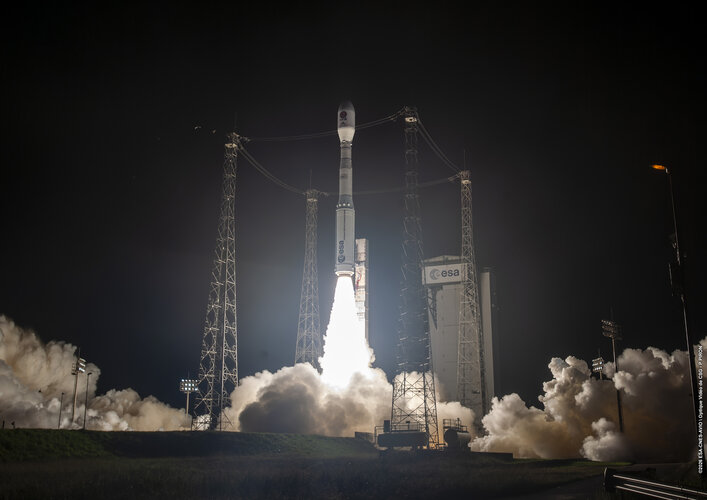
The Smile spacecraft lifted off on a Vega-C rocket from Europe’s Spaceport in French Guiana at 04:52 BST / 05:52 CEST (00:52 local time) on 19 May 2026. The launch marks the beginning of an…
Astronomers have identified the likely source of gas that flows into the maw of the Milky Way’s central black hole, Sagittarius A*.
The post What's Feeding Our Supermassive Black Hole?…

Image:
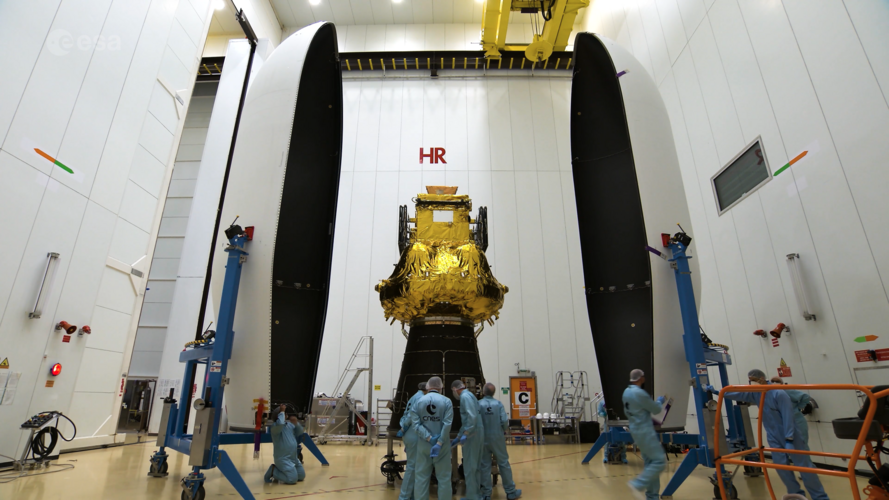
Inspector Smile, chapter 3: the countdown begins
Video:
00:04:42
Before Smile can begin studying how Earth responds to the streams of particles and bursts of radiation from the Sun, the spacecraft had to complete an extraordinary journey…
The Moon, Venus, and Jupiter — the three brightest celestial objects after the Sun — will form up beautifully in twilight this Monday, Tuesday, and Wednesday.
The post This Week's Sky at a…
A planetary odd couple — a mini-Neptune and a hot Jupiter — probably formed much farther away from their star before migrating closer in.
The post How Did This Peculiar Planet Pair Form?…
Two objects that appeared to be galaxies residing in a universe about 150 million years old turn out to be brown dwarfs in the Milky Way.
The post Webb Telescope Reveals Brown Dwarfs Masquerading as…