AI Insight
Northrop Grumman's Cygnus XL cargo spacecraft successfully delivered fresh produce, including oranges, apples, onions, and peppers, to the International Space Station. The resupply mission also transported over 2,300 pounds of scientific hardware, including equipment to study blood stem cells for cancer and blood disorder treatments, gut health research tools, an advanced ESA exercise system, eye-imaging hardware, and spacesuit oxygen and nitrogen tanks. The April 2026 delivery supports both the health of the crew and ongoing scientific research aboard the station.
Why it matters
Regular delivery of fresh food and research equipment is critical to sustaining long-duration human spaceflight by addressing both nutritional needs and advancing medical research with potential applications for Earth-based treatments of cancer, blood disorders, and gastrointestinal conditions.
Understand the Science
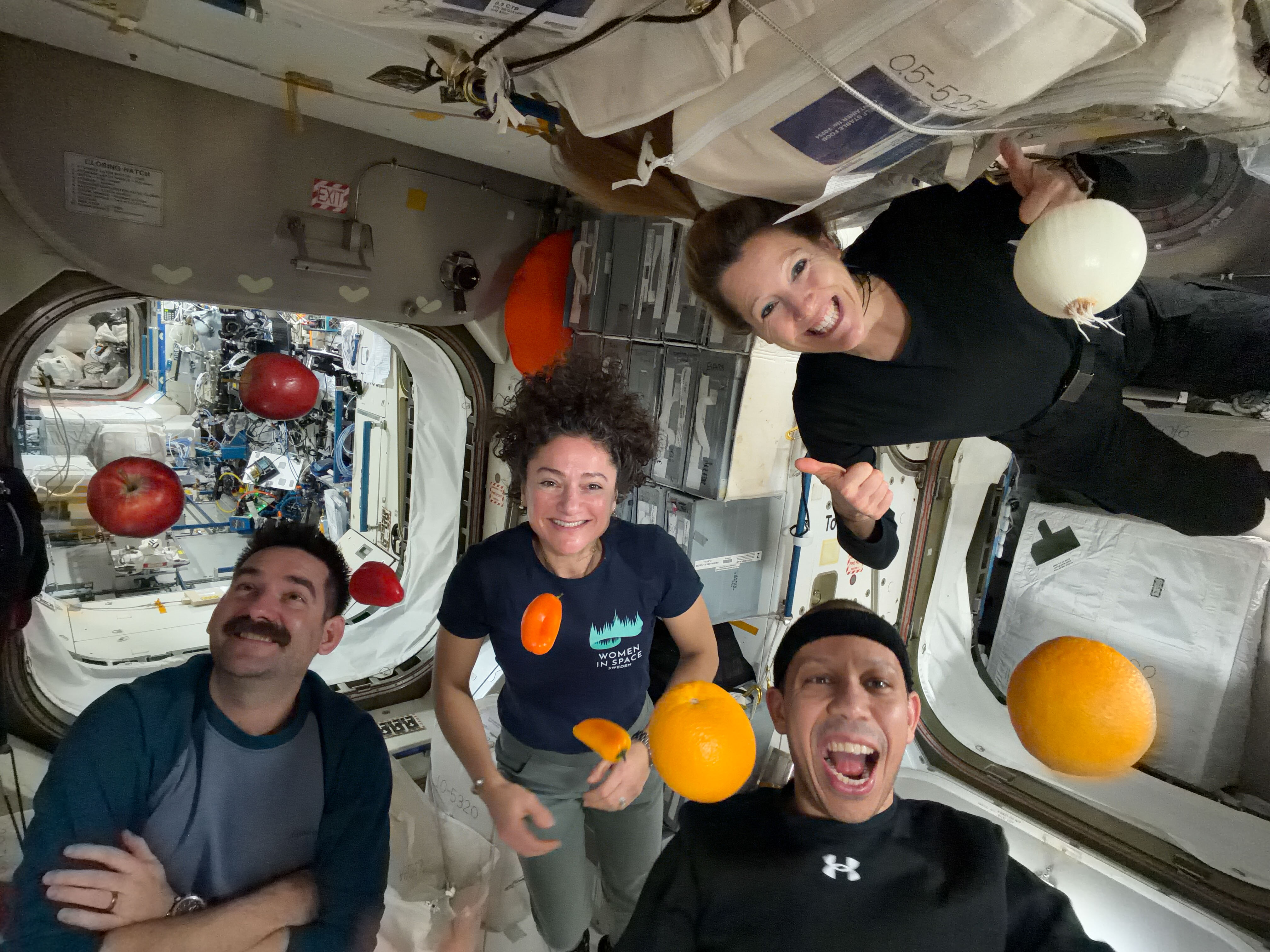
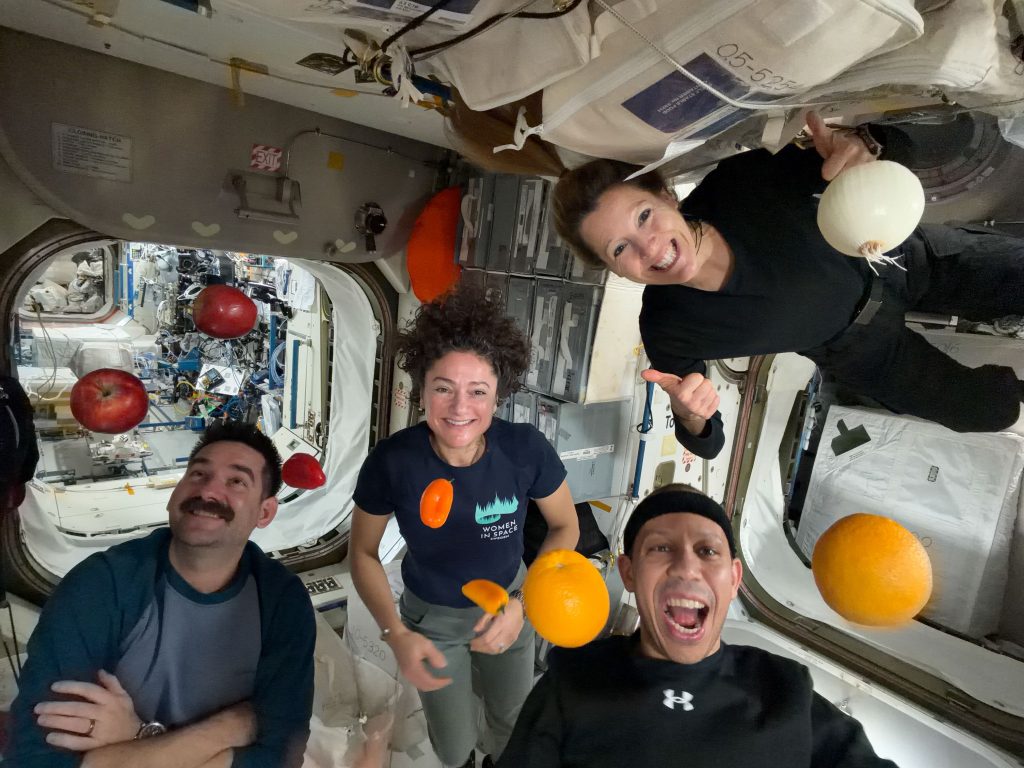
NASA astronauts Jack Hathaway (bottom left), Jessica Meir (middle left), and Chris Williams (bottom right), and ESA (European Space Agency) astronaut Sophie Adenot (top right) have some fun with food and microgravity in this April 19, 2026, photo.
Northrop Grumman’s Cygnus XL cargo spacecraft delivered a shipment of fresh food, including oranges, apples, onions, and peppers, to the International Space Station. Cygnus XL also brought over 2,300 pounds of new research hardware and science experiments that the space station crew will use to explore blood stem cells to treat cancers and blood disorders and study ways to protect astronaut gut health. Other gear delivered aboard Cygnus XL include an advanced exercise system from ESA, new eye-imaging hardware, oxygen and nitrogen tanks to recharge spacesuits, and more.
Image credit: NASA/Chris Williams