AI Insight
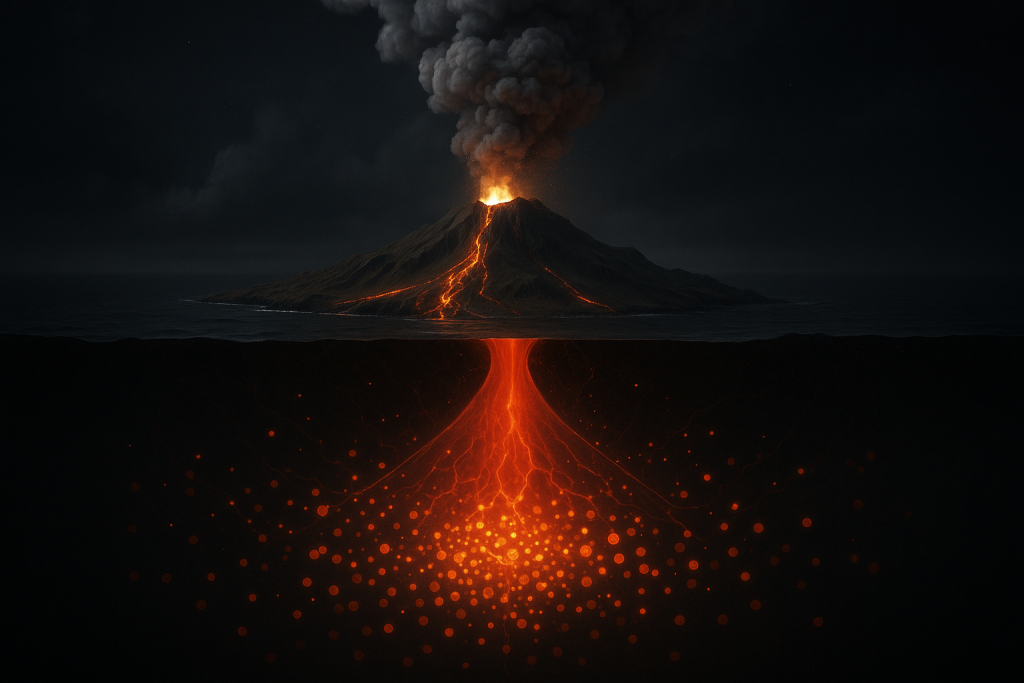
In 2022, a large magma intrusion originated from depths exceeding 20 kilometers beneath São Jorge Island in Portugal's Azores archipelago, ascending rapidly and triggering thousands of seismic events before halting approximately 1.6 kilometers below the surface. The event, characterized as a "failed eruption," involved a volume of magma equivalent to roughly 32,000 Olympic swimming pools and proceeded without producing surface volcanic activity, which led researchers to describe it as a "stealth" intrusion. The study provides new insight into the mechanics of magma ascent and the conditions that determine whether subsurface intrusions result in eruptions or remain confined underground.
Why it matters
Understanding why some magma surges stall before reaching the surface is critical for improving volcanic eruption forecasting and risk assessment in populated island communities. This case offers a rare opportunity to study a large-scale intrusion event with observational data, which could refine monitoring protocols for similar volcanic systems worldwide.
Understand the Science
Deep beneath Portugal’s São Jorge Island, a massive surge of magma silently pushed upward from more than 20 kilometers underground in 2022, triggering thousands of earthquakes and briefly raising fears of a volcanic eruption. Scientists discovered that the molten rock climbed astonishingly fast — enough to fill 32,000 Olympic swimming pools — before stalling just 1.6 kilometers below the surface in what researchers call a “failed eruption.”
Source: Giant “stealth” magma surge triggered thousands of earthquakes beneath Atlantic island