AI Insight
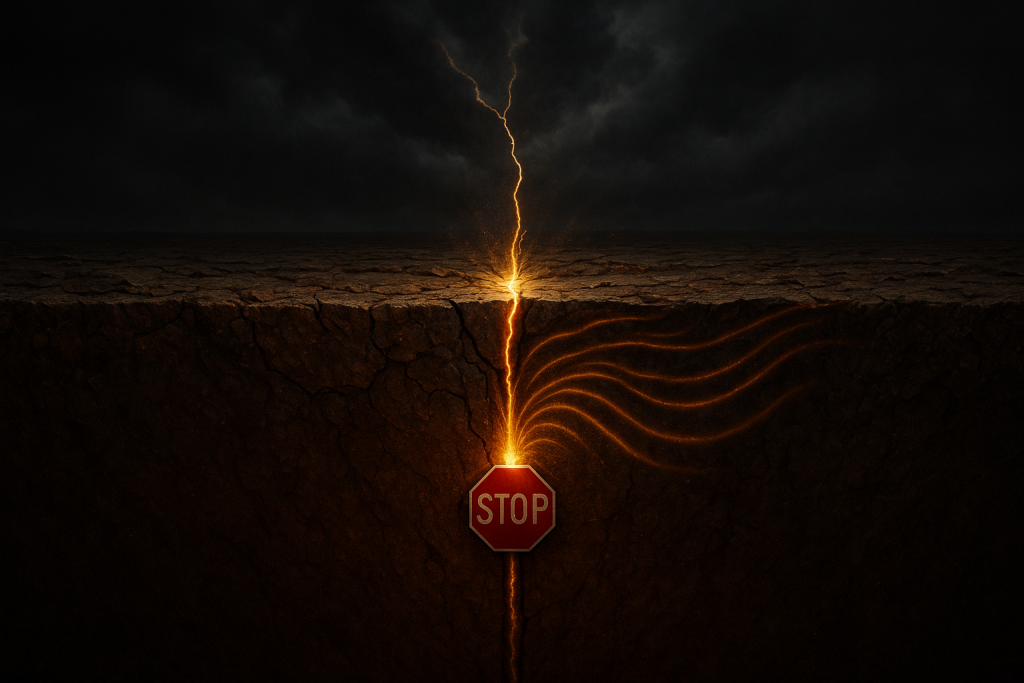
When an earthquake ruptures along a fault and encounters a geological barrier that halts its propagation, it generates a distinct seismic signal known as the "stopping phase." Researchers have successfully isolated this seismic signature from observational data, distinguishing it from other wave signals produced during an earthquake. This stopping phase encodes information about where and how an earthquake terminates, which could improve understanding of fault segmentation and rupture dynamics.
Why it matters
Identifying stopping phases in seismic records could help scientists better characterize fault barriers and segment boundaries, potentially improving probabilistic earthquake hazard assessments for vulnerable regions. This may contribute to more accurate models of maximum expected earthquake magnitudes on specific fault systems.
Understand the Science
When an earthquake rupturing along a fault hits a barrier, it creates a seismic signature called the “stopping phase.” Scientists have isolated this and could use it to better predict earthquake risk