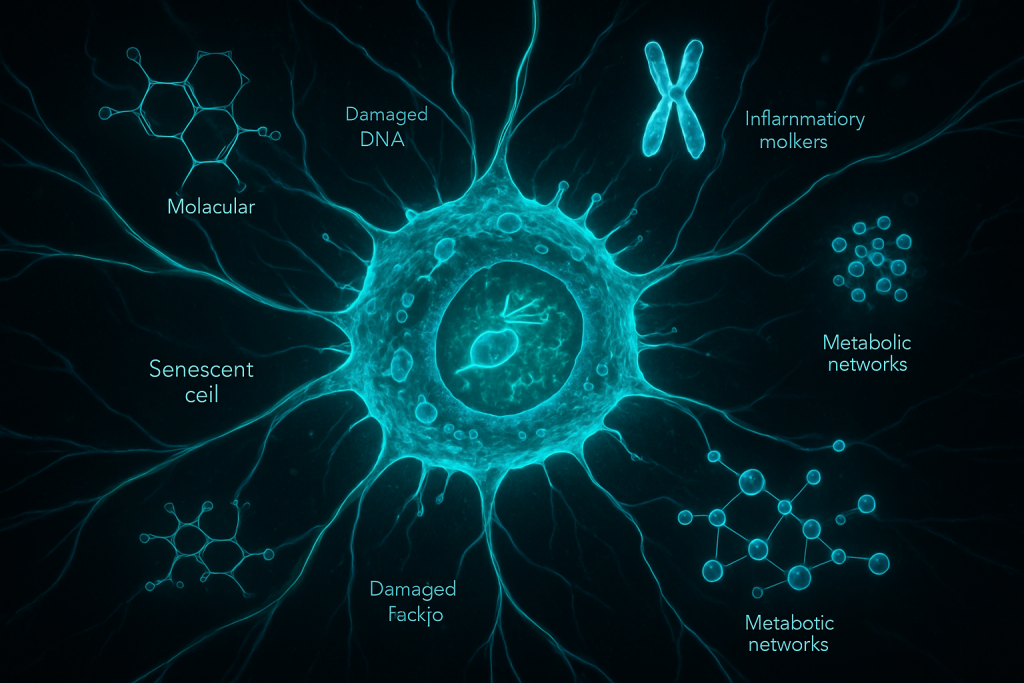
Image generated by AI
AI Insight
Cellular senescence is a state where cells stop dividing but remain metabolically active, accumulating in the body over time. This single biological mechanism connects multiple scientific disciplines—molecular biology, immunology, cancer research, and gerontology—because senescent cells both prevent cancer and accelerate aging through inflammatory secretions called SASP. Understanding senescence requires integrating insights from genetics, pathology, and systems biology to explain how aging and age-related diseases develop.
Why it matters
Senolytic drugs designed to eliminate senescent cells could potentially treat multiple age-related diseases simultaneously by addressing a fundamental aging mechanism rather than targeting individual conditions. Early clinical trials show promise for these therapies, suggesting that senescence research offers a unified therapeutic approach to extending healthspan and improving quality of life in aging populations.
Understand the Science
Cells don’t simply die—they sometimes enter a peculiar state called senescence, where they stop dividing but remain metabolically active, accumulating over time in our bodies. This discovery has exploded from a niche cell biology observation into a fundamental concept reshaping our understanding of aging, cancer, and chronic disease. Senescence now connects genetics, immunology, pathology, and gerontology in ways that could revolutionize how we treat age-related conditions.
Across the Sciences
Cellular senescence illustrates how a single biological mechanism bridges multiple disciplines. In molecular biology and genetics, researchers study the genetic switches that trigger senescence—the telomere shortening and DNA damage checkpoints that force cells into this arrested state. Simultaneously, immunologists are discovering that senescent cells secrete inflammatory molecules called the senescence-associated secretory phenotype (SASP), which triggers immune responses and paradoxically accelerates aging in neighboring tissues. Cancer biologists recognize senescence as a crucial tumor-suppression mechanism—a fail-safe preventing damaged cells from becoming cancerous. Yet this same protective mechanism, when cells accumulate with age, contributes to age-related inflammation and tissue dysfunction, revealing a connection between gerontology and pathology that was previously invisible.
This cross-disciplinary insight extends further into tissue engineering and regenerative medicine, where scientists must balance senescence prevention with cancer risk. Pharmacologists searching for “senolytics”—drugs that eliminate senescent cells—must understand their biological targets from cellular to organismal levels. Meanwhile, clinicians and epidemiologists track how senescence correlates with diseases from arthritis to Alzheimer’s, grounding these discoveries in human health outcomes. The senescence story demonstrates that understanding aging requires contributions from chemistry, systems biology, and medicine working in concert.
Why This Matters for the Future
Senescence research offers a tangible path toward treating multiple age-related diseases simultaneously rather than pursuing disease-specific approaches. If senescent cells genuinely drive aging’s consequences, then senolytics could theoretically extend healthspan—years of healthy life—rather than just lifespan. Already, early clinical trials show promise for senolytic therapies in idiopathic pulmonary fibrosis and other conditions. This interdisciplinary framework also reveals why single-discipline approaches have historically underestimated aging’s complexity; you cannot understand senescence without combining cell biology’s precision with immunology’s systemic perspective. Future breakthroughs will likely emerge from laboratories where geneticists collaborate with geriatricians and computational biologists analyze aging networks alongside immunologists studying inflammation.
Key Takeaways
- Cellular senescence connects molecular biology, immunology, cancer research, and gerontology through a single biological mechanism.
- Senescent cells prevent cancer but accelerate aging—revealing how protective mechanisms can become harmful over time.
- Senolytics represent a potential unified treatment for multiple
🎥 Watch on TED
Explore TED Talks on Biological Discovery and Human Health:
TED content is used under CC BY-NC-ND 4.0. © TED Conferences, LLC.
Frequently Asked Questions
What is the senescence-associated secretory phenotype (SASP) and why does it accelerate aging?
SASP refers to inflammatory molecules that senescent cells secrete into surrounding tissues, triggering immune responses and damaging neighboring healthy cells. This paradoxically accelerates aging because these chronic inflammatory signals accumulate as senescent cells build up over time, contributing to tissue dysfunction and age-related diseases.
How does cellular senescence act as a tumor-suppression mechanism to prevent cancer?
When cells detect DNA damage or telomere shortening, they enter senescence—a state where division stops permanently, preventing damaged genetic material from being replicated into cancerous cells. This fail-safe mechanism essentially arrests potentially dangerous cells before they can transform into tumors.
Why is cellular senescence considered both protective and harmful to human health?
Senescence is protective early in life because it prevents cancer by stopping damaged cells from dividing, but becomes harmful with age as senescent cells accumulate and release SASP molecules that cause chronic inflammation and tissue degeneration. This dual nature reveals why a mechanism evolved to protect us from cancer paradoxically contributes to age-related diseases.
What genetic triggers force cells into senescence?
Telomere shortening (the erosion of protective caps on chromosomes after repeated cell division) and DNA damage checkpoints are primary genetic triggers that force cells into senescence. These mechanisms act as cellular alarms that stop division when chromosomal integrity is compromised.