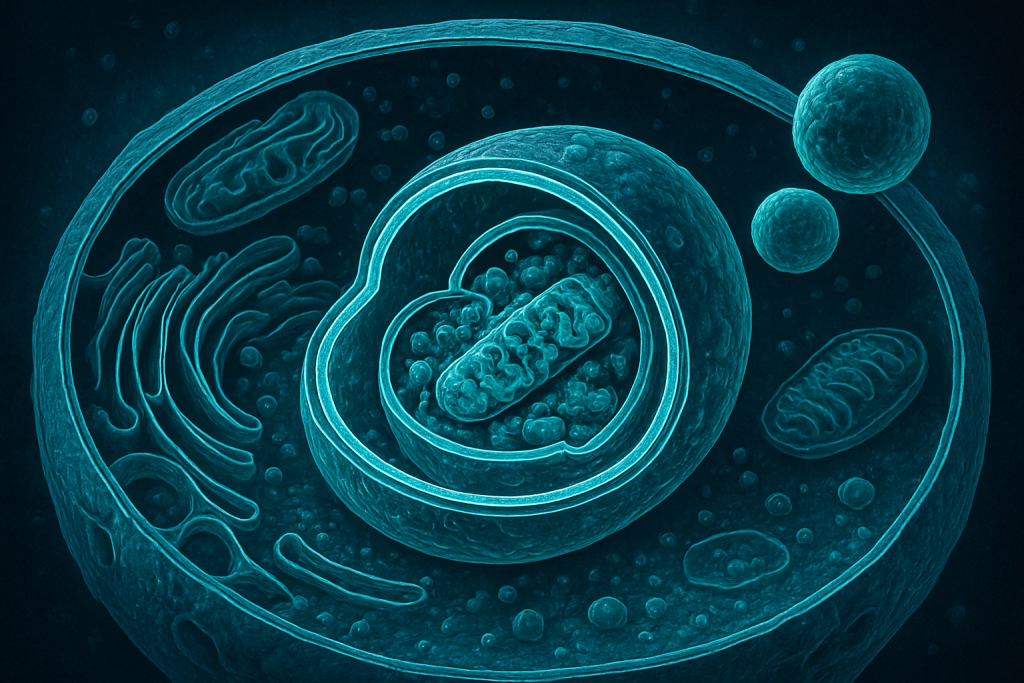
Image generated by AI
AI Insight
Autophagy is a cellular recycling process where cells enclose damaged components, old organelles, and misfolded proteins in membrane structures called autophagosomes, which then fuse with lysosomes for degradation and reuse of molecular building blocks. This process is regulated by nutrient-sensing pathways like mTOR and increases during periods of stress, starvation, or infection. Defective autophagy is linked to cancer, neurodegenerative diseases like Alzheimer's and Parkinson's, and accelerated aging.
Why it matters
Understanding autophagy has revealed potential therapeutic strategies for treating age-related diseases and cancer, either by enhancing the process in neurodegeneration or suppressing it in tumors. This research also explains the molecular basis for health benefits associated with intermittent fasting, caloric restriction, and exercise, opening new avenues for extending healthy lifespan.
Understand the Science
Your cells are constantly eating themselves. This isn’t a sign of disease—it’s one of nature’s most elegant recycling programs, called autophagy, and it’s essential for keeping your body healthy and fighting off everything from infections to cancer. Understanding this cellular cleanup process has revolutionized how scientists think about aging, disease, and longevity.
How It Works in Nature
Autophagy, literally “self-eating,” is a cellular housekeeping mechanism where a cell wraps damaged or worn-out components—old organelles, misfolded proteins, or invading pathogens—in a membrane bubble called an autophagosome. This bubble then fuses with a lysosome, a cellular compartment filled with digestive enzymes, which breaks down the contents into their basic building blocks. These recycled molecules are then reused to build new cellular structures or generate energy, allowing the cell to maintain itself without constantly demanding fresh nutrients from outside.
The process is tightly regulated and ramps up during stress, starvation, or infection. Cells activate autophagy through molecular switches like the mTOR pathway, which senses nutrient availability. When food is scarce, autophagy kicks into high gear; when nutrients are abundant, it quiets down. This elegant system has been preserved across all eukaryotic life, from yeast to humans, suggesting its fundamental importance to cellular survival.
Medical and Scientific Relevance
Defective autophagy is now linked to multiple diseases. Cancer cells often hijack autophagy to survive and grow, making it a therapeutic target. Neurodegenerative diseases like Alzheimer’s and Parkinson’s involve the buildup of toxic proteins that autophagy normally clears—when the system fails, these proteins accumulate and damage neurons. Conversely, boosting autophagy through fasting, exercise, or drugs like rapamycin has shown promise in extending lifespan and improving health in animal models.
The 2016 Nobel Prize in Physiology or Medicine was awarded for discoveries illuminating autophagy’s mechanisms, underscoring its clinical importance. Researchers are now developing drugs to enhance autophagy in aging and neurodegeneration, or suppress it in cancers. Understanding this process has also revealed why intermittent fasting and caloric restriction may benefit human health—they activate cellular renewal pathways.
Key Takeaways
- Autophagy is a cellular recycling system that breaks down damaged components and reuses their building blocks.
- Dysregulation of autophagy contributes to cancer, neurodegeneration, and aging-related diseases.
- Activating autophagy through lifestyle changes or drugs represents a promising frontier in treating age-related diseases and extending healthy lifespan.
Explore TED Talks on Molecular Biology/Cellular Biology:
TED content is used under CC BY-NC-ND 4.0. © TED Conferences, LLC.
Frequently Asked Questions
How does the mTOR pathway sense nutrient availability to regulate autophagy?
The mTOR pathway acts as a nutrient sensor by detecting amino acid and glucose levels in the cell; when nutrients are abundant, mTOR remains active and suppresses autophagy, but when nutrients are scarce, mTOR inhibition allows autophagy-promoting factors to activate the process.
What is the difference between an autophagosome and a lysosome in the autophagy process?
An autophagosome is a double-membrane vesicle that wraps around damaged cellular components, while a lysosome is a pre-existing organelle containing digestive enzymes that fuses with the autophagosome to break down its contents. The fusion of these two structures creates the functional degradative compartment.
Why is autophagy considered a recycling program rather than simple cellular waste disposal?
Autophagy recycles broken-down molecules into basic building blocks that are reused to construct new cellular structures or generate ATP for energy, rather than excreting them as waste, making it an efficient resource-conservation mechanism for the cell.
How does autophagy help cells defend against infections?
Autophagy can engulf invading pathogens within autophagosomes and deliver them to lysosomes for degradation, a process called xenophagy, which eliminates bacteria and viruses before they can replicate or spread within the cell.