AI Insight
NASA has begun assembling the Space Launch System rocket for the Artemis III mission, with the first solid rocket booster segment arriving at Kennedy Space Center's Vehicle Assembly Building. The mission, targeted for mid-to-late 2027, will send four astronauts to low Earth orbit for approximately two weeks to test rendezvous and docking procedures with prototype lunar landers from SpaceX and Blue Origin. Unlike Artemis II, which circled the moon, Artemis III will focus on validating critical spacecraft technologies and procedures needed for future lunar surface missions.
Why it matters
This mission represents a crucial intermediate step in NASA's Artemis program to return humans to the moon, allowing astronauts to practice essential docking maneuvers and test lunar surface equipment in a lower-risk environment before attempting actual moon landings. The testing of two commercial lunar lander systems demonstrates NASA's strategy of partnering with private companies for sustained lunar exploration.
Understand the Science
The assembly of NASA’s next Artemis rocket is well underway, with the recent arrival of one of the launch vehicle’s solid fuel booster sections to the agency’s integration facility at Kennedy Space Center in Florida.
The bottom segment of the left-hand solid rocket booster (SRB) that will help launch Artemis III was transported to KSC’s Vehicle Assembly Building (VAB) this week, according to a NASA social media post. It’s one of two SRBs that will be affixed to either side of NASA’s Space Launch System (SLS) rocket, which together provide a combined 7.2 million pounds of force — more than 75% of the rocket’s power at liftoff.
“Soon, assembly of the rocket will begin as we prepare to send crew aboard Orion to test the rendezvous and docking capabilities needed for future lunar landings,” the NASA post said.
It took about one year for NASA to stack the Artemis II SLS once each of the rocket’s components were delivered to the VAB. The same timeline gives Artemis III a small amount of wiggle room, as it progresses toward a targeted launch in mid-to-late 2027 — and stacking of the entire rocket may not begin immediately.
The Artemis III SLS core stage arrived in the VAB in May. Unlike the core stage’s arrival for Artemis II, Artemis III’s was delivered without the engine section. Once that’s attached, it may be some time before other components are stacked onto the main vehicle. NASA Administrator Jared Isaacman has said that the agency aims to complete a wet dress rehearsal on the rocket before the end of the year. In the meantime, other SLS components and SRB segments will continue arriving at the VAB.
Each SRB stands about 177 feet (54 meters) tall. They’re packed with polybutadiene acrylonitrile (PBAN), ammonium perchlorate, and aluminum powder, which bring their combined weight to 3.2 million pounds (1.45 million kg). Unlike liquid-fueled rocket engines, once the SRBs’ solid propellants ignite, they cannot be turned off. Without them, the four RS-25 engines on SLS’s core stage would not be powerful enough to lift the rocket off the launch pad.
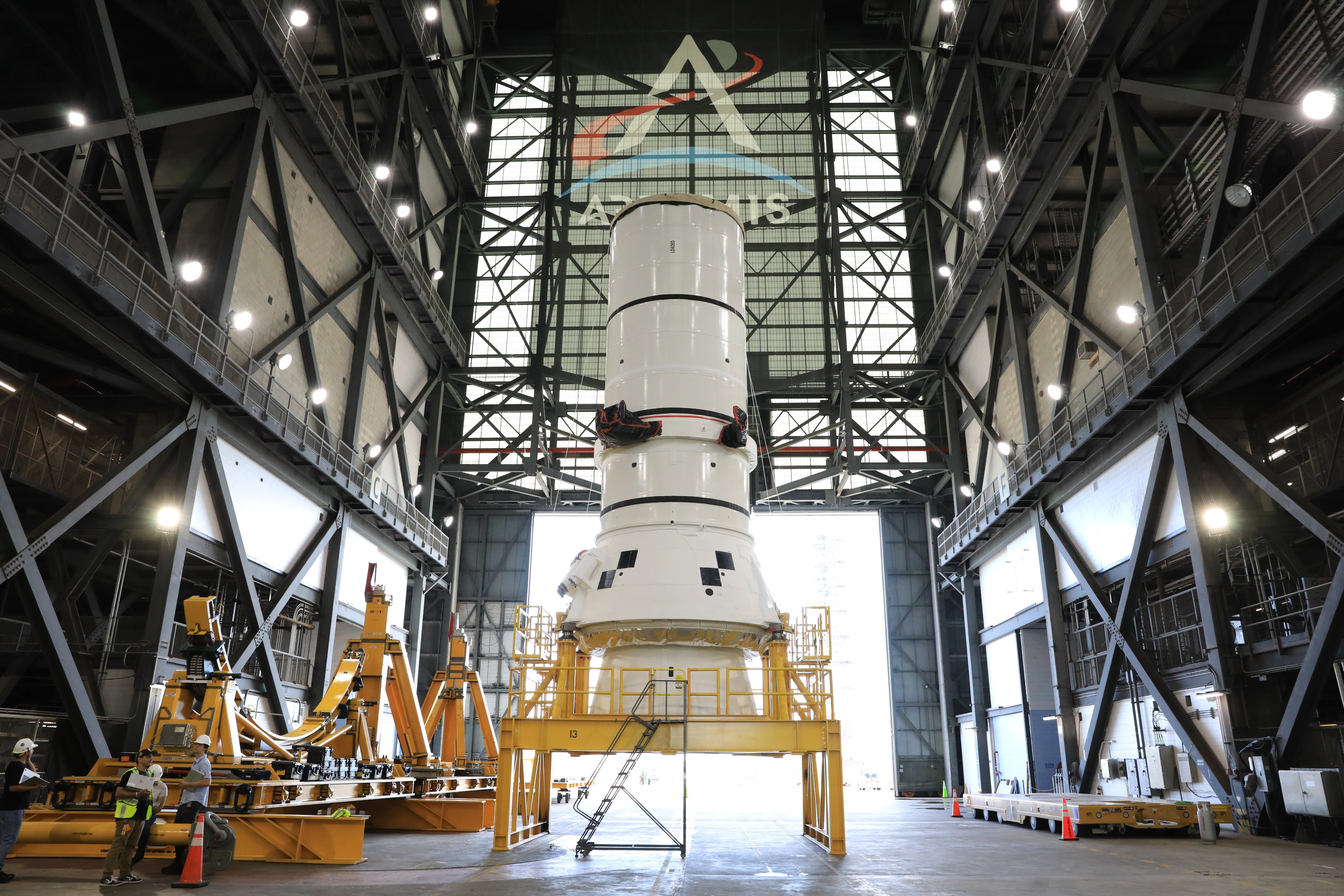
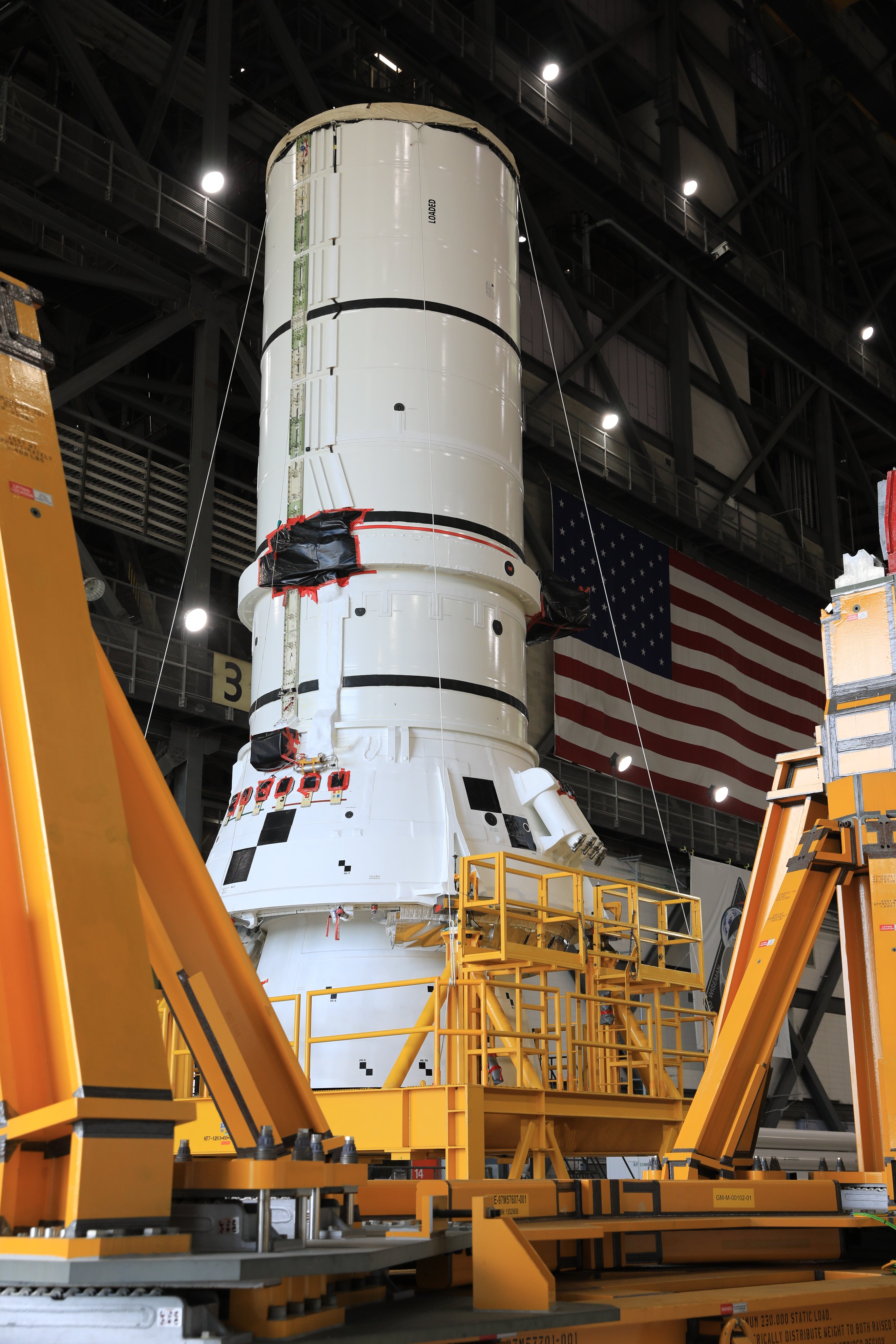
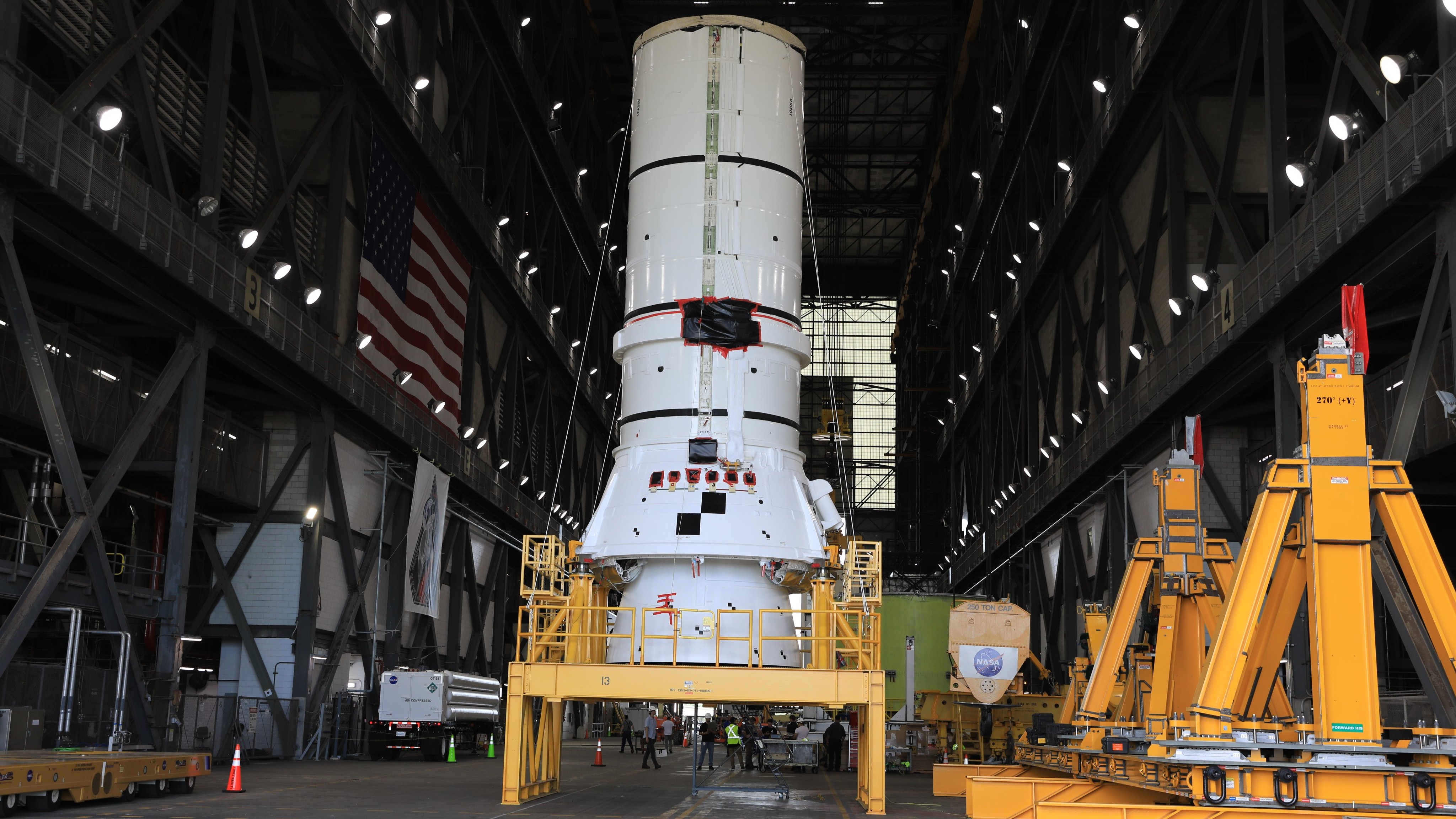
Artemis III will be the second crewed mission of the Artemis program — NASA’s next-generation push to return astronauts to the moon. And, while Artemis III itself won’t actually fly to the moon, it will help progress the hardware and spacecraft technologies the space agency needs to ensure success on future missions to the lunar surface.
Like Artemis II, which flew four astronauts on a 10-day mission around the moon in April, the Artemis III astronauts will launch on SLS aboard the Orion spacecraft — but they won’t fly beyond low Earth orbit this time. Instead, the four-person crew will spend about two weeks testing out rendezvous and docking procedures with prototypes for the two Artemis moon landers, both of which have been privately contracted by NASA.
Big move for @NASAArtemis III!The left-hand aft assembly solid rocket booster segment for NASA’s Space Launch System arrived at the Vehicle Assembly Building at Kennedy Space Center. This segment is part of one of two boosters that will provide more than 75% of the rocket’s… pic.twitter.com/L7k4Qh3Jn9July 8, 2026
The space agency has partnered with SpaceX and Blue Origin for those vehicles, each of which is expected to launch once the Artemis III crew are on orbit. They’ll first meet up with Blue Origin’s lander, Blue Moon. After docking, the astronauts will have the opportunity to enter Blue Moon’s crew cabin, where they will also have the chance to test parts of the Artemis extravehicular activity (EVA) suit designed for astronauts to wear on the lunar surface.
A rendezvous with SpaceX’s Starship will follow Orion’s stint with Blue Moon. SpaceX has indicated it will fly a boilerplate Starship V3 (Version 3) vehicle equipped with a docking adapter, but it will not have a crew cabin. V3 is SpaceX’s newest version of Starship, which has been upgraded for high launch efficiency and capacity, but it will lack a fully developed life support system in time for the Artemis III launch next year.
If all goes according to plan and NASA is able to maintain its current mission timeline, the first moon landing of the Artemis program will take place on Artemis IV, scheduled to launch in late 2028.
Source: NASA begins stacking rocket ahead of 2027 Artemis III astronaut launch (photos)