AI Insight
NASA's Nancy Grace Roman Space Telescope successfully launched aboard a SpaceX Falcon Heavy rocket from Kennedy Space Center in Florida on August 30, 2026. The telescope is named after NASA's first chief astronomer and is designed to survey billions of stars and galaxies with a field of view significantly larger than the Hubble Space Telescope. Roman's primary scientific objectives include studying dark energy, discovering and characterizing exoplanets, and investigating the evolution of the universe.
Why it matters
This mission represents a major advancement in astronomical observation capabilities, with its wide-field imaging allowing scientists to conduct large-scale surveys of the cosmos more efficiently than previous space telescopes. The data collected will help answer fundamental questions about the universe's expansion, the nature of dark energy, and the prevalence of planetary systems beyond our solar system.
Understand the Science
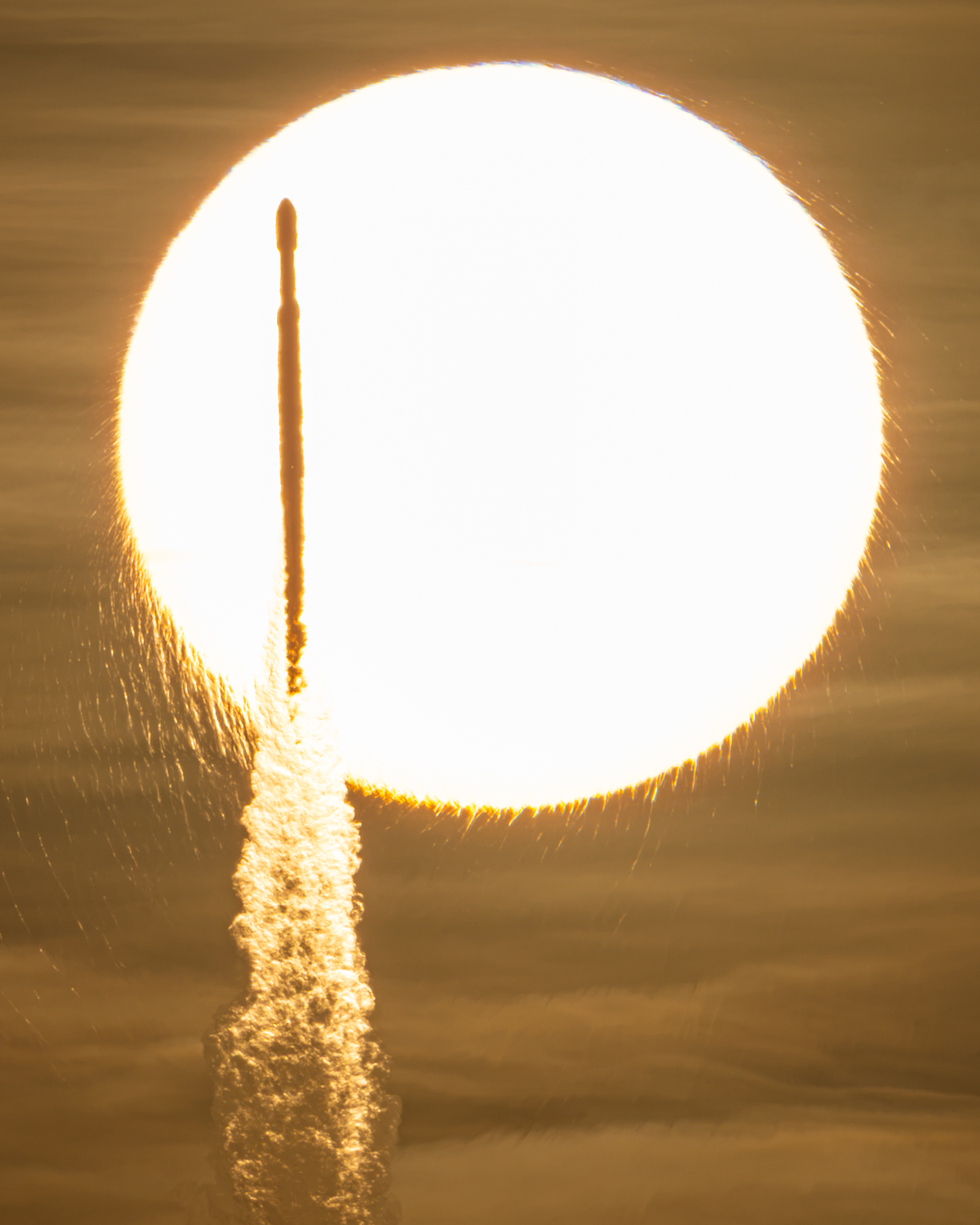
NASA’s Nancy Grace Roman Space Telescope, aboard a SpaceX Falcon Heavy rocket, transits the Sun during launch from the agency’s Kennedy Space Center in Florida on Aug. 30, 2026. Roman is named after the agency’s first chief astronomer.
Roman will survey billions of stars and galaxies with a field of view far larger than Hubble’s, helping scientists study dark energy, exoplanets, and the evolution of the universe.
Follow along with Roman’s journey.
Image credit: NASA/John Kraus