AI Insight
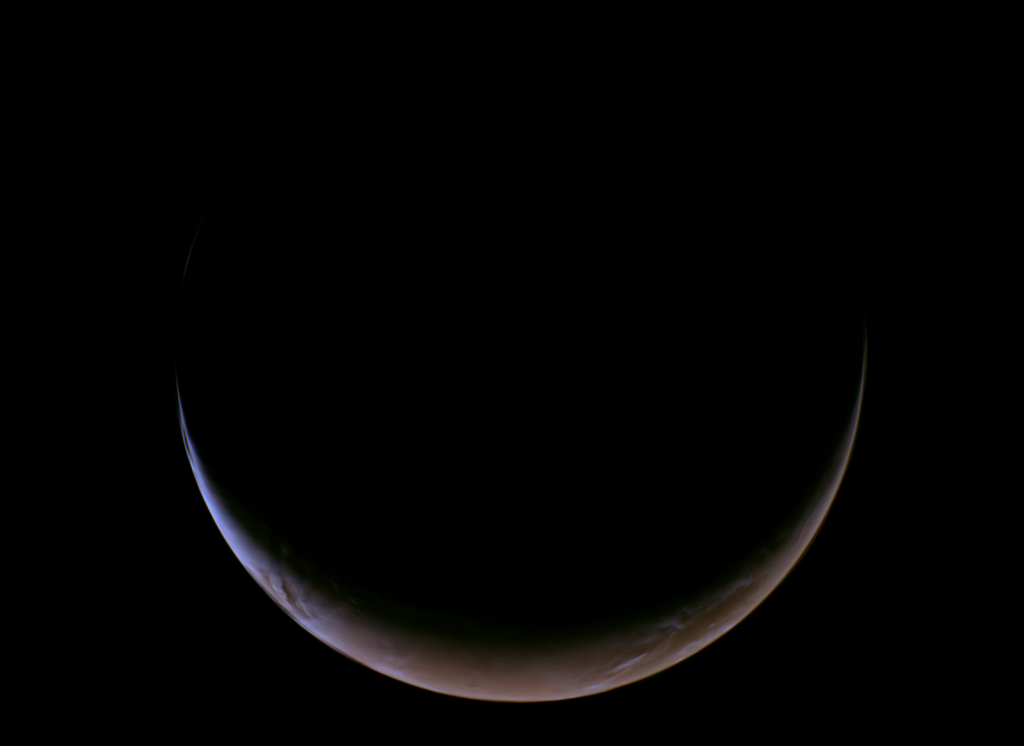
On May 15, 2026, NASA's Psyche spacecraft captured images of Mars as a thin crescent during its gravity assist flyby approach. The multispectral imager instrument recorded the planet from a high phase angle, where sunlight illuminated only a sliver of the Martian disk. Notably, the crescent appeared brighter and extended farther around the planet's limb than expected, attributed to strong forward-scattering of sunlight through Mars's dust-laden atmosphere.
Why it matters
This observation provides useful data on the optical scattering properties of the Martian atmosphere and validates the performance of Psyche's multispectral imager during an active mission phase. The gravity assist maneuver itself is a critical navigational step that adjusts the spacecraft's trajectory toward its ultimate target, the metal-rich asteroid 16 Psyche.
NASA’s Psyche Mission Images the Crescent of Mars
NASA/JPL-Caltech/ASU
Description
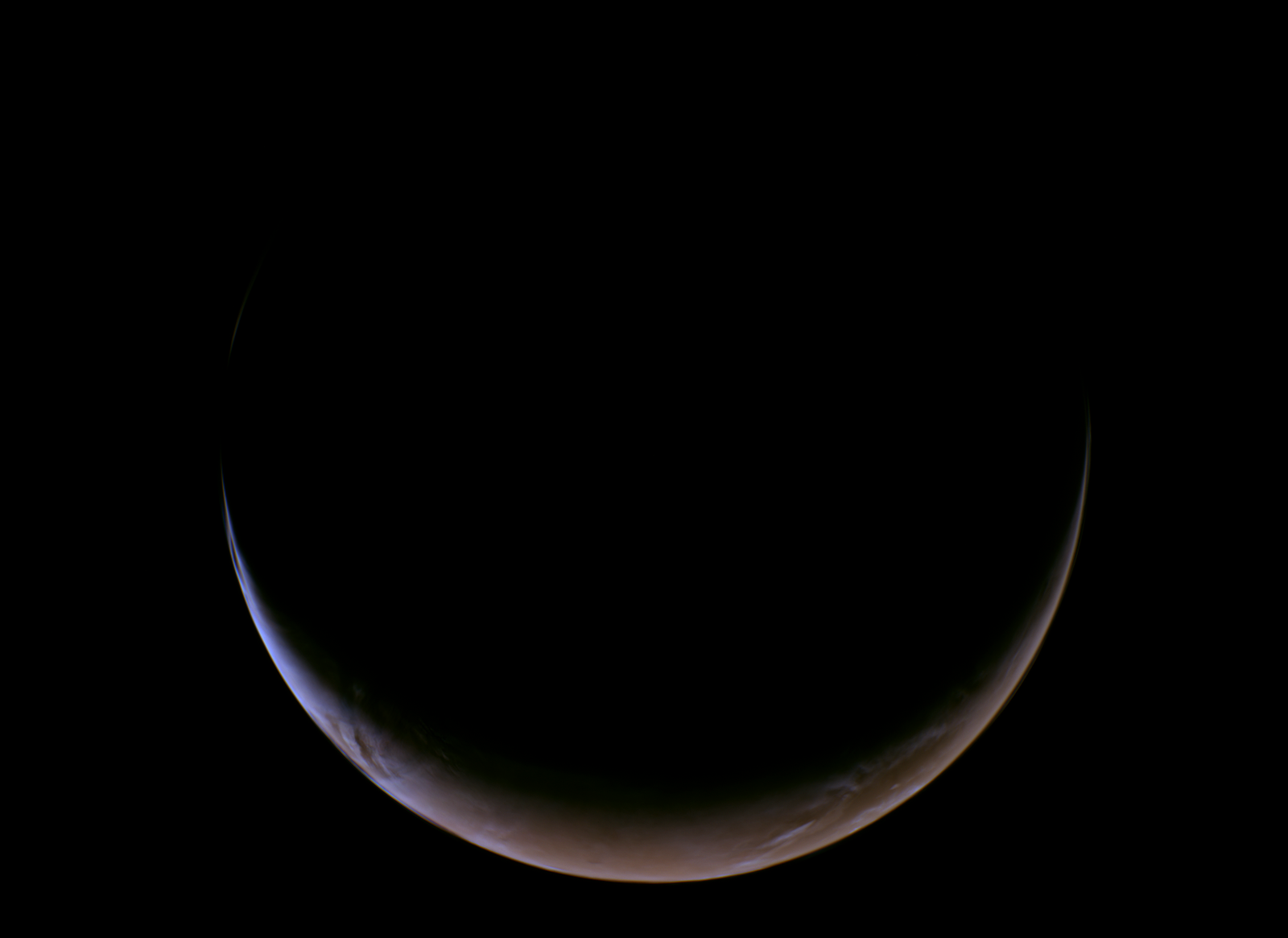
This view of a crescent Mars was captured on May 15, 2026, at about 5:03 a.m. PDT by NASA’s Psyche mission as it approached the planet for a gravity assist. Captured by the spacecraft’s multispectral imager instrument, this was the last view of the whole planet before it began to overfill the field of view of the camera.
Because Psyche approached Mars from a high phase angle, the planet appeared as a thin crescent in the days running up to the close approach, lit by sunlight reflecting off its surface. In observations from the spacecraft’s multispectral imagers, the crescent appeared brighter and extended farther around the planet’s disk than anticipated because of the strong scattering of sunlight through the planet’s dusty atmosphere.
The image was acquired with Imager A. It has been processed into a natural-color view (approximating what the human eye would see) using red, green, and blue data from imager filters.
For more information about NASA’s Psyche mission, visit: