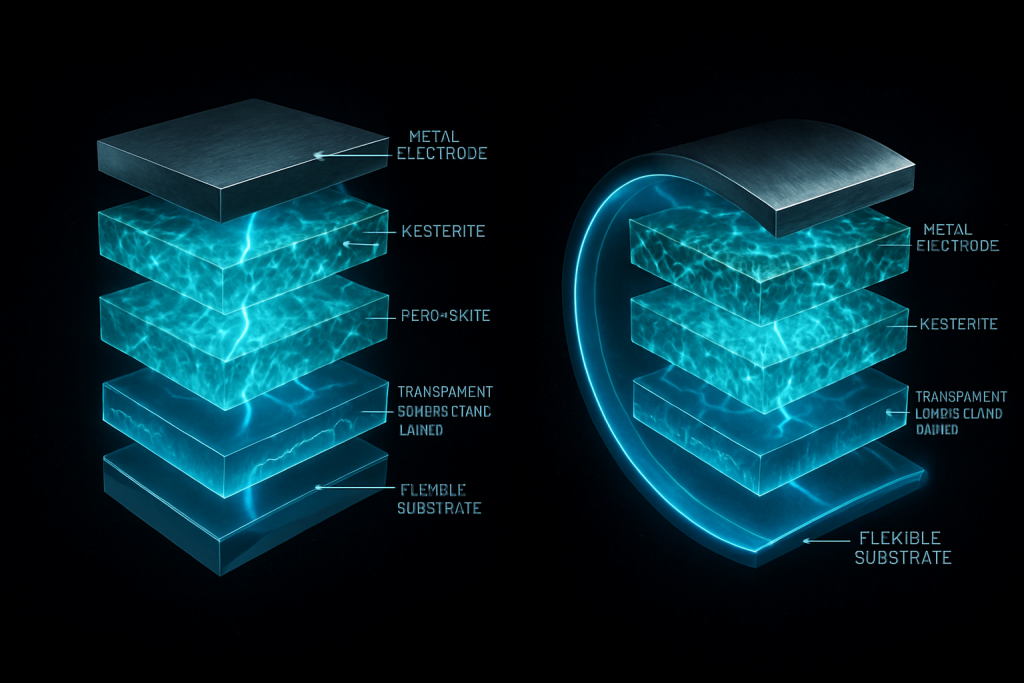
Image generated by AI
AI Insight
Researchers have developed tandem solar cells combining kesterite and perovskite materials that achieve power conversion efficiencies exceeding 20% on both rigid and flexible substrates. The kesterite layer (Cu2ZnSnS4) serves as the bottom cell while the perovskite layer functions as the top cell in this two-terminal tandem architecture. This advancement demonstrates that earth-abundant, non-toxic kesterite materials can be effectively paired with perovskites to create high-efficiency photovoltaic devices suitable for diverse applications.
Why it matters
This breakthrough addresses critical concerns about solar cell sustainability by utilizing abundant, low-toxicity materials while maintaining competitive efficiency levels. The demonstration on flexible substrates opens possibilities for lightweight, portable solar applications and integration into curved surfaces or wearable electronics.
Understand the Science