AI Insight
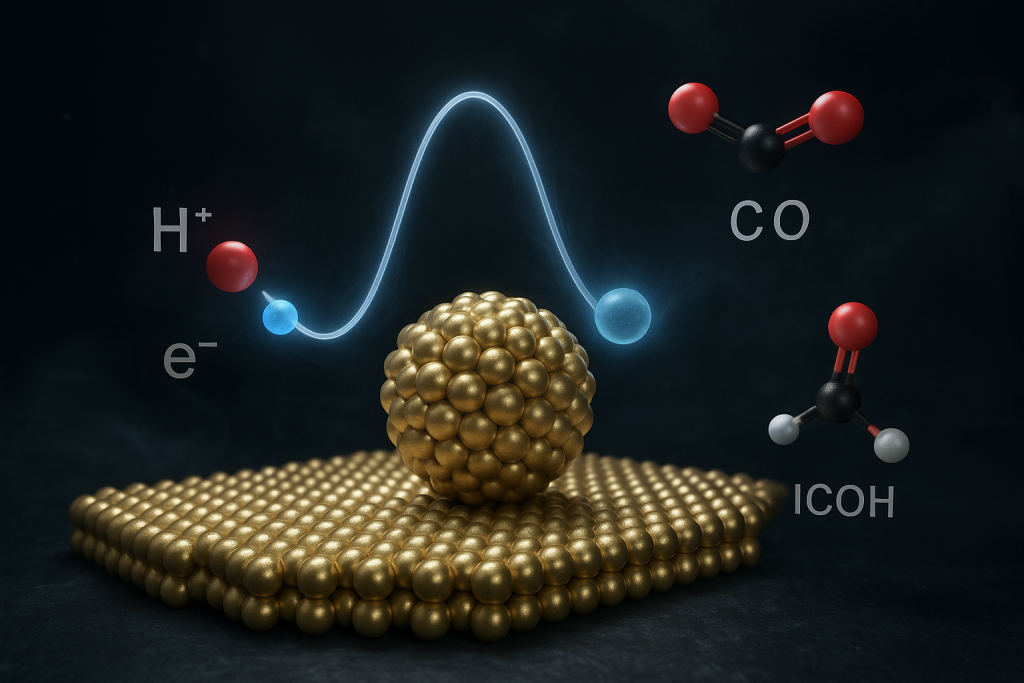
This study applies Marcus-Hush-Chidsey (MHC) kinetic theory to investigate how the electrochemical microenvironment, specifically the effects of cations, influences the CO2 reduction reaction (CO2RR) on gold electrodes. By using experimentally accessible variables, the researchers demonstrate that MHC theory can systematically quantify and disentangle the complex contributions of interfacial cations to electron transfer kinetics at the electrode surface. The work provides a mechanistic framework for understanding how the local chemical environment at electrochemical interfaces shapes catalytic performance in CO2 electroreduction.
Why it matters
Understanding and controlling microenvironmental effects in CO2 electroreduction is essential for designing more efficient electrocatalysts that convert CO2 into valuable chemical feedstocks, which has direct relevance to carbon capture and utilization strategies aimed at reducing greenhouse gas emissions.
Understand the Science
Nature Chemistry, Published online: 05 December 2025; doi:10.1038/s41557-025-02010-8
Electrochemical interfaces play a crucial role in governing electrode-mediated electron transfer processes, but elucidating the complex effects of the microenvironment remains challenging. Now it has been shown that the Marcus–Hush–Chidsey theory can be used to systematically analyse cation effects on the Au-catalysed CO2 reduction reaction with experimentally accessible variables.