AI Insight
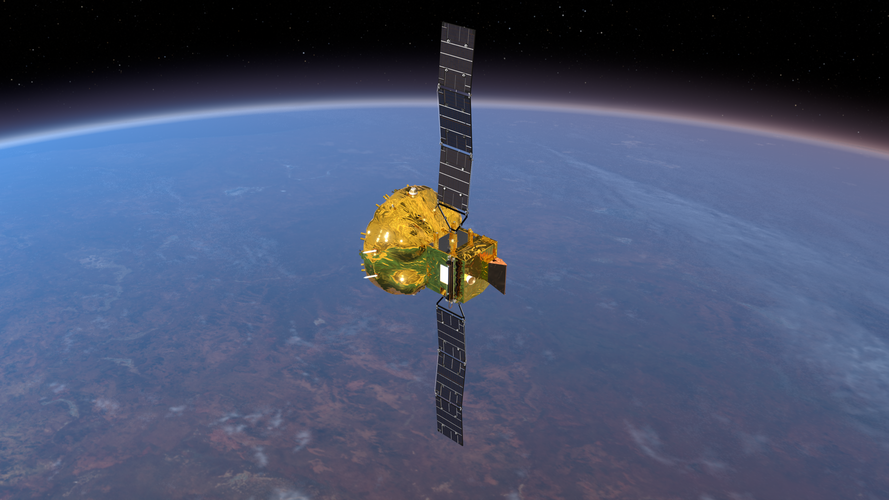
The SMILE (Solar wind Magnetosphere Ionosphere Link Explorer) mission, a joint project between the European Space Agency and the Chinese Academy of Sciences, is set to launch aboard a Vega-C rocket from French Guiana on 19 May into an initial circular orbit 700 km above Earth. The spacecraft will then perform 11 engine burns to raise its orbit over Earth's North Pole, positioning itself to observe the interaction between the solar wind and Earth's magnetosphere. Using X-ray and ultraviolet instruments, SMILE will provide an unprecedented global view of how Earth's magnetic shield responds to streams of charged particles and radiation from the Sun.
Why it matters
Understanding the dynamics of Earth's magnetosphere and its response to solar activity has direct implications for protecting satellites, power grids, and communications infrastructure from space weather events. SMILE's observations could significantly improve our ability to forecast geomagnetic storms and their potential impacts on modern technological systems.
Understand the Science

Video:
00:02:43
Our next space science mission is about to begin its space adventure.
After more than 10 years of designing, developing, building and testing, Smile is now ready for action.
Its ride to space will be a Vega-C rocket, departing from Europe’s Spaceport in French Guiana on 19 May. The rocket will drop Smile off in a circular orbit 700 km above Earth’s surface.
Smile will then fire its own engines 11 times, taking itself higher and higher above the North Pole. From there, it will use X-ray and ultraviolet vision to watch how Earth defends itself from streams of particles and bursts of radiation from the Sun. Nobody has ever seen Earth’s magnetic shield like this before.
Smile (the Solar wind Magnetosphere Ionosphere Link Explorer) is a joint mission between the European Space Agency and the Chinese Academy of Sciences.
Learn more about Smile.