AI Insight
SpaceX has rescheduled the Flight 13 test launch of its Starship megarocket to July 23, following an abort during the previous attempt on July 16 caused by engine issues during pre-launch firing. The 408-foot-tall fully reusable vehicle will launch from Starbase in South Texas, carrying 20 next-generation Starlink V3 satellites on a suborbital trajectory, with plans for both the Super Heavy booster and Ship upper stage to perform controlled ocean landings. This will be the second test of Starship Version 3, the variant intended for NASA's Artemis lunar missions and future Mars operations.
Why it matters
This test flight represents a critical step in developing the launch system that will transport astronauts to the Moon under NASA's Artemis program and eventually enable Mars missions. The flight will also debut SpaceX's Starlink V3 satellites, which are central to the company's plan to deploy a 100,000-satellite constellation for global internet coverage using Starship as the exclusive launch vehicle.
Understand the Science
SpaceX has pushed the next launch of its Starship megarocket back a few more days.
Elon Musk‘s company is now targeting Thursday (July 23) for Flight 13 of Starship, the giant, fully reusable vehicle it’s developing to help get people to the moon and Mars, among other spaceflight tasks.
If all goes to plan, the 408-foot-tall (124.4 meters) Starship will lift off from SpaceX‘s Starbase site in South Texas on Thursday during a 90-minute window that opens at 6:45 p.m. EDT (2245 GMT; 5:45 p.m. local Texas time). You can watch the action live here at Space.com, courtesy of SpaceX.
It will be the second launch attempt for Starship Flight 13. The first came last Thursday (July 16) and ended in an abort, which occurred just as the giant rocket’s 33 first-stage Raptor engines were firing up.
“To be confident of a good flight, 2 Raptors will be removed & replaced. Most probable launch timing is early next week,” Musk said on July 16 via X, the social media platform he owns.
SpaceX first targeted today (July 20) for Flight 13’s second try. On Sunday (July 19), however, the company announced that it had pushed that date back to no earlier than Thursday.
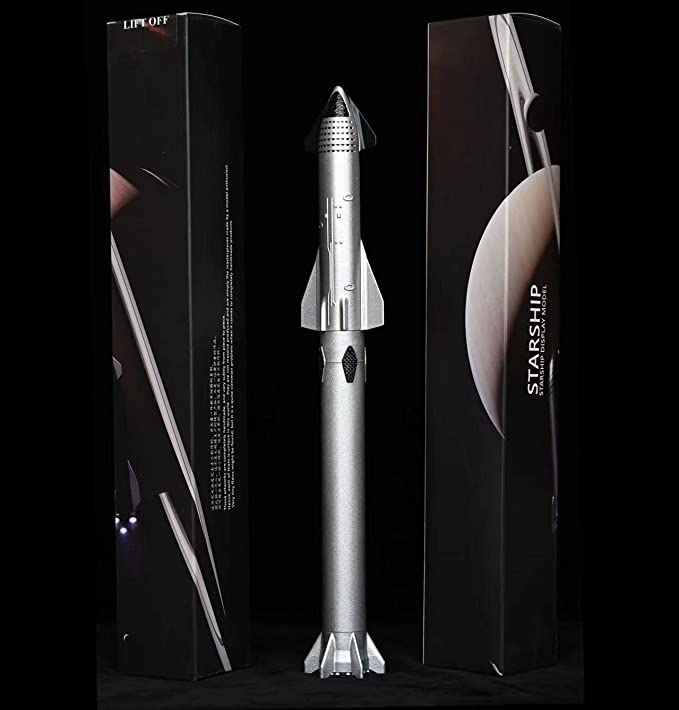
Starship Die Cast Rocket Model Was $47.99 Now $39.99 on Amazon.
Even if you can’t see SpaceX’s Starship in person, you can score a model of your own. Standing at 13.77 inches (35 cm), this is a 1:375 ratio of SpaceX’s Starship as a desktop model. The materials here are alloy steel and it weighs just 225g.View Deal
Flight 13 will be the second launch of Starship Version 3 (V3), the latest, most advanced iteration of the megarocket. V3 is the variant that will land astronauts on the moon for NASA’s Artemis program and fly SpaceX’s first Mars missions, if all goes to plan.
The plan for the upcoming suborbital launch is similar to that of Flight 12, which lifted off on May 22. Starship’s Super Heavy first stage will aim to steer itself back to Earth for a controlled splashdown in the Gulf of Mexico, while the Ship upper stage will do the same halfway around the world, off the coast of Western Australia.
SpaceX accomplished the latter objective on Flight 12 but not the former; Super Heavy suffered engine issues during its return to Earth and ended up hitting the Gulf waters hard.
Flight 13 will do a few new things, however. For example, it will carry 20 of SpaceX’s next-gen Starlink V3 internet satellites, which have never flown to space before. SpaceX plans to build a constellation of 100,000 Starlink V3 spacecraft in low Earth orbit over the coming years, and Starship will do all of the heavy lifting.
These 20 Starlinks won’t stay aloft for long, however. Since Ship is flying on a suborbital trajectory, the satellites will come back to Earth relatively quickly — about 20 minutes after deployment, according to SpaceX’s Flight 13 mission description.
Starship debuted in April 2023. All of its test flights to date have been suborbital.
Source: SpaceX targets July 23 for crucial Starship Flight 13 test launch after abort