AI Insight
SpaceX experienced two consecutive last-second launch aborts within days: a Falcon 9 rocket carrying 24 Starlink satellites from Vandenberg Space Force Base on July 20, 2026, and the Starship Flight 13 test on July 16. The aborts are likely unrelated as they involve different vehicles - the proven Falcon 9 with 84 successful launches in 2026 versus the developmental Starship megarocket - powered by different engine systems (Merlin 1D versus Raptor engines). SpaceX has rescheduled both launches, with the Starlink mission planned for July 21 and Starship Flight 13 for July 23 after replacing two Raptor engines.
Why it matters
These launch aborts demonstrate standard safety protocols in commercial spaceflight operations and highlight the different operational maturity levels between SpaceX's established Falcon 9 program and its developing Starship system. The events underscore the routine nature of launch scrubs in maintaining mission safety while advancing both satellite internet deployment and next-generation launch vehicle development.
Understand the Science
That’s two last-second launch aborts in a row for SpaceX.
One of the company’s Falcon 9 rockets tried to loft 24 Starlink internet satellites from Vandenberg Space Force Base in California this morning (July 20), but the attempt was aborted just as the first-stage engines started firing up.
Something similar happened on Thursday afternoon (July 16), when SpaceX attempted to launch the 13th test flight of its Starship megarocket.
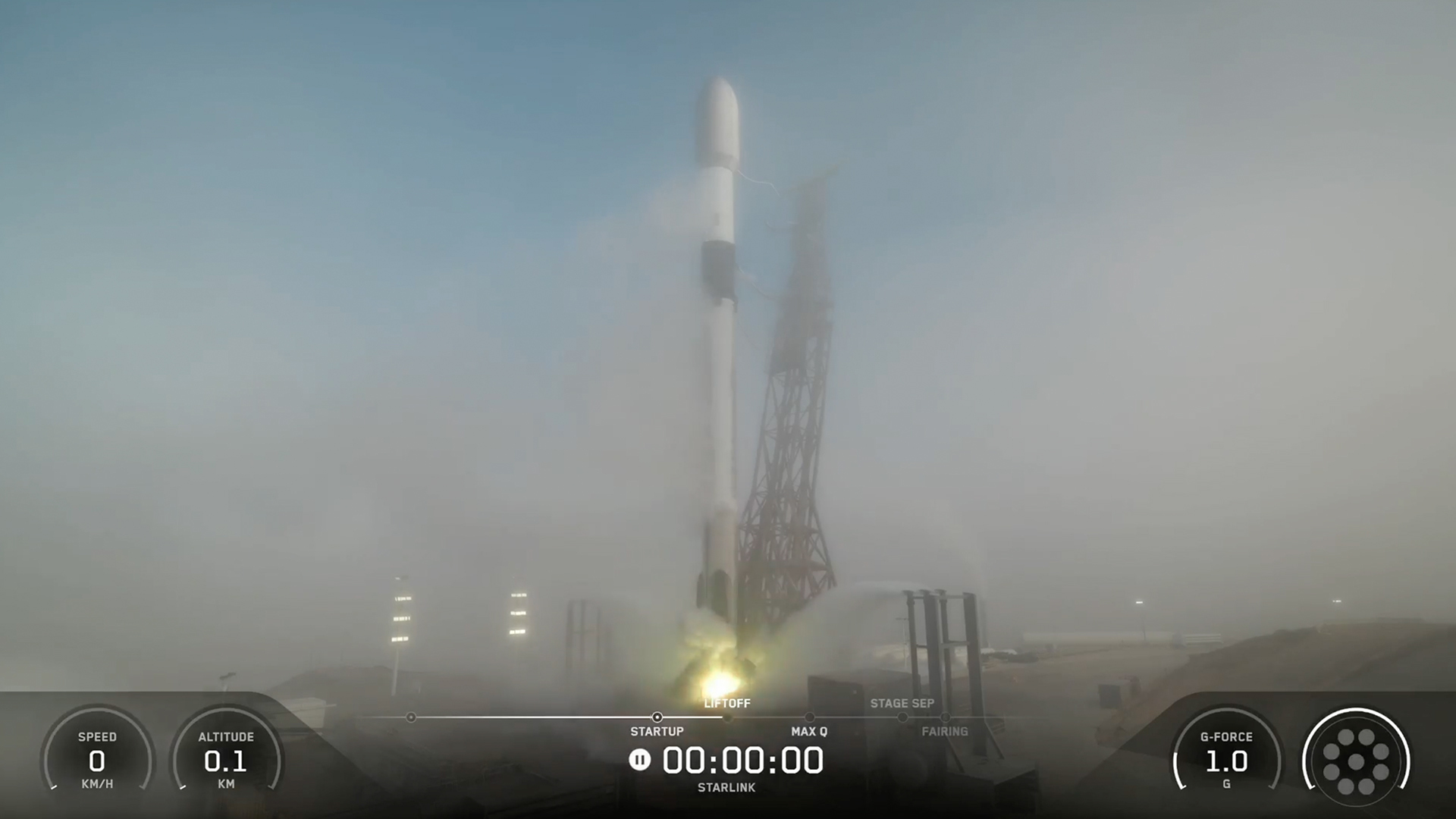
The two events likely have little in common other than a proximity in time. They involved two very different vehicles, after all: The workhorse Falcon 9 is the most reliable and active rocket on the planet; it has already launched 84 times this year, with zero failures.
Starship, on the other hand, remains in the development-and-testing phase. SpaceX has high hopes for the giant vehicle, which combines full reusability with unprecedented brawn. (It’s the biggest and most powerful rocket ever built.)
The two vehicles are also powered by different engines. The Falcon 9’s first stage employs nine Merlin 1Ds, whereas Starship’s Super Heavy booster uses 33 next-gen Raptors.
SpaceX decided to swap out two of those Raptors ahead of the next Flight 13 launch attempt, which is scheduled for Thursday afternoon (July 23).
The Vandenberg Starlink launch, meanwhile, is back on the docket for Tuesday morning (July 21). It’s scheduled to lift off during a nearly four-hour window that opens at 10 a.m. EDT (1400 GMT; 7 a.m. local California time), according to a SpaceX mission description.
Source: Twice in a row: SpaceX rocket aborts launch at last second again (video)