AI Insight
On June 5, 2026, NASA's X-59 experimental aircraft achieved its first supersonic flight, reaching Mach 1.1 (713 mph) during an 81-minute test flight at Edwards Air Force Base in California. The flight tested the aircraft's handling characteristics at both subsonic and supersonic speeds as part of the Quesst mission, which aims to demonstrate quiet supersonic technology that reduces the typical sonic boom. This milestone marks a critical step toward validating the X-59's ability to fly faster than sound while minimizing ground noise disruption.
Why it matters
This technology could enable commercial supersonic flights over land by addressing noise regulations that currently restrict such operations, potentially reducing travel times significantly for passengers worldwide. Success of the Quesst mission may lead to a new generation of faster commercial aircraft that can operate over populated areas without creating disruptive sonic booms.
Understand the Science
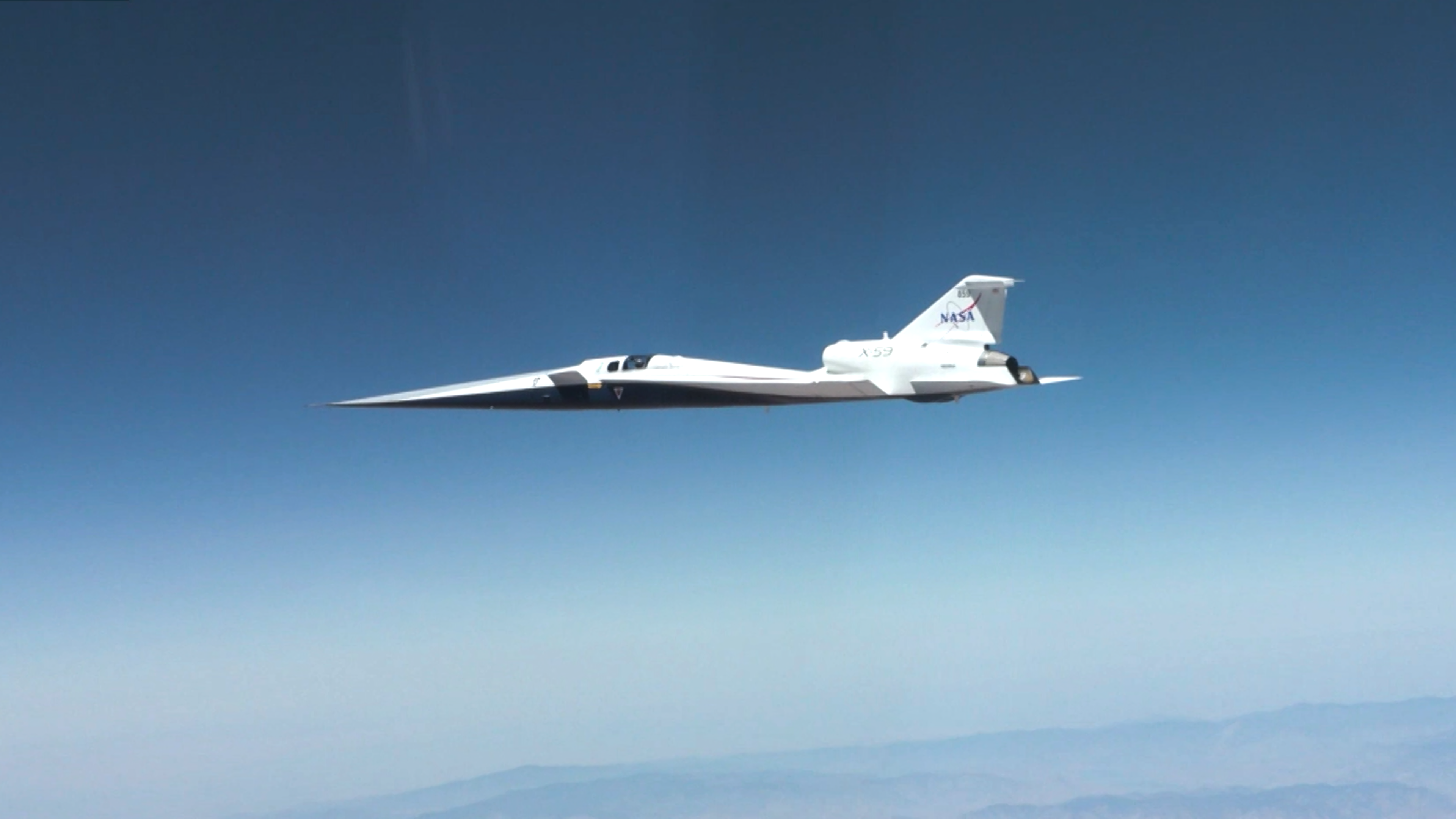
On June 5, 2026, NASA’s experimental X-59 aircraft flew faster than the speed of sound for the first time, setting the stage for demonstrating its quiet supersonic capabilities later this year. NASA test pilot Jim “Clue” Less took off and landed at Edwards Air Force Base in California, reaching a top speed of approximately Mach 1.1 (713 mph). The flight lasted 81 minutes, with the team focusing on flying qualities at both subsonic and then supersonic speeds.
The X-59 is the centerpiece of NASA’s Quesst mission, which aims to demonstrate quiet supersonic flight and help enable commercial supersonic flight over land worldwide. These advancements will help travelers reach their preferred destinations faster, spending less time in the air.
Learn more about the milestone and Quesst.
Image credit: NASA/Lori Losey
Source: Supersonic!