AI Insight
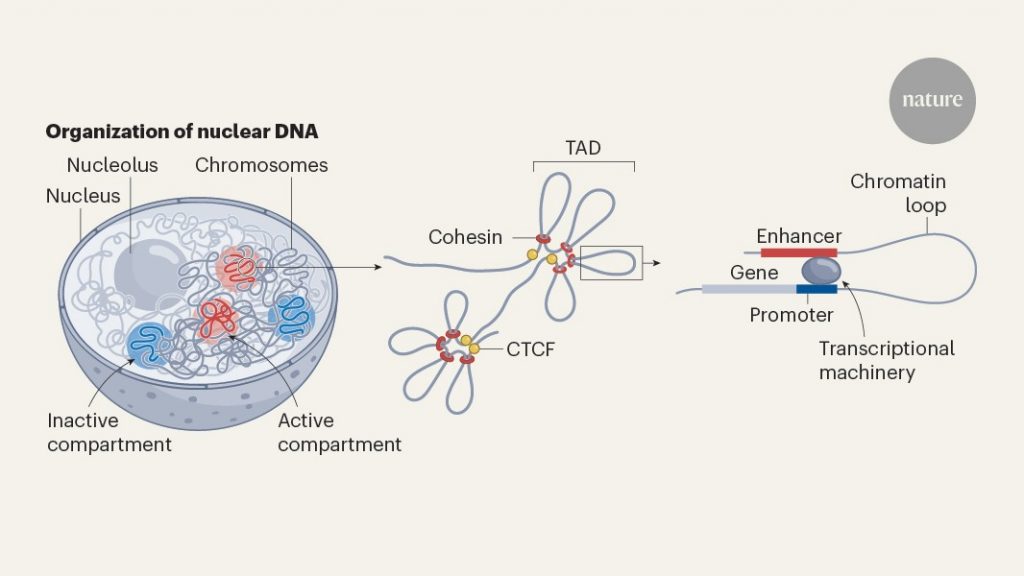
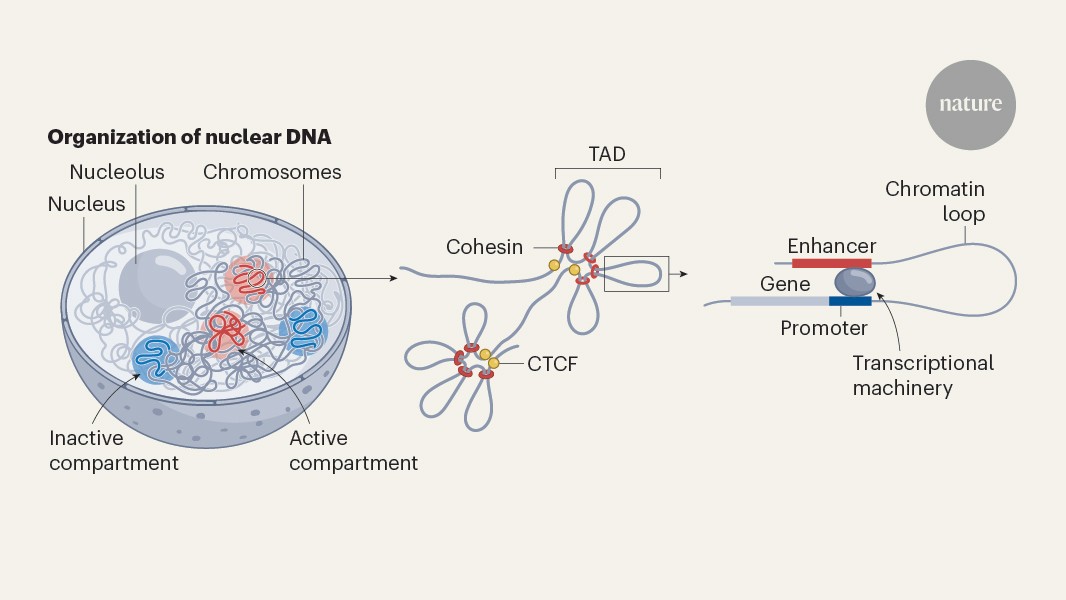
A large-scale study by Dekker et al., published in Nature (2025), presents systematic maps of how human chromosomes are spatially organized within the cell nucleus. The research builds on decades of chromosome conformation capture techniques to generate comprehensive three-dimensional maps of chromosomal architecture, revealing how DNA is folded, compartmentalized, and structured into domains at multiple scales. These maps illuminate the relationship between chromosome organization and gene regulation, showing how physical proximity of genomic regions influences their functional interactions.
Why it matters
Understanding chromosomal organization has direct implications for interpreting how disruptions to genome structure can lead to developmental disorders and cancer, as misorganization of chromosomal domains has been linked to aberrant gene expression. These maps may also serve as reference frameworks for identifying structural variants that contribute to human disease.
Understand the Science
Dekker, J. et al. Nature https://doi.org/10.1038/s41586-025-09890-3 (2025).
Simonis, M. et al. Nature Genet. 38, 1348–1354 (2006).
da Costa-Nunes, J. A. & Noordermeer, D. Curr. Opin. Struct. Biol. 81, 102622 (2023).
Davidson, I. F. & Peters, J.-M. Nature Rev. Mol. Cell Biol. 22, 445–464 (2021).
Lupiáñez, D. G. et al. Cell 161, 1012–1025 (2015).
Kim, K. L. et al. Mol. Cell 84, 1365–1376 (2024).
Dekker, J., Rippe, K., Dekker, M. & Kleckner, N. Science 295, 1306–1311 (2002).
Gschwind, A. R. et al. Preprint at bioRxiv https://doi.org/10.1101/2023.11.09.563812 (2023).
Fudenberg, G., Kelley, D. R. & Pollard, K. S. Nature Methods 17, 1111–1117 (2020).
Gabriele, M. et al. Science 376, 496–501 (2022).
Nagano, T. et al. Nature 502, 59–64 (2013).