AI Insight
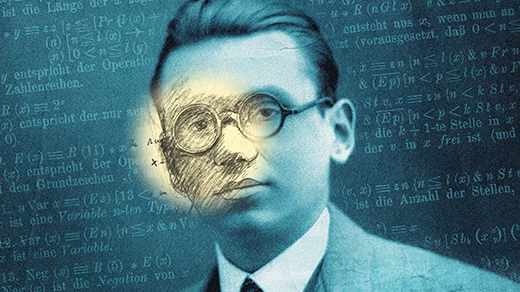
In 1931, mathematician Kurt Gödel proved two landmark incompleteness theorems by applying logical reasoning to formal mathematical systems themselves. The first theorem establishes that any consistent formal system capable of expressing basic arithmetic will necessarily contain true statements that cannot be proven within that system. The second theorem demonstrates that such a system cannot prove its own consistency, fundamentally limiting the scope of formal mathematical reasoning.
Why it matters
Gödel's theorems set hard boundaries on what mathematics and formal logic can ever achieve, with profound implications for computer science, artificial intelligence, and the philosophy of mind, suggesting that human reasoning may transcend purely mechanical rule-based systems.
Understand the Science
In 1931, by turning logic on itself, Kurt Gödel proved a pair of theorems that transformed the landscape of knowledge and truth. These “incompleteness theorems” established that no formal system of mathematics — no finite set of rules, or axioms, from which everything is supposed to follow — can ever be complete. There will always be true mathematical statements that don’t logically follow from…