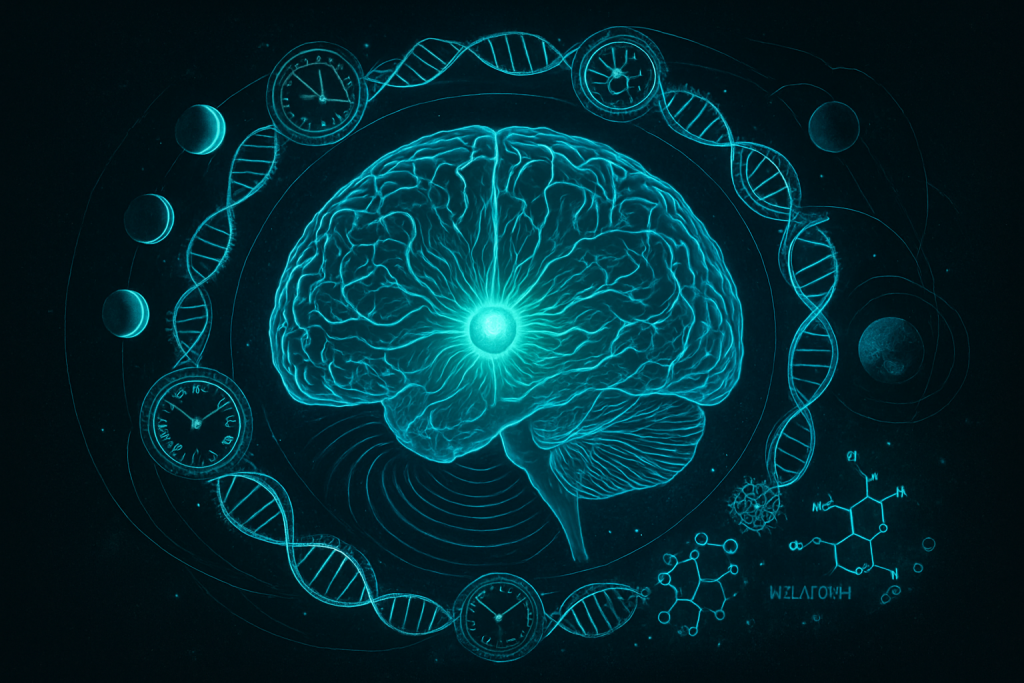
Image generated by AI
Your body is keeping time right now—not with a ticking clock, but with an intricate network of molecular timekeepers that coordinate everything from when you feel hungry to how efficiently your immune system fights infection. These internal rhythms, called circadian rhythms, operate on roughly a 24-hour cycle and influence nearly every physiological process in your body. Yet for most of the 20th century, medical science largely ignored this temporal dimension of health, treating the body as if it operated the same way at midnight as it did at noon.
Today, chronobiology—the science of biological time—has emerged as one of the most consequential fields in medicine, revealing that when you take your medication, when you schedule surgery, and even when you eat breakfast can be as important as what you do. The 2017 Nobel Prize in Physiology or Medicine went to three researchers who cracked open the molecular machinery of circadian clocks, cementing what many had long suspected: that ignoring our body’s internal schedules is a recipe for disease. From cancer to cardiovascular illness to metabolic disorders, circadian disruption has been implicated in nearly every major health condition, making this ancient field suddenly urgent and modern.
What Is Circadian Rhythm and Chronobiology in Health?
Circadian rhythm refers to the roughly 24-hour biological cycle that regulates sleep-wake patterns, hormone release, body temperature, and numerous other physiological processes. The term itself comes from the Latin “circa” (about) and “dies” (day), reflecting the approximately—but not exactly—daily nature of these rhythms. This cycle is controlled by the suprachiasmatic nucleus (SCN), a tiny cluster of about 20,000 neurons in the brain’s hypothalamus that acts as the body’s master clock. The SCN receives light signals from the eyes and synchronizes the body’s numerous peripheral clocks—found in organs like the liver, heart, and kidneys—ensuring that all biological processes work in coordinated harmony. When this system functions optimally, you wake alert, energy peaks at appropriate times, digestion follows a predictable schedule, and your immune system operates at full capacity.
Chronobiology is the broader scientific field that studies these biological rhythms and their relationship to health and disease. The field emerged in the 1950s when researchers like Franz Halberg began systematically measuring how biological variables fluctuate over time, discovering that nearly every measurable aspect of physiology varies predictably across the 24-hour day. For decades, chronobiology remained on the periphery of mainstream medicine, considered interesting but not clinically crucial. This changed dramatically when molecular biologists identified the specific genes—Clock, Bmal1, Per, and Cry among them—that encode the proteins forming the molecular clock mechanism. Suddenly, the internal circadian system went from philosophical curiosity to concrete biological target, opening possibilities for therapeutic intervention.
What the Research Shows
At the molecular level, circadian rhythms operate through an elegantly simple yet profoundly complex feedback loop. Clock genes in cells produce proteins that accumulate throughout the day, eventually triggering their own genetic repression—a molecular switch that turns off their own production. As these proteins degrade, the repression lifts, and the cycle begins anew, creating an autonomous oscillation that repeats approximately every 24 hours. This cell-autonomous clock runs independently of external cues, meaning your cells would maintain roughly 24-hour rhythms even in complete darkness or constant light. However, environmental signals—particularly light exposure—fine-tune these cellular clocks, synchronizing them with the external world. This process, called entrainment, is mediated by light’s effect on specialized retinal ganglion cells containing photopigment melanopsin, which communicate directly with the SCN to reset the master clock each day.
Think of the circadian system as a biological orchestra, with the SCN as the conductor and peripheral clocks in various organs as different sections of musicians. When the conductor keeps perfect time, every section plays in sync, creating harmonious music. But when the conductor loses the beat—due to irregular sleep schedules, shift work, or chronic jet lag—the orchestra falls apart. Individual musicians (individual organs) start playing at their own tempo, and what emerges is cacophony rather than symphony. The liver might still expect food at midnight while the stomach has already begun its nighttime rest. The immune system might launch an attack when the anti-inflammatory hormones that normally dampen immune responses haven’t yet kicked in. Over time, this systemic misalignment creates the conditions for disease.
What This Means for Patients and Science
Circadian disruption has emerged as a significant risk factor for metabolic diseases, cardiovascular disorders, cancer, and even psychiatric conditions. Night shift workers, for instance, show elevated risks of obesity, type 2 diabetes, and certain cancers—risks that persist even when controlling for lifestyle factors like exercise and diet. People who experience chronic jet lag or have naturally disrupted circadian rhythms show elevated blood pressure, impaired glucose tolerance, and weakened immune function. More subtly, the same medication might work differently depending on the time it’s administered; chronopharmacology research has shown that taking certain cancer drugs at specific times of day can improve efficacy and reduce side effects. Tumor cells themselves operate on circadian rhythms, making them more or less vulnerable to chemotherapy at different times, suggesting that temporal drug scheduling could be as important as drug selection.
Modern hospitals and medical systems are beginning to incorporate chronobiological principles into practice, though implementation remains inconsistent. Sleep medicine specialists now recognize circadian rhythm sleep disorders as distinct clinical entities requiring targeted treatment. Cardiology departments are exploring optimal timing for procedures, noting that heart attack risk peaks in early morning hours. Oncology centers are investigating circadian-timed chemotherapy protocols. The military and aviation industries have become major funders of circadian research, recognizing that pilot fatigue and circadian misalignment pose safety risks. Wearable technology companies are developing devices that track sleep-wake patterns and provide personalized light exposure recommendations to optimize circadian entrainment—representing an emerging market worth billions of dollars annually.
Recent Breakthroughs in Circadian Rhythm and Chronobiology in Health
Over the past two to three years, chronobiology research has accelerated dramatically, driven by advances in molecular techniques and increased clinical interest. Researchers have identified new mechanisms by which circadian disruption leads to disease, including discoveries that the circadian system regulates the integrity of the intestinal barrier and immune tolerance. Studies have shown that maintaining proper circadian alignment can dramatically improve outcomes in conditions ranging from diabetes to depression. Single-cell RNA sequencing has revealed that different cell types within the same tissue operate on different circadian phases, suggesting far greater complexity in the circadian orchestra than previously appreciated. This cellular heterogeneity may explain why some individuals tolerate circadian disruption better than others and why treating circadian disorders requires increasingly personalized approaches.
Researchers are actively investigating pharmacological approaches to circadian modulation, including drugs that directly target Clock proteins and light-based therapies optimized through computational modeling. Clinical trials are underway testing circadian-aligned chemotherapy, intermittent fasting protocols timed to circadian phase, and light-dark cycle manipulations for psychiatric conditions. A particularly exciting frontier involves understanding how circadian rhythms coordinate with the microbiome—the trillions of bacteria in your gut that also operate on circadian rhythms and whose dysbiosis has been linked to numerous diseases. Questions remain about individual differences in circadian period length, why some people are naturally “morning people” while others are “night owls,” and whether chronotype (your natural preference for sleep-wake timing) should be accommodated rather than fought against in clinical and occupational settings.
Why Circadian Rhythm and Chronobiology in Health Matters for the Future
As our understanding of chronobiology deepens, it promises to revolutionize how we approach prevention and treatment across all medical disciplines. Precision medicine increasingly recognizes that genetic variation, environmental exposure, and circadian phase must all be considered together to understand individual disease risk and treatment response. The emerging field of chronomedicine aims to time medical interventions—from drug administration to surgical procedures to light therapy—to align with individual circadian phases, potentially maximizing efficacy while minimizing side effects. For public health, this has enormous implications: simple interventions like optimizing light exposure, maintaining consistent sleep-wake schedules, and timing meals appropriately could prevent or delay the onset of major chronic diseases affecting billions worldwide. In an era where personalized medicine is becoming reality, circadian status represents an essential data point about individual biology that current medical records largely ignore.
Yet significant challenges remain in translating circadian science into widespread clinical practice. Most clinicians receive minimal training in chronobiology, and institutional barriers make timing-based interventions difficult to implement systematically. The circadian system itself shows profound individual variation—some people have naturally longer or shorter circadian periods, and genetic polymorphisms affect circadian amplitude and entrainment capacity. Moreover, modern society increasingly demands round-the-clock activity, creating structural barriers to circadian alignment that no individual intervention can overcome. Determining which patients would benefit most from circadian interventions and developing practical, scalable delivery mechanisms remain active areas of research and development.
Key Takeaways
- Circadian rhythms are roughly 24-hour biological cycles controlled by a master clock in the brain and synchronized throughout the body, regulating sleep, hormone release, metabolism, and immune function.
- Circadian disruption occurs when misalignment develops between internal biological clocks and external demands, resulting from shift work, jet lag, irregular schedules, or genetic variation, leading to increased disease risk.
- Chronopharmacology and circadian-timed medical interventions represent the most promising clinical application, as timing medication administration and procedures to circadian phase can improve efficacy and reduce side effects.
- While chronobiology research has advanced dramatically in recent years with molecular mechanisms clarified and clinical applications emerging, implementation in mainstream medicine remains limited due to knowledge gaps among clinicians and institutional barriers.
- As personalized medicine evolves, incorporating individual circadian status into medical decision-making could transform prevention and treatment of chronic disease, though significant challenges in scalability and individual variation must first be addressed.
Explore TED Talks on Circadian Rhythm and Chronobiology in Health:
TED content is used under CC BY-NC-ND 4.0. © TED Conferences, LLC.
Frequently Asked Questions
What molecular mechanisms control the circadian clock in human cells?
Circadian rhythms are generated by an intricate network of molecular timekeepers—primarily clock genes and proteins—that operate on a roughly 24-hour cycle to coordinate physiological processes. The 2017 Nobel Prize-winning research revealed the specific molecular machinery underlying these biological clocks, though the article does not detail the individual genes and proteins involved.
How does circadian disruption contribute to disease development?
Circadian disruption has been implicated as a causal or contributing factor in nearly every major health condition, including cancer, cardiovascular illness, and metabolic disorders, because it impairs the precise timing of physiological processes that depend on proper circadian coordination. When the body's internal schedule is disrupted, the synchronized regulation of immune function, metabolism, and other critical systems becomes compromised.
Can the timing of medical interventions like medication or surgery be optimized based on circadian rhythms?
Yes, chronobiology research indicates that when medications are administered and when surgery is scheduled can be as important as the medication or procedure itself in terms of health outcomes. This suggests that medical timing should be coordinated with the patient's circadian rhythm to maximize efficacy and minimize complications.
Why was circadian rhythm largely ignored by medical science throughout most of the 20th century?
The 20th-century medical model treated the body as operating identically regardless of time of day, effectively ignoring the temporal dimension of health that circadian rhythms represent. The emergence of chronobiology as a major medical field required molecular evidence—such as that recognized by the 2017 Nobel Prize—to demonstrate that biological time is fundamental to understanding health and disease.