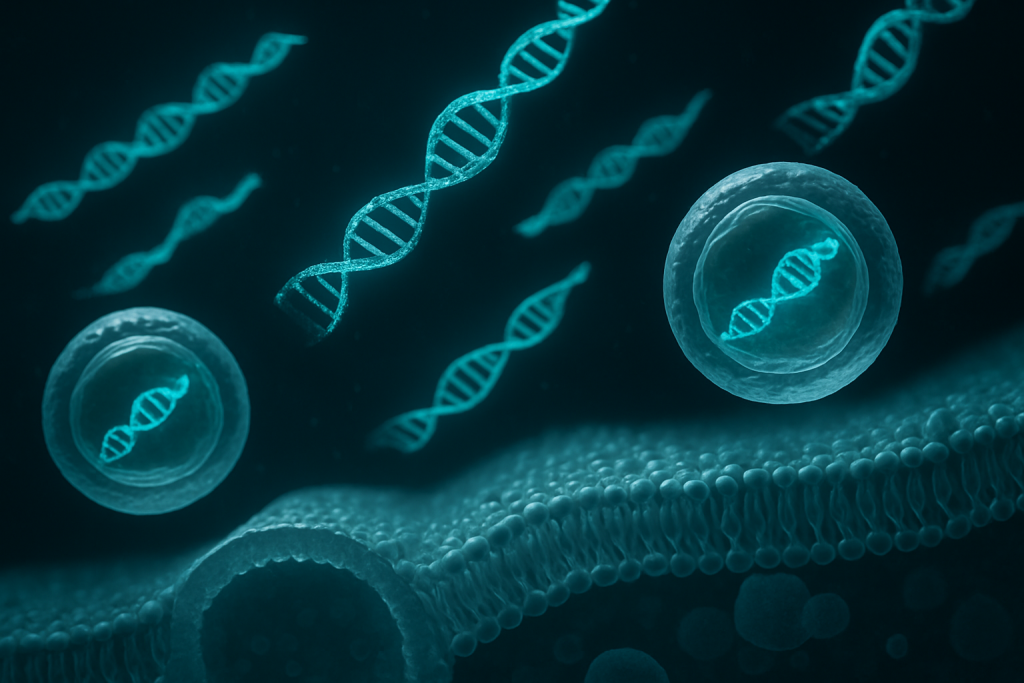
Image generated by AI
In December 2023, researchers announced a breakthrough that would have seemed like science fiction a decade ago: a therapy based entirely on RNA successfully treated a patient with a previously incurable genetic disorder. This wasn’t a one-off miracle cure, but rather the latest milestone in a fundamental shift in how medicine thinks about treating disease. Rather than using chemical drugs or protein injections, scientists are now learning to harness the body’s own molecular machinery—specifically, the snippets of genetic code called RNA—to fight illness from the inside out. The question is no longer whether RNA therapeutics work, but how quickly we can scale them up to treat the millions of patients waiting for new options.
RNA therapeutics represent one of the most transformative developments in modern medicine, yet most people have never heard of them. The technology exploded into public consciousness during the COVID-19 pandemic, when mRNA vaccines from Pfizer and Moderna proved remarkably effective at preventing severe disease. But the true scope of RNA-based medicine extends far beyond vaccines. Scientists are now using RNA to silence disease-causing genes, repair genetic mutations, boost immune responses against cancer, and restore proteins that patients’ bodies cannot make on their own. This field sits at the intersection of molecular biology, chemistry, and medicine—and understanding it requires grappling with some fundamental questions about how life itself works.
What Is RNA Therapeutics and Drug Delivery?
RNA therapeutics are medications built from ribonucleic acid—a molecule that cells use to translate genetic instructions into proteins and regulate countless biological processes. Unlike traditional drugs, which are small chemical compounds that target specific proteins, RNA therapeutics work by directly interfering with the genetic code itself. They come in several varieties: messenger RNA (mRNA) that instructs cells to produce therapeutic proteins; small interfering RNA (siRNA) that silences disease-causing genes; antisense oligonucleotides that block the production of harmful proteins; and circular RNA constructs that can be engineered to perform multiple functions. The fundamental appeal is elegant: by editing the instructions, you can prevent the disease from manifesting in the first place, rather than treating its symptoms after the fact.
The concept of using RNA as medicine emerged gradually over several decades. In the 1970s, scientists discovered that synthetic strands of RNA could bind to complementary RNA sequences—a process called hybridization—and potentially block gene expression. The first antisense oligonucleotide drug, fomivirsen, received FDA approval in 1998 for treating a viral eye infection. However, the field languished for years because delivering RNA to cells proved extraordinarily difficult; the molecules were fragile, quickly degraded by enzymes in the body, and struggled to penetrate cell membranes. The crucial breakthrough came around 2010, when researchers discovered how to chemically modify RNA to make it more stable and how to package it into lipid nanoparticles—tiny fat-based vessels that could sneak RNA past the body’s defenses. These dual innovations transformed RNA from a theoretical tool into a practical medicine.
What the Research Shows
The mechanism behind RNA therapeutics hinges on a cellular process called gene silencing, where specific RNA sequences can prevent genes from being expressed—that is, from being converted into proteins. When you inject a therapeutic RNA molecule into the body, it travels through the bloodstream until it encounters a cell where it can cross the membrane, usually with help from a delivery vehicle like a lipid nanoparticle. Once inside the cell, the RNA either directly blocks messenger RNA (mRNA) that codes for a disease-causing protein, or it stimulates the cell’s own quality-control systems to destroy the target mRNA before it can be translated. The result is that the harmful protein never gets made, or gets made in much smaller quantities. This process is remarkably specific: a well-designed therapeutic RNA will target only the genes you want to silence, leaving everything else untouched.
Consider a patient with familial amyloidosis, a genetic disorder where the liver produces a mutated protein that accumulates in tissues and damages the heart and nervous system. Traditional treatments try to manage the damage after it occurs, like removing the damaged protein or suppressing its production with chemicals. An RNA therapeutic takes a different approach: it delivers instructions that tell liver cells to silence the specific mutated gene before it even produces the toxic protein. The analogy is imperfect, but imagine a faulty photocopier making bad copies of a document that causes problems when distributed. A traditional drug would be like having someone filter out the bad copies after they’re made, while an RNA therapeutic would be like fixing the copier itself—or simply telling it to stop making copies of that particular document. In both cases, you’re addressing the problem at its source rather than cleaning up the mess afterward.
What This Means for Patients and Science
The clinical potential of RNA therapeutics extends across a vast range of diseases. For rare genetic disorders like spinal muscular atrophy (SMA), where patients lack a critical protein needed for nerve function, an mRNA therapeutic can provide instructions for producing that missing protein, effectively replacing what their cells cannot make on their own. For cancers, researchers are using mRNA therapeutics to train the immune system to recognize and attack tumor cells with unprecedented precision. For common diseases like high cholesterol, siRNA therapeutics can lower cholesterol by silencing genes that produce too much LDL. The diversity of potential applications reflects the fundamental insight behind the approach: if a disease involves too much or too little of a specific protein, or if it involves a gene that’s been mutated, RNA-based medicine offers a way to address the root cause rather than just managing symptoms.
Several RNA therapeutics have already transformed patient outcomes. Spinraza, approved in 2016 for spinal muscular atrophy, has given children with a previously devastating condition the ability to walk and live near-normal lifespans. Patisiran, approved in 2018, treats familial amyloidosis by silencing the gene that produces the toxic protein. Leqvio, a lipid nanoparticle-based siRNA therapy, was approved in 2023 to lower cholesterol in patients who don’t respond adequately to statins. Meanwhile, personalized mRNA cancer vaccines are currently in clinical trials, with early results suggesting they can reduce cancer recurrence rates when combined with checkpoint inhibitors. Beyond individual therapies, entire industries are mobilizing: major pharmaceutical companies have invested billions in RNA platforms, contract manufacturers are building specialized facilities to produce RNA on scale, and startup companies are exploring novel delivery mechanisms to reach previously inaccessible tissues like the brain.
Recent Breakthroughs in RNA Therapeutics and Drug Delivery
The past two to three years have witnessed remarkable momentum in the field. In 2023, researchers published positive Phase 2 trial results for mRNA vaccines against melanoma that appeared to reduce recurrence rates by roughly 44 percent when combined with checkpoint immunotherapy. Simultaneously, multiple companies advanced programs targeting cardiovascular disease, metabolic disorders, and immunological conditions. One particularly significant development involved improved lipid nanoparticle formulations that can cross the blood-brain barrier more effectively, opening the door to treating neurological diseases that have long been inaccessible to systemically administered therapies. Additionally, chemically modified RNA constructs called self-amplifying RNA (saRNA) have shown promise by replicating themselves within cells, potentially allowing for smaller doses and lower manufacturing costs.
Researchers are currently grappling with several frontier questions. How can we deliver RNA therapeutics to specific tissues with greater precision, minimizing off-target effects in healthy cells? Can we engineer RNA to trigger controlled immune responses without causing excessive inflammation? How do we manufacture these complex molecules at the scale needed to treat millions of patients cost-effectively? Can we combine multiple RNA therapeutics or combine them with traditional drugs to tackle complex diseases that involve multiple genetic pathways? The answers to these questions will largely determine whether RNA therapeutics become a dominant treatment modality for the next generation of medicine or remain a niche approach for rare genetic diseases.
Why RNA Therapeutics and Drug Delivery Matters for the Future
RNA therapeutics represent a fundamental shift in how we approach disease. Rather than discovering drugs through laborious trial-and-error screening of chemical libraries, scientists can now rationally design a therapeutic by simply identifying the genetic target and engineering RNA that interacts with it. This rational, sequence-based approach dramatically accelerates drug development—the path from identifying a genetic disease to having a candidate therapeutic can now take months rather than years. Moreover, RNA therapeutics inherit the scalability advantages of biotechnology: once you’ve engineered the sequence and optimized the manufacturing process, you can theoretically apply the same platform to dozens of diseases. This is particularly transformative for rare genetic disorders, which have historically been neglected by the pharmaceutical industry because the patient populations are too small to generate profits with traditional drug discovery models.
Significant challenges remain before RNA therapeutics achieve their full potential. The current delivery systems work well for reaching the liver, but delivering RNA to the brain, muscle, or other organs remains technically difficult. Manufacturing costs are still high, though they’re declining as production processes mature. Immunogenicity—the tendency of some RNA constructs to trigger unintended immune responses—can limit efficacy and cause side effects. Patients sometimes develop antibodies against the therapeutic RNA or the delivery vehicles, reducing effectiveness with repeated doses. Regulatory frameworks are still evolving, creating uncertainty about which types of modifications and delivery approaches will be approved for new therapeutics. And fundamental questions about long-term safety remain partially unanswered, since most RNA therapeutics have only been in clinical use for a handful of years.
Key Takeaways
- RNA therapeutics are medications made from RNA sequences that can silence disease-causing genes, provide missing proteins, or train the immune system to fight disease, offering a fundamentally different approach to treatment than traditional chemical drugs.
- These therapeutics work by entering cells and targeting specific messenger RNA molecules, preventing the production of harmful proteins or stimulating the cell’s own quality-control systems to destroy disease-related genetic instructions.
- The most promising applications include rare genetic disorders like spinal muscular atrophy, personalized cancer vaccines, high cholesterol treatment, and familial amyloidosis, with several therapies already transforming patient outcomes.
- The field has advanced rapidly due to innovations in chemical RNA modification and lipid nanoparticle delivery technology, with multiple breakthrough therapies reaching the market in the past five years and numerous programs in clinical trials.
- RNA therapeutics represent a paradigm shift that could make drug development faster and more rational, particularly benefiting patients with rare genetic diseases, though significant challenges in delivery, manufacturing, and long-term safety remain to be solved.
Explore TED Talks on RNA Therapeutics and Drug Delivery:
TED content is used under CC BY-NC-ND 4.0. © TED Conferences, LLC.
Frequently Asked Questions
How do RNA therapeutics silence disease-causing genes differently than traditional chemical drugs?
RNA therapeutics work by using RNA molecules to directly target and block the expression of specific genes at the molecular level, rather than attempting to inhibit proteins after they're already made. This allows the body's own cellular machinery to prevent disease-causing proteins from being produced in the first place, offering greater precision than chemical drugs that typically work downstream.
What is the fundamental difference between mRNA vaccines used for COVID-19 and other types of RNA therapeutics mentioned in treating genetic disorders?
mRNA vaccines instruct cells to produce a specific protein (like the spike protein) to trigger an immune response, whereas RNA therapeutics for genetic disorders can silence faulty genes, repair mutations, or restore missing proteins directly. Both use RNA as instructions, but they target fundamentally different biological problems.
Why is drug delivery considered a critical challenge for RNA therapeutics compared to traditional protein injections?
RNA molecules are fragile and prone to degradation by enzymes in the body, and they struggle to cross cell membranes naturally to reach target tissues effectively. Drug delivery systems must protect RNA from degradation while ensuring it reaches the right cells, making this a key technical hurdle in scaling RNA therapeutics.
Can RNA therapeutics be used to restore proteins that a patient's body cannot produce on its own?
Yes, RNA therapeutics can deliver genetic instructions that enable patients' own cells to manufacture missing or defective proteins, essentially restoring the body's natural protein production capability. This approach treats the root cause by restoring the genetic code rather than requiring patients to receive external protein injections indefinitely.