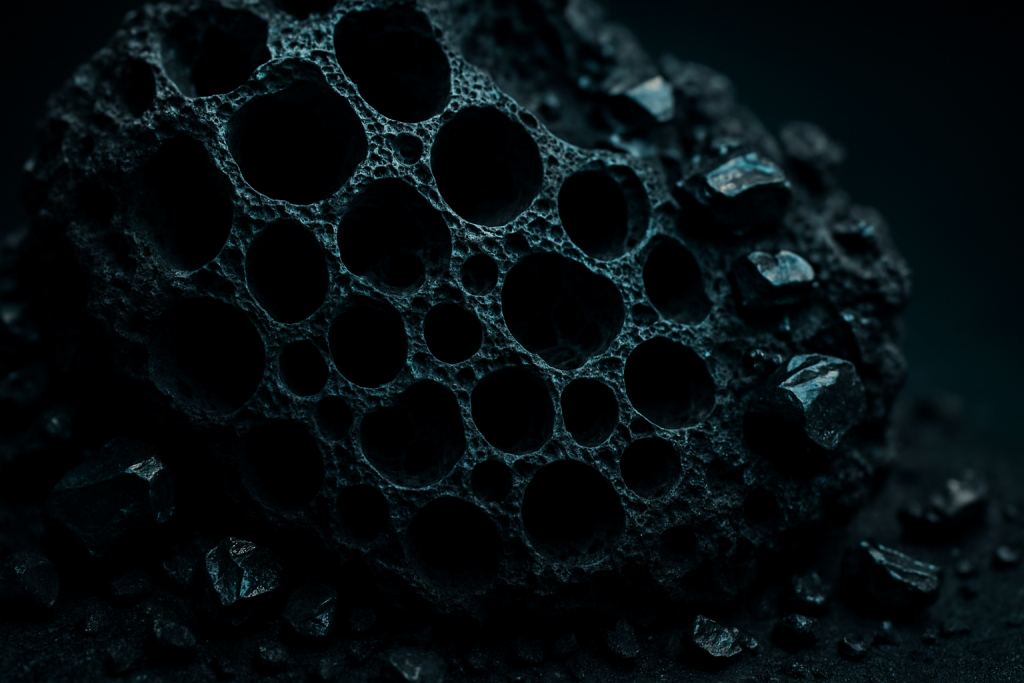
Image generated by AI
AI Insight
Activated carbon is a highly porous material created by heating organic sources like wood, coconut shells, or coal with steam or chemicals, producing microscopic voids that yield surface areas exceeding 3,000 square meters per gram. The material captures contaminants through adsorption, where molecules bond to the carbon surface without chemical integration. Carbon composites enhance these properties by combining activated carbon with polymers or metal oxides to create specialized adsorbents for targeted industrial and environmental applications.
Why it matters
Activated carbon is essential for water purification, air filtration, pharmaceutical manufacturing, and emergency medical treatment of poisonings. As environmental regulations strengthen and water scarcity intensifies globally, carbon composites offer increasingly sophisticated solutions for removing specific pollutants, heavy metals, and radioactive materials from contaminated resources.
Understand the Science
Activated carbon is everywhere—from the filter in your water pitcher to the air purifier in your home—yet most people have no idea how it works. This remarkable material can trap chemicals, odors, and contaminants with an efficiency that makes it indispensable to modern industry, medicine, and environmental protection. Understanding activated carbon and its composite materials reveals why this humble substance remains one of chemistry’s most practical innovations.
The Chemistry Behind It
Activated carbon begins as ordinary charcoal made from wood, coconut shells, or coal. The magic happens during “activation”—a process where the raw material is heated with steam or chemical agents, creating millions of tiny pores throughout its structure. These microscopic voids dramatically increase the surface area; just one gram of activated carbon can have a surface area exceeding 3,000 square meters. When contaminant molecules contact these pores, they stick through a process called adsorption, where molecules bond to the carbon’s surface without becoming part of it chemically. Carbon composites enhance this further by combining activated carbon with other materials like polymers or metal oxides, creating hybrid adsorbents with tailored properties for specific industrial challenges.
Where It Is Used Today
The applications of activated carbon and its composites span nearly every industry. Water treatment plants use it to remove chlorine, pesticides, and organic compounds that affect taste and safety. In air purification, activated carbon filters trap volatile organic compounds and odors in homes, vehicles, and industrial facilities. The pharmaceutical industry employs it to purify medications and remove impurities from chemical processes. Perhaps most critically, activated carbon plays a vital role in emergency response—it’s the primary treatment for certain poisonings and overdoses, literally saving lives by binding toxins in the stomach before absorption. Modern carbon composites extend these capabilities further, with researchers developing materials that selectively capture heavy metals, radioactive ions, or specific pollutants from water and air. As environmental regulations tighten and water scarcity increases globally, demand for these materials continues to surge.
Key Takeaways
- Activated carbon’s porous structure creates enormous surface area, enabling it to trap contaminants through adsorption—a reversible bonding process at the molecular level.
- From drinking water purification to medical emergency treatment, activated carbon’s versatility makes it essential across healthcare, environmental, and industrial sectors.
- Carbon composites represent the next frontier, combining activated carbon with other materials to create specialized adsorbents for emerging pollution challenges and resource recovery.
Explore TED Talks on Materials and Adsorbents (activated carbon, carbon materials, composites):
TED content is used under CC BY-NC-ND 4.0. © TED Conferences, LLC.