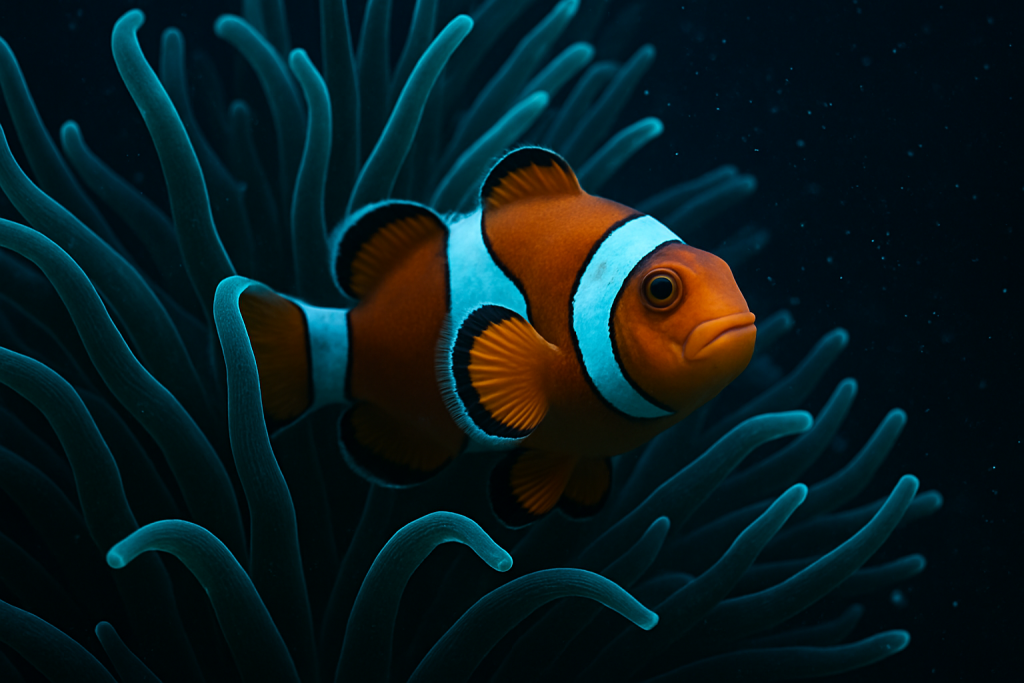
Image generated by AI
Inside your intestines right now, trillions of bacteria are working to break down your food, synthesize vitamins you cannot make yourself, and defend you against pathogens. In return, you provide them with a stable, nutrient-rich environment and protection from the outside world. This invisible partnership—one of countless such arrangements playing out across the living world—represents one of biology’s most profound discoveries: life does not simply compete for survival. Rather, it often thrives through cooperation, in relationships so intimate that the partners become nearly inseparable from one another.
The study of symbiosis and mutualistic relationships has moved from the margins of evolutionary biology to its center, reshaping how we understand health, disease, agriculture, and even the origins of complex life itself. What was once dismissed as a minor curiosity—the idea that organisms might help each other—now appears to be a fundamental organizing principle of the living world, relevant to everything from treating inflammatory diseases to developing drought-resistant crops in an age of climate change.
What Is Symbiosis and Mutualistic Relationships?
Symbiosis, derived from Greek words meaning “living together,” refers to any long-term relationship between two or more organisms of different species. Within this broad category sits mutualism, perhaps the most celebrated form of symbiosis, in which both partners benefit. A lichen, for instance, is not one organism but a partnership between a fungus and an alga or cyanobacterium—the photosynthetic partner produces sugars through photosynthesis, while the fungus provides structure, water absorption, and protection. In mycorrhizal relationships, fungal networks connect to plant roots, trading minerals and water absorbed from soil for sugars the plant has synthesized. These are not metaphorical partnerships; they are biological realities in which the fitness of each partner is demonstrably enhanced by the presence of the other.
The concept of symbiosis was formalized in the 19th century, though observations of “helpful cooperation” appeared much earlier in natural history records. German botanist Heinrich de Bary coined the term “symbiosis” in 1879, defining it broadly to include all forms of cohabitation. American biologist Ivan Wallin later proposed in the 1920s that symbiosis played a role in evolution itself, suggesting that new organelles and even new species could arise from the merger of once-independent organisms. Though controversial at the time, Wallin’s ideas were vindicated decades later by American biologist Lynn Margulis, whose endosymbiotic theory—demonstrating that mitochondria and chloroplasts originated as free-living bacteria—fundamentally reshaped our understanding of life’s history and opened the door to recognizing symbiosis as a creative force in evolution.
How It Works in Nature
Mutualistic relationships function through an elegant economic logic: each partner provides something the other needs but cannot easily obtain alone. This exchange operates at multiple biological levels simultaneously. At the molecular level, organisms secrete compounds that signal their presence and chemical needs to their partners; at the cellular level, nutrients and metabolic byproducts move across cell membranes; at the organismal level, behavior changes to accommodate the partner’s requirements. The relationship persists because both parties gain a fitness advantage that would be diminished or lost if they reverted to independence. This is not altruism in any conscious sense, but rather the outcome of natural selection favoring individuals whose genes promote cooperation with compatible partners.
Consider the relationship between flowering plants and pollinators—a relationship so ancient and interconnected that it has shaped the terrestrial landscape for over 100 million years. A bee visits a flower seeking nectar and pollen as food; the flower’s structure guides the bee such that pollen adheres to the bee’s body and is carried to the next flower, enabling reproduction for the plant. Neither partner evolved with the other in mind, yet their structures, behaviors, and biochemistry have become exquisitely matched through millions of years of coevolution. The plant’s bright colors, scent, and nectar reward are essentially advertisements; the bee’s sensory systems and body morphology are essentially receivers tuned to those advertisements. This is mutualism in action—a relationship sustained not by loyalty but by mutual advantage.
Medical and Scientific Relevance
The realization that humans are superorganisms—that we are not individuals but ecosystems containing trillions of microbial cells—has catalyzed a revolution in medicine and biomedicine. The human microbiome, primarily the bacterial communities inhabiting the gut, influences everything from digestion and immune function to mood, behavior, and susceptibility to disease. Dysbiosis—an imbalance or loss of microbial diversity—has been linked to obesity, inflammatory bowel disease, type 2 diabetes, depression, and autism spectrum disorder. Understanding the mechanisms of these relationships has opened new therapeutic avenues: fecal microbiota transplantation for severe infections, targeted use of probiotics and prebiotics, dietary interventions to promote beneficial microbes, and even the possibility of engineering new microbial strains to treat disease. The implication is profound: many conditions we once viewed as purely internal malfunctions of human genetics or physiology actually represent failures of symbiotic relationships.
In agriculture, symbiotic relationships offer solutions to some of humanity’s most pressing challenges. Legume crops form partnerships with nitrogen-fixing bacteria that can extract usable nitrogen from the atmosphere—a process that reduces dependence on synthetic fertilizers, which are energetically expensive to produce and ecologically damaging in runoff. Mycorrhizal associations with crop plants can enhance water uptake and drought resistance, increasingly important as climate change intensifies water stress. Researchers are also exploring how to harness symbiotic relationships to develop crops that require fewer chemical inputs, addressing both economic sustainability and environmental degradation. These applications are not merely academic; they represent billion-dollar industries and critical tools for food security.
Recent Breakthroughs in Symbiosis and Mutualistic Relationships
Recent years have witnessed accelerating discoveries that expand and complicate our understanding of symbiosis. In 2022 and 2023, research revealed that many organisms previously thought to be single entities are actually assemblages of species working together. For example, studies of tardigrades (microscopic animals known as water bears) showed that they carry symbiotic bacteria essential for surviving radiation and oxidative stress—bacteria without which the tardigrades are far more vulnerable. Researchers have also discovered that some corals actively cultivate bacterial communities that produce protective compounds, suggesting a level of “farming” behavior previously unsuspected in animals. Meanwhile, advances in metagenomic sequencing—technologies that allow researchers to identify all organisms in a sample—have revealed that many symbiotic relationships involve more than two partners; some involve dozens or hundreds of species in intricate networks, creating what might be better described as biological consortia than simple pairs.
Current research frontiers include understanding how symbiotic relationships transmit across generations—how offspring inherit their parents’ microbial partners—and how rapid environmental change disrupts these ancient partnerships. Scientists are also investigating the genetic basis of symbiotic compatibility: what genes determine whether two organisms can cooperate, and how do these genes diverge as partners speciate? There are also fundamental open questions about the prevalence of symbiosis itself—is mutualism rare and special, or is it ubiquitous? Early data suggest the latter, but quantifying it across the tree of life remains an ongoing challenge.
Why Symbiosis and Mutualistic Relationships Matters for the Future
As humanity faces converging crises—climate change, biodiversity loss, pandemic disease, food insecurity—a deeper understanding of symbiosis offers conceptual and practical tools for response. The realization that ecosystems are networks of interdependent relationships, not collections of competing individuals, suggests that conservation strategies focused on preserving entire communities and their symbiotic networks will be more effective than species-by-species approaches. In medicine, recognizing diseases as dysbiosis rather than purely genetic pathologies opens the door to preventive strategies centered on maintaining healthy communities of microbes. In agriculture and environmental remediation, harnessing symbiotic relationships could reduce our dependence on energetically expensive industrial inputs. Perhaps most fundamentally, symbiosis offers a counternarrative to the zero-sum, competitive view of evolution that has dominated popular thought since Darwin—a view that has sometimes been weaponized to justify ruthless human behavior as merely “natural.”
Yet significant challenges remain. The mechanisms by which symbiotic relationships persist over evolutionary time, and the conditions under which they might collapse, are still poorly understood. Many symbiotic partnerships are specialized to the point of fragility; if one partner is lost, the other may not survive. In an era of rapid environmental change, species are moving and mixing in novel ways, creating new partnerships while disrupting ancient ones, with unpredictable consequences. Moreover, translating knowledge of symbiosis into practical applications—engineering robust symbiotic relationships for agriculture or medicine—is considerably harder than simply understanding how they work in nature.
Key Takeaways
- Symbiosis encompasses all long-term relationships between different species, with mutualism being the form in which both partners benefit, revealing that life often thrives through cooperation rather than competition alone.
- Mutualistic relationships function through coevolution, in which both partners provide resources the other needs, creating intricately matched structures and behaviors shaped by millions of years of natural selection.
- Human health is fundamentally shaped by symbiotic relationships with microbial partners; dysbiosis is linked to obesity, diabetes, inflammatory bowel disease, and mental health disorders, opening new treatment possibilities.
- Current research reveals that symbiotic relationships are far more complex and prevalent than once thought, involving multiple partners in intricate networks, with new discoveries emerging constantly about how organisms collaborate.
- Understanding symbiosis offers practical and conceptual tools for addressing climate change, food insecurity, disease, and environmental degradation while also suggesting a more nuanced view of evolution and nature itself.
The hidden beauty and bizarre reality of fungi — Merlin Sheldrake →
TED content is used under CC BY-NC-ND 4.0. © TED Conferences, LLC.
Frequently Asked Questions
How do the bacteria in our intestines synthesize vitamins that our bodies cannot produce on their own?
Gut bacteria possess enzymes and metabolic pathways that human cells lack, allowing them to synthesize B vitamins and vitamin K from dietary compounds and their own metabolism. These synthesized vitamins are then absorbed through the intestinal wall, providing essential nutrients that support human health and development.
What distinguishes mutualism from other types of symbiotic relationships?
Mutualism is a symbiotic relationship where both organisms derive benefits, whereas other symbiotic relationships like parasitism benefit only one partner at the expense of the other, and commensalism benefits one partner while leaving the other unaffected. The gut bacteria example represents mutualism because both the human and bacteria gain advantages from their coexistence.
Why has the scientific understanding of symbiosis moved from being considered a minor curiosity to a central principle in evolutionary biology?
Accumulating evidence has shown that symbiotic relationships are far more prevalent and consequential than previously recognized, affecting health, disease susceptibility, and even the evolutionary origin of complex cells through endosymbiosis. This shift reflects the realization that cooperation, not just competition, is a fundamental driver of evolution and biodiversity.
Can symbiotic relationships be applied to develop crops that are more resistant to drought?
Yes, researchers are cultivating symbiotic relationships between crop plants and beneficial soil microorganisms that enhance water uptake and stress tolerance, allowing plants to survive in drier conditions. These microbial partnerships improve nutrient availability and root resilience, making them valuable tools for sustainable agriculture in climate-change scenarios.