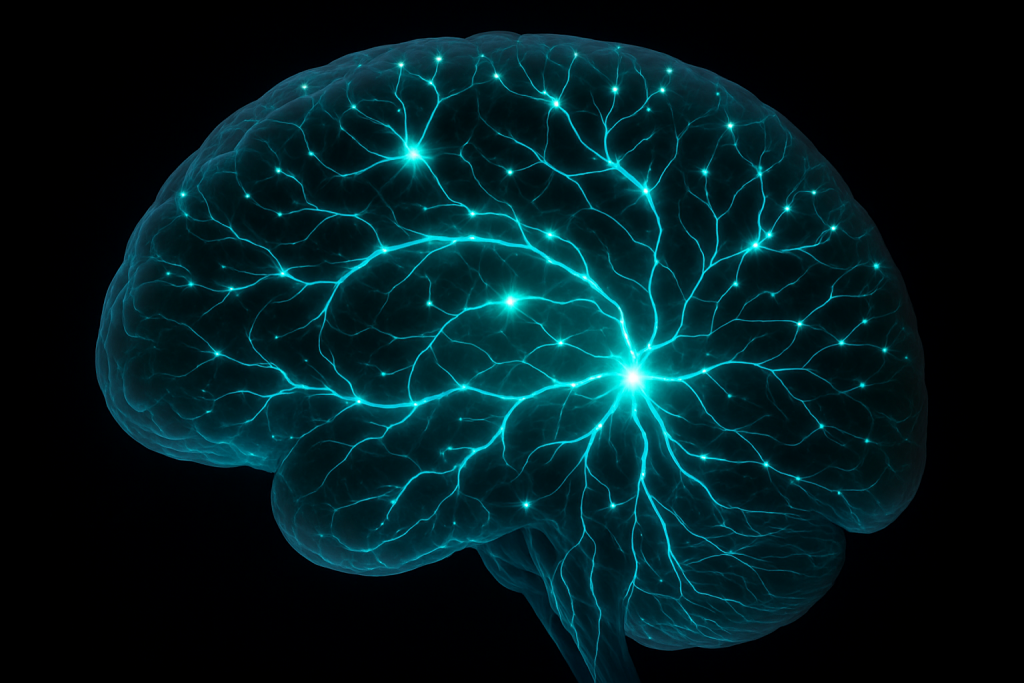
Image generated by AI
AI Insight
Neuroplasticity refers to the brain's ability to physically reorganize itself throughout life by forming new neural connections, overturning the long-held belief that adult brains are fixed after childhood. This occurs through structural plasticity, where brain tissue physically reorganizes and gray matter volume can increase, and functional plasticity, where healthy brain regions assume functions of damaged areas. The process relies on synaptic plasticity, the strengthening or weakening of connections between neurons based on activity patterns following the principle that neurons that fire together wire together.
Why it matters
This discovery has transformed approaches to stroke rehabilitation, mental health treatment, and neurodegenerative disease intervention by demonstrating that the brain can recover and adapt at any age through targeted therapy and cognitive engagement. It provides scientific foundation for rehabilitation programs and supports the concept of cognitive reserve as protection against age-related decline.
Understand the Science
For decades, neuroscientists believed the adult brain was essentially fixed—a hardwired machine unlikely to change after childhood. This assumption has been thoroughly overturned. Neuroplasticity, the brain’s ability to physically rewire itself throughout life by forming new neural connections, has emerged as one of the most consequential discoveries in modern neuroscience. Understanding this fundamental property has revolutionized how we approach learning, recovery from injury, and mental health.
How It Works in Nature
Neuroplasticity operates through two primary mechanisms. Structural plasticity allows the brain to physically reorganize itself—neurons migrate to new locations, and gray matter can actually increase in volume with training. Functional plasticity is equally remarkable: when one brain region is damaged, its responsibilities can be assumed by healthy areas, essentially rerouting neural traffic around the injury. Both processes rely on synaptic plasticity, the strengthening or weakening of connections between neurons based on their activity patterns, governed by the principle “neurons that fire together, wire together.” This happens continuously in response to experience, from learning a new language to mastering a musical instrument, fundamentally altering brain structure at the microscopic level.
Medical and Scientific Relevance
The practical implications of neuroplasticity are transformative across multiple domains. For stroke and brain injury survivors, it explains how rehabilitation therapy can help patients relearn lost functions by stimulating undamaged brain regions to compensate. In psychiatric treatment, therapies like cognitive behavioral therapy work by encouraging the brain to form new neural pathways that override harmful thought patterns. Neuroplasticity also underlies the cognitive reserve concept—the idea that continuous learning and mental engagement throughout life builds a buffer against age-related cognitive decline and neurodegenerative diseases. Even at advanced ages, this capacity persists, offering hope for intervention in Alzheimer’s, Parkinson’s, and other conditions previously considered immutable.
From an evolutionary perspective, neuroplasticity enabled humans to rapidly adapt to diverse environments without waiting for genetic changes, accelerating our species’ unprecedented cultural and technological development.
Key Takeaways
- The adult brain can physically reorganize and form new neural connections throughout life, contrary to earlier scientific assumptions about fixed neural architecture.
- Neuroplasticity operates through structural changes in brain tissue and functional reassignment of tasks, enabling recovery from injury and learning new skills at any age.
- This capacity has revolutionized treatment approaches for stroke, mental health conditions, and neurodegenerative diseases, emphasizing rehabilitation and cognitive engagement as powerful therapeutic tools.
Explore TED Talks on Brain and Neuroscience:
TED content is used under CC BY-NC-ND 4.0. © TED Conferences, LLC.
Frequently Asked Questions
What is the difference between structural plasticity and functional plasticity in the brain?
Structural plasticity involves the physical reorganization of brain tissue, such as neurons migrating to new locations or gray matter increasing in volume with training. Functional plasticity, by contrast, allows undamaged brain regions to assume the responsibilities of damaged areas, essentially rerouting neural functions around injury.
How does the principle 'neurons that fire together, wire together' explain learning at the cellular level?
This principle, known as synaptic plasticity, describes how connections between neurons strengthen when they are activated simultaneously in response to experience. Repeated activation of the same neural pathways during learning physically reinforces those connections, making them more efficient and stable.
Why can the adult brain rewire itself when previously scientists believed it was fixed after childhood?
The discovery of neuroplasticity revealed that the adult brain retains the ability to form new neural connections and reorganize its structure throughout life in response to experience and environmental demands. This contradicts the earlier static model of the brain because continuous synaptic plasticity and structural changes persist well into adulthood.
How does functional plasticity help stroke patients recover lost abilities?
When a stroke damages one brain region, functional plasticity allows neighboring healthy areas to gradually assume those lost functions through intensive practice and rehabilitation, effectively rerouting neural signals around the damaged tissue. This neuronal reassignment occurs through repeated activation of alternative neural pathways, which strengthen over time through synaptic plasticity.