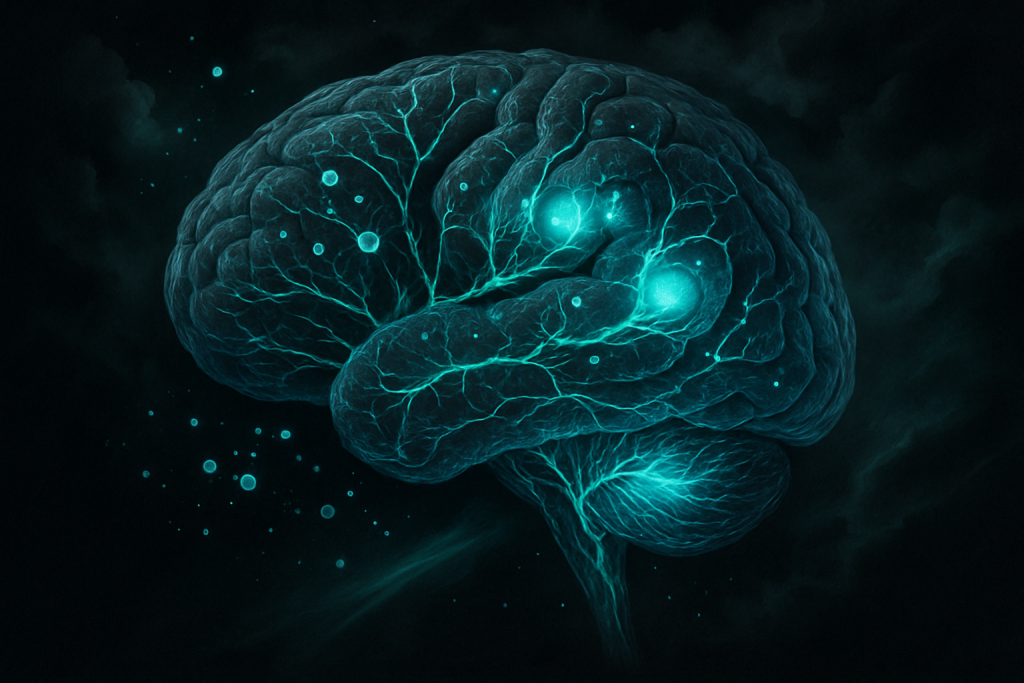
Image generated by AI
Every eleven seconds, someone in the world dies by suicide—a stark reminder that mental health remains one of humanity’s most pressing challenges. Yet despite its prevalence, the science underlying psychological wellbeing remains poorly understood by the general public, shrouded in misconceptions that range from the purely biological to the purely psychological. Understanding why humans struggle with mental health requires us to move beyond simplistic explanations and embrace the intricate interplay of neurobiology, cognition, environment, and social connection that shapes our emotional lives.
In 2023, the World Health Organization reported that over 280 million people worldwide suffer from depression, while anxiety disorders affect approximately 4 percent of the global population. The post-pandemic era has only intensified these numbers, with rates of loneliness, burnout, and existential distress climbing sharply across all age groups. As neuroscience, psychology, and behavioral economics converge in new ways, researchers are uncovering profound insights into why our minds are so vulnerable to suffering—and, importantly, what we can do about it.
What Is Mental Health and Wellbeing?
Mental health and wellbeing represent far more than the mere absence of psychiatric disorder. Rather, the World Health Organization defines mental health as “a state of mental well-being in which an individual realizes his or her own abilities, can cope with the normal stresses of life, can work productively and fruitfully, and is able to make a contribution to his or her community.” True wellbeing encompasses emotional resilience, psychological flexibility, a sense of purpose, meaningful relationships, and the ability to navigate life’s inherent uncertainties. This definition moves beyond the traditional medical model of illness and health, recognizing that mental wellbeing exists on a spectrum, with individuals fluctuating across time and circumstances.
The modern conception of mental health as a distinct field of scientific inquiry emerged in the early 20th century, with pioneering work by William James, Carl Jung, and Sigmund Freud establishing psychology as a legitimate discipline. However, the biopsychosocial model—which integrated biological, psychological, and social factors into a unified understanding of mental health—didn’t crystallize until the 1970s through the work of psychiatrist George Engel. This framework fundamentally shifted how scientists and clinicians conceptualized mental suffering, moving away from purely biological reductionism toward a more holistic understanding that acknowledged the inseparability of mind, body, and social context.
What the Science Says
At the neurobiological level, mental health struggles arise from complex dysregulation across multiple brain systems, particularly those governing stress response, emotional processing, and social bonding. The amygdala, a small almond-shaped structure deep in the brain’s temporal lobe, serves as the brain’s alarm system, detecting potential threats and triggering the fight-flight-freeze response. In individuals experiencing anxiety or depression, this system often becomes hyperactive, creating a state of perpetual vigilance where the brain interprets neutral stimuli as dangerous. Simultaneously, the prefrontal cortex—responsible for rational thinking, emotional regulation, and perspective-taking—shows reduced activity and connectivity, meaning the brain’s “executive control center” has diminished ability to regulate the alarm bells being rung by the amygdala.
Imagine your mind as a smoke detector system in a house. In a well-calibrated system, the detector responds appropriately to actual smoke, triggering reasonable alarm. But in anxiety or depression, the detector becomes hypersensitive, triggering alarms at the slightest provocation—a wisp of steam from a shower, cooking smells, even dust particles. Meanwhile, the homeowner’s ability to rationally assess whether there’s a real fire has been compromised, so they can’t easily override the alarms. They remain in a state of mobilized emergency, exhausted and hypervigilant. This neurobiological mismatch between threat detection and threat appraisal characterizes much of what we call anxiety disorders and depression.
How This Affects Everyday Life
The practical consequences of these neurobiological patterns ripple through every domain of human functioning. Depression, characterized by a neurochemical deficit in serotonin and dopamine, drains motivation and pleasure from previously enjoyed activities—a symptom called anhedonia that can leave someone unable to experience joy even at moments that should be celebratory. Anxiety disorders hyperactivate the body’s stress response system, flooding the bloodstream with cortisol and adrenaline even in objectively safe circumstances, creating a relentless state of physical tension that exhausts the body’s regulatory systems. Beyond individual suffering, these conditions cascade into workplace productivity loss (costing the global economy an estimated $1 trillion annually), fractured relationships, substance abuse as self-medication, and in severe cases, suicide and self-harm.
Modern therapeutic interventions leverage these neurobiological insights directly. Cognitive-behavioral therapy (CBT), one of the most empirically validated treatments, works by retraining the prefrontal cortex to override amygdala-driven threat responses through deliberate cognitive and behavioral practice. Antidepressants like SSRIs (selective serotonin reuptake inhibitors) function by increasing available serotonin in synaptic spaces, partially correcting the neurochemical deficit underlying depression. Mindfulness-based interventions, validated by hundreds of studies, strengthen connections between the prefrontal cortex and the amygdala, essentially improving the “volume control” on threat detection. Even social connection operates at a biological level—oxytocin and other neurochemicals released during positive social interaction directly down-regulate stress response systems.
Recent Breakthroughs in Mental Health and Wellbeing
The past few years have witnessed remarkable advances in understanding mental health at unprecedented scales of biological resolution. In 2023, researchers using advanced neuroimaging techniques discovered that depression involves not just isolated deficits in neurotransmitter systems, but rather widespread disruption in neural network integration—the brain’s ability to coordinate communication across different regions. The ENIGMA consortium, an international collaboration of over 1,000 neuroscientists, released findings showing that depression correlates with systematic changes in brain structure, particularly in the hippocampus and prefrontal cortex, validating long-suspected anatomical dimensions of the condition. Simultaneously, work in epigenetics has revealed that stress experiences can directly alter gene expression related to stress response—literally changing how our genetic code is “read” without altering the DNA sequence itself.
Emerging therapeutic approaches are capitalizing on these discoveries in innovative ways. Psychedelic-assisted therapy, particularly with psilocybin and MDMA, has shown dramatic results in treating treatment-resistant depression and PTSD in clinical trials, with some patients experiencing relief after just a few sessions. Neurofeedback technology is advancing, allowing individuals to visualize real-time brain activity and learn to self-regulate previously automatic neural patterns. Researchers are also exploring the gut-brain axis more thoroughly, discovering that the bacterial microbiome influences mood and mental health through mechanisms involving short-chain fatty acids and neurotransmitter precursors, opening entirely new avenues for intervention through dietary modulation.
Why Mental Health and Wellbeing Matters for the Future
As artificial intelligence becomes increasingly prevalent in our lives, understanding mental health becomes crucial to managing technology’s psychological impacts. The same neurobiological systems that make us vulnerable to depression and anxiety are precisely those exploited by algorithmic recommendation systems designed to maximize engagement—essentially hacking our threat detection and reward systems for profit. The rates of anxiety and depression among adolescents have skyrocketed since the rise of social media, a correlation that researchers increasingly argue reflects social platforms’ misalignment with our psychological needs for autonomy, genuine connection, and realistic self-assessment. Understanding the science of mental wellbeing is therefore not merely a clinical concern, but a fundamental prerequisite for designing technology and society in ways that respect human psychological architecture.
However, significant challenges remain in translating neurobiological understanding into accessible, scalable mental health interventions. The cost of psychotherapy, medication, and specialized treatments remains prohibitive for billions of people globally, particularly in low- and middle-income countries where mental health infrastructure is virtually nonexistent. Additionally, the biological heterogeneity of conditions like depression means that a given treatment works for only 60-70 percent of patients, requiring extensive trial-and-error to find effective interventions. The field must also grapple with the reality that mental wellbeing cannot be purely medicalized—cultural factors, socioeconomic status, systemic inequities, and existential questions about meaning and purpose shape mental health in ways that no neurotransmitter can fully capture.
Key Takeaways
- Mental health struggles arise from dysregulation in brain systems governing threat detection and emotional processing, with the hyperactive amygdala and underactive prefrontal cortex creating a mismatch between perceived danger and actual danger.
- Depression and anxiety involve both neurochemical imbalances (particularly serotonin and dopamine) and structural changes in brain architecture that accumulate over time and can be partially reversed through appropriate treatment.
- Cognitive-behavioral therapy, antidepressant medications, and mindfulness-based interventions represent the most evidence-based approaches currently available, though they remain effective for only 60-70 percent of individuals.
- Psychedelic-assisted therapy and microbiome-based interventions represent emerging frontier approaches with remarkable early results, though they remain largely inaccessible and require further validation in diverse populations.
- As technology becomes increasingly influential in shaping human behavior, understanding the neurobiology of wellbeing becomes essential to both treating mental illness and designing systems that respect rather than exploit psychological vulnerabilities.
Explore TED Talks on Mental Health and Wellbeing:
TED content is used under CC BY-NC-ND 4.0. © TED Conferences, LLC.
Frequently Asked Questions
What does the World Health Organization identify as the key components that define mental health beyond just the absence of disorder?
The WHO defines mental health as a state of mental well-being, which encompasses more than simply lacking psychiatric disorder. This definition recognizes that true mental health involves positive psychological functioning and life satisfaction, not just the absence of illness.
How do neurobiology, cognition, environment, and social connection interact to influence mental health outcomes?
Mental health is shaped by a complex interplay between brain chemistry and neural processes, how we think and process information, our physical and social surroundings, and the quality of our relationships and social bonds. These four dimensions are interconnected, meaning dysfunction in one area can affect the others, which is why comprehensive treatment often addresses multiple factors.
Why has the post-pandemic period specifically shown increases in loneliness, burnout, and existential distress across all age groups?
The article indicates that post-pandemic mental health deterioration has occurred but does not provide mechanistic explanations for why this pattern emerged across all age groups. The specific neurobiological and psychological mechanisms underlying these increases would require the full research context beyond the excerpt provided.
What does current research reveal about the biological versus psychological causes of mental health struggles?
Contemporary neuroscience and psychology research reject simplistic explanations that attribute mental health issues solely to biology or purely to psychological factors, instead revealing that both neurobiological and psychological mechanisms work together. This convergence of disciplines shows that effective understanding requires examining how brain chemistry, thought patterns, and behavioral responses all contribute to mental health outcomes.