AI Insight
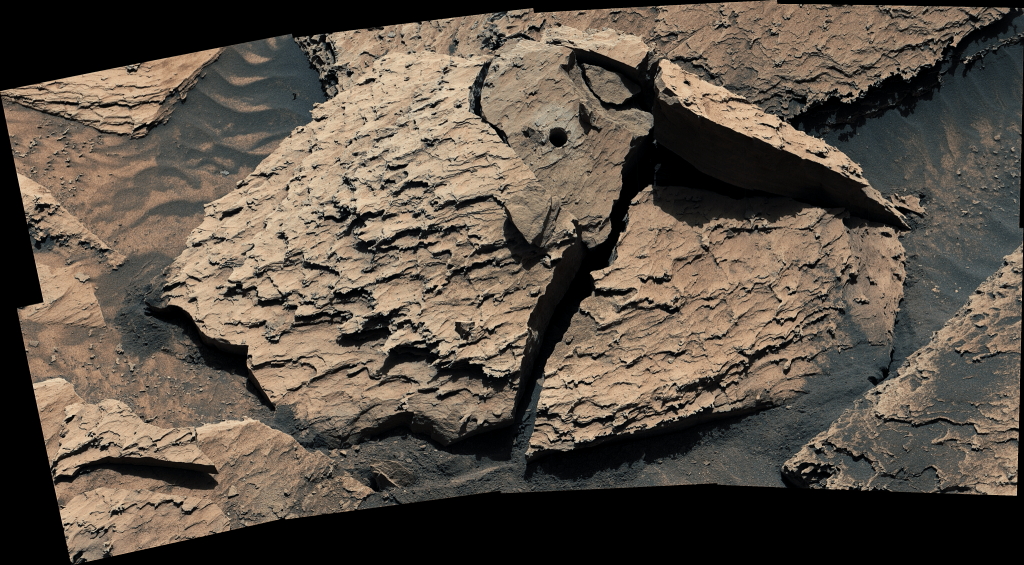
On April 25, 2026, NASA's Curiosity rover drilled a rock sample on Mars, accidentally dislodging the entire rock, nicknamed "Atacama," which became lodged on its robotic arm. Engineers spent several days remotely repositioning the arm and vibrating the drill to free the rock, which eventually detached on May 1 and broke into pieces. The rock, estimated at 1.5 feet in diameter and 6 inches thick, was subsequently imaged by Curiosity's Mastcam on May 6, with the drill hole remaining visible in the fragmented material.
Why it matters
This incident highlights the operational challenges of remote robotic geology on Mars and the complexity of real-time engineering problem-solving across interplanetary distances. Understanding how Martian rocks respond to mechanical drilling informs future rover mission planning and instrument design.
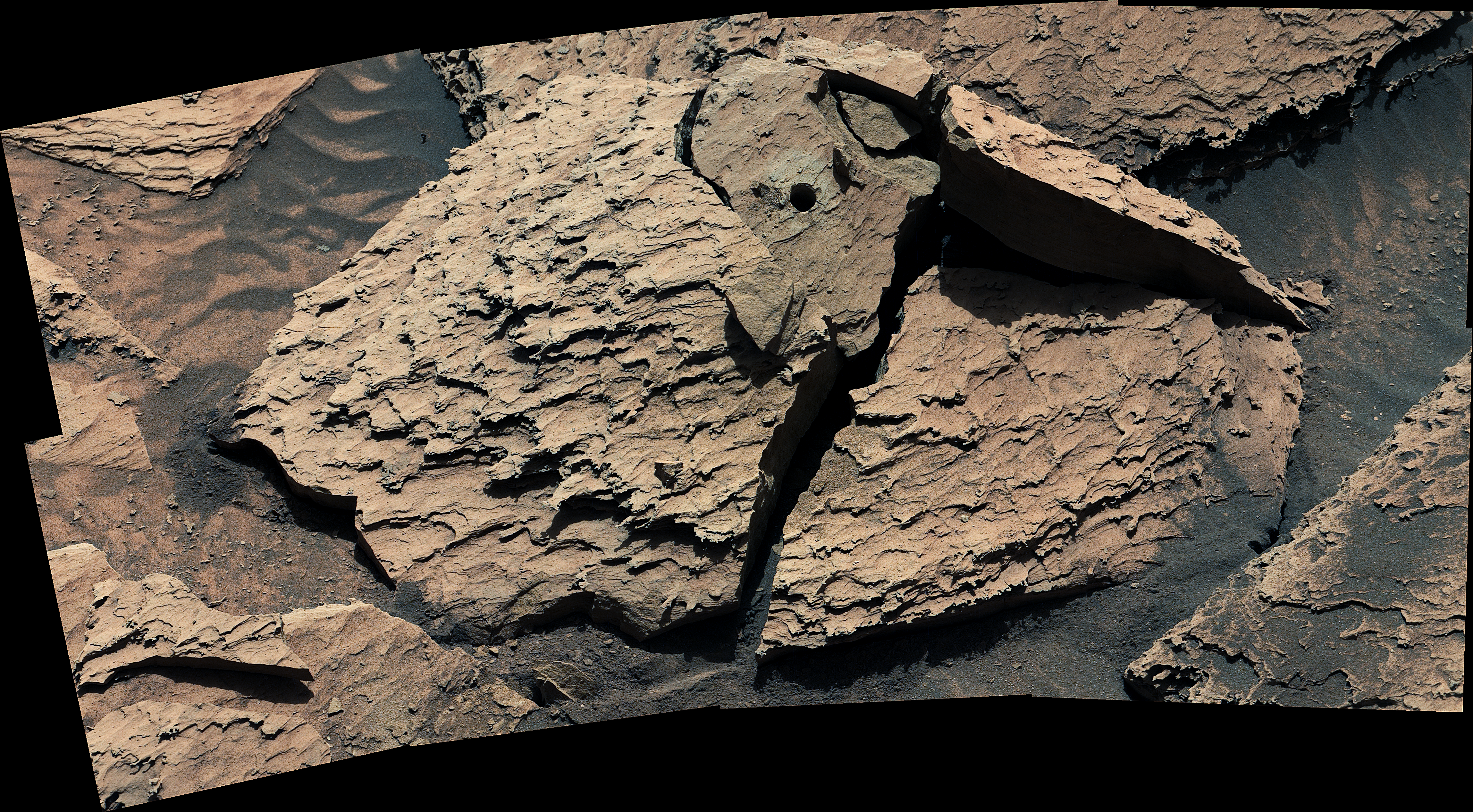
After NASA’s Curiosity Mars rover drilled a sample from this rock on April 25, 2026, it withdrew its robotic arm and pulled the entire rock off the surface with it. Engineers spent several days repositioning the arm and vibrating the drill to try and get the rock loose. When it finally detached on May 1, the rock broke into pieces.
This close-up image of the rock was produced by Curiosity’s Mast Camera, or Mastcam, on May 6. Nicknamed “Atacama,” the rock is estimated to be 1.5 feet in diameter at its base and 6 inches thick. It would weigh roughly 28.6 pounds on Earth (and about a third of that on Mars). The circular hole produced by Curiosity’s drill is visible in the rock.
See Atacama stuck on Curiosity’s drill.
Credit: NASA/JPL-Caltech/MSSS