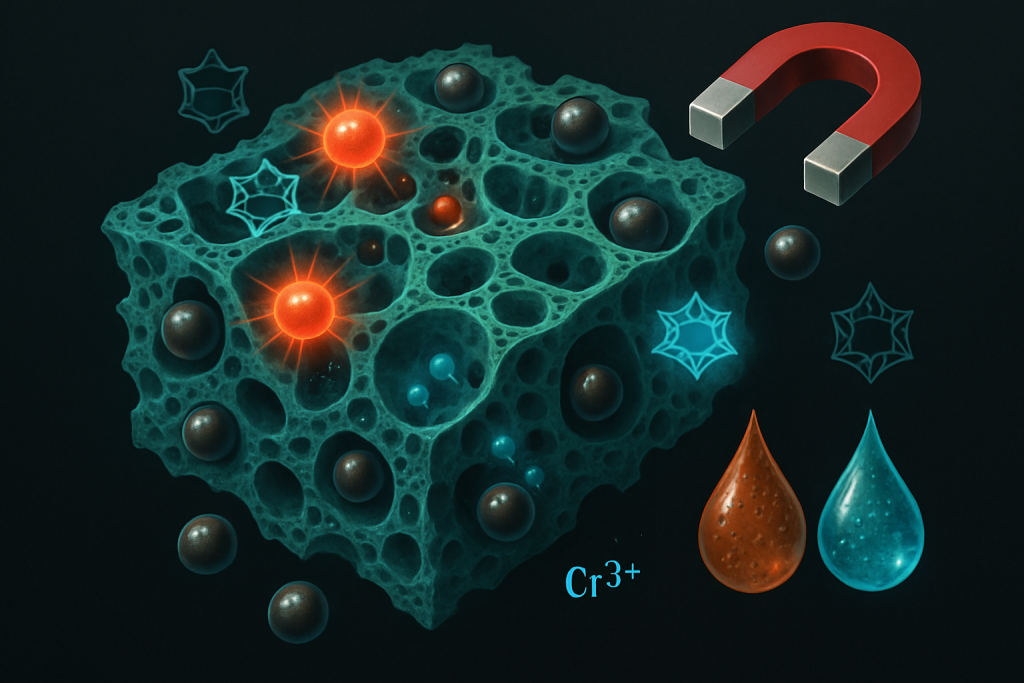
Image generated by AI
AI Insight
Researchers developed a magnetically recoverable composite sponge made from activated carbon, carboxymethyl cellulose, and β-cyclodextrin for removing hexavalent chromium (Cr(VI)) from wastewater. The material demonstrates high adsorption capacity for Cr(VI) while simultaneously reducing it to the less toxic trivalent form Cr(III). The sponge's magnetic properties enable easy recovery and reuse, making it suitable for sustainable water treatment applications.
Why it matters
Hexavalent chromium is a highly toxic and carcinogenic pollutant commonly found in industrial wastewater from metal plating, leather tanning, and other manufacturing processes. This reusable, magnetically recoverable material offers a practical and cost-effective solution for treating contaminated water while converting chromium to a less harmful form, addressing both pollution removal and detoxification.
Understand the Science