AI Insight
California-based Auxilium Biotechnologies successfully bioprinted kidney and liver tissues aboard the International Space Station in June 2024, marking the first time either tissue type has been manufactured in space. The company's AMP-1 orbital bioprinter also produced cartilage tissues and 28 nerve repair implants during the mission, using cell and tissue designs from the Wake Forest Institute for Regenerative Medicine. The bioprinted materials returned to Earth on June 17 via SpaceX Dragon cargo capsule, with researchers noting that uniform cell distribution achieved in microgravity demonstrates potential advantages for space-based tissue manufacturing.
Why it matters
This breakthrough demonstrates the feasibility of producing multiple types of functional biological tissues and medical implants in a single space mission, potentially opening pathways for manufacturing organs and regenerative medicine products in microgravity environments. The technology could address organ shortage issues on Earth and support long-duration space missions requiring medical supplies.
Understand the Science
A company just produced kidney and liver tissue in space for the first time, using a method called bioprinting, which 3D-prints living tissue.
The announcement comes from California-based Auxilium Biotechnologies, whose AMP-1 orbital bioprinter made the breakthrough. The bioprinter used cell and tissue designs from the Wake Forest Institute for Regenerative Medicine in North Carolina.
“The ability to manufacture multiple tissue types alongside clinically relevant medical products highlights both the versatility and scalability of our technology,” Auxilium CEO Jacob Koffler said in a statement today (July 9).
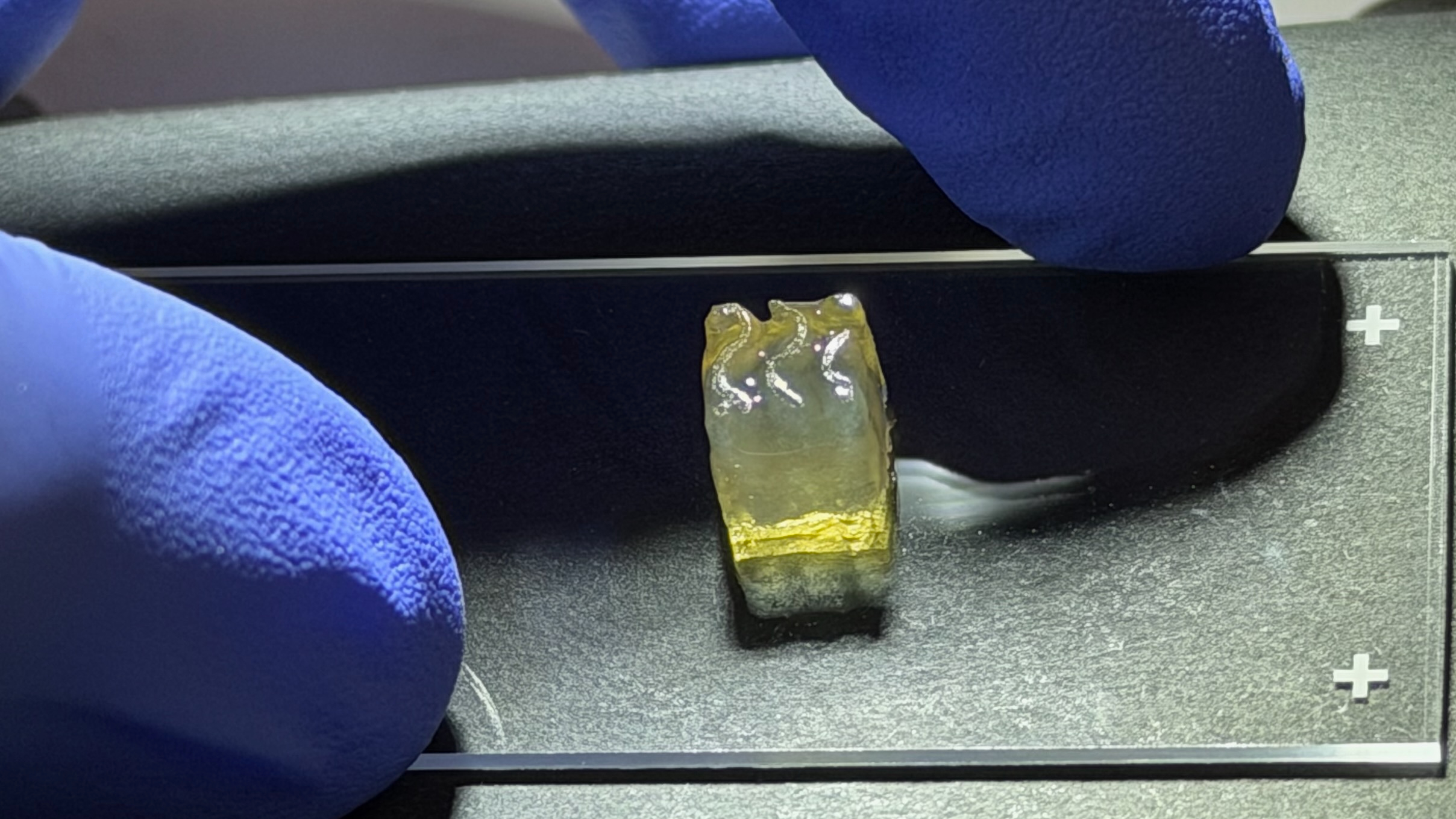
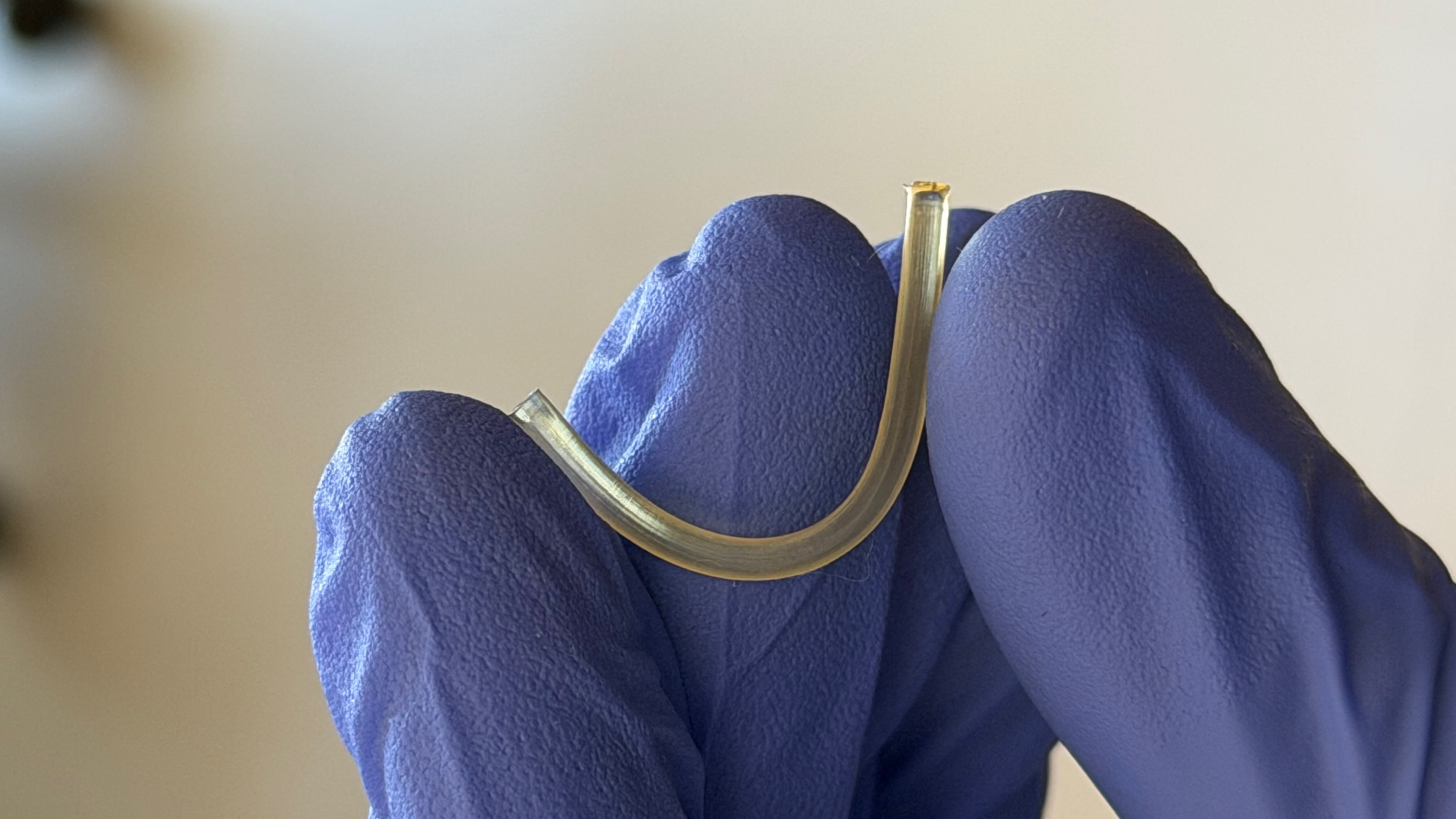
The experiments took place aboard the International Space Station in June. In addition to bioprinting kidney, liver, and cartilage tissues, the AMP-1 machine also created 28 nerve repair implants. The bioprinted materials returned to Earth on a SpaceX Dragon cargo capsule that splashed down in the Pacific Ocean on June 17.
“Successfully bioprinting living liver and kidney tissue aboard the International Space Station marks an important step forward for regenerative medicine,” WFIRM director Anthony Atala said in a statement today (July 9). “The uniform cell distribution achieved aboard the space station points to real possibilities for manufacturing medical devices and tissues in space.”
This wasn’t the first bioprinting experiment to be conducted on the ISS. For example, in 2018, Russian cosmonaut Oleg Kononenko tested a machine called the “Bioprinter Organ.Aut,” which successfully assembled cartilage cells using a magnetic field.
However, Auxilium’s AMP-1 bioprinter is the first tool that has produced multiple types of tissue in space, as well as the first to make kidney and liver tissue in the final frontier. Auxilium says this flexibility will be important as commercial interests expand manufacturing hubs in space for biotech, healthcare and advanced materials development.
“This mission marks an exciting step forward for in-space biomanufacturing and demonstrates what can be achieved when innovative technology is paired with strong collaboration,” Isac Lazarovits, Auxilium’s engineering vice president, said in the same statement.
“Demonstrating multiple product classes and meaningful production volume within a single mission is an important milestone as we continue advancing toward routine manufacturing operations in orbit,” Lazarovits continued.
Source: Space medicine breakthrough? Kidney and liver tissue bioprinted off Earth for 1st time ever