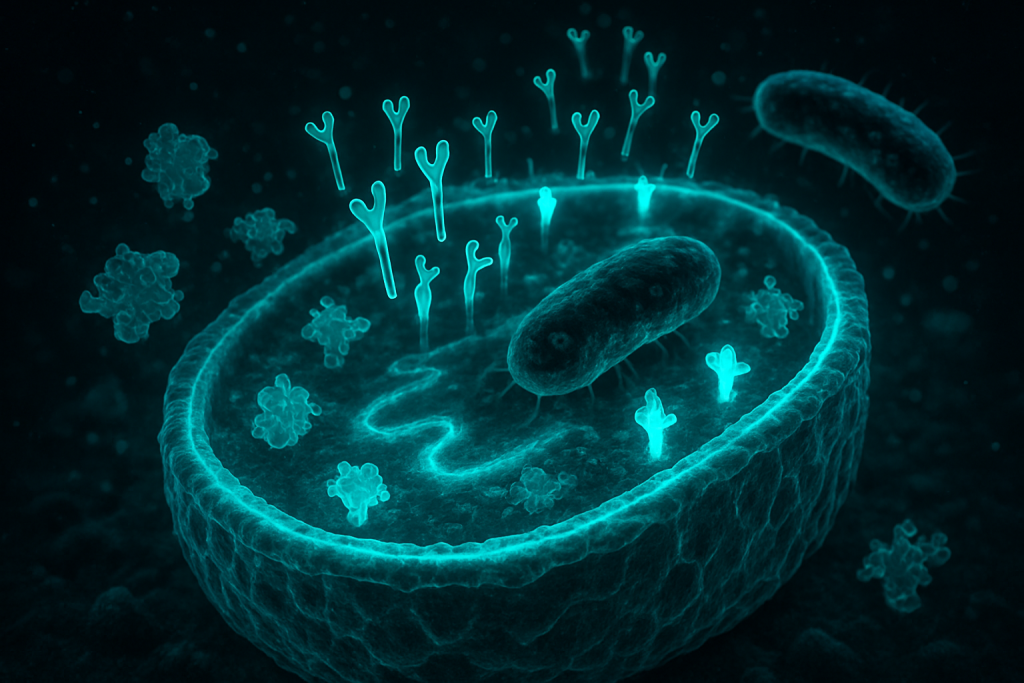
Image generated by AI
Every second of every day, plants are under siege. Fungi, bacteria, viruses, and parasitic organisms constantly probe the defenses of leaves, roots, and stems, seeking entry into living tissue where they can feed and reproduce. Yet most plants survive these assaults remarkably well—not through thick skin or rapid escape, but through an elaborate surveillance system so sophisticated that it rivals our own immune defenses. This hidden war, waged silently in the cellular trenches of plant tissue, involves molecular recognition systems that can distinguish friend from foe with stunning precision, triggering orchestrated chemical responses that can transform a plant into a fortress within hours.
Understanding how plants recognize and resist pathogens has become urgent in an age of global food insecurity, climate change, and emerging crop diseases. As human populations push toward ten billion and arable land shrinks, crop losses to disease—currently accounting for up to 40 percent of global food production in some regions—threaten our ability to feed ourselves. Beyond agriculture, the principles of plant immunity offer profound insights into how life itself evolved to survive in a microbial world, potentially illuminating new strategies for protecting human health and engineering more resilient ecosystems.
What Is Plant-Pathogen Recognition and Defense Mechanisms?
Plant-pathogen recognition and defense mechanisms refer to the sophisticated biological systems through which plants detect microbial invaders and mount targeted immune responses to neutralize them. Unlike animals, plants lack circulating immune cells or antibodies, yet they possess an even more distributed and localized system: millions of individual cells throughout the plant body can independently recognize pathogenic threats and respond by producing antimicrobial compounds, thickening cell walls, or triggering programmed cell death to contain an infection. This recognition occurs through two primary layers of immunity. The first layer, called pattern-triggered immunity (PTI), involves pattern recognition receptors on plant cell surfaces that detect conserved molecular signatures common to many pathogens—such as bacterial flagellin or fungal chitin—much as a security system might recognize a shared trait of known criminals. The second layer, called effector-triggered immunity (ETI), involves intracellular surveillance proteins called resistance (R) proteins that directly monitor whether a pathogen has attempted to hijack the plant’s cellular machinery, triggering rapid and often dramatic local immune responses.
The story of plant immunity research begins in earnest in the late 1990s, when geneticists discovered the first plant resistance genes in model organism Arabidopsis thaliana and later in crops like rice and tobacco. Prior to these discoveries, plant immunity seemed almost magical—farmers and botanists knew plants could resist certain diseases, but the molecular basis remained mysterious. The breakthrough came when researchers like Brian Staskawicz and colleagues systematically analyzed how specific plant varieties could resist particular pathogens while closely related varieties could not. By comparing their genomes, scientists identified conserved genes encoding receptor proteins with a distinctive structure: a nucleotide-binding domain coupled to leucine-rich repeats (NBS-LRR), a molecular “sensor” that appeared exquisitely tuned to detect specific pathogenic intrusions. These discoveries opened an entirely new field and eventually earned major recognition in the scientific community, as researchers realized plants possessed an adaptive recognition system nearly as sophisticated as the adaptive immunity of vertebrates, but operating through entirely different molecular hardware.
How It Works in Nature
The mechanism of plant pathogen recognition unfolds like a multi-layered security system with increasingly sensitive alarms. When a pathogen first encounters a plant, it may breach the outer cuticle—a waxy barrier covering leaves and stems. As soon as the pathogen begins to grow or replicate, it inevitably releases or exposes molecular patterns that plant cells recognize. These patterns, called pathogen-associated molecular patterns (PAMPs), are like biological uniforms that reveal a pathogen’s identity. Bacterial flagellin, the protein that makes bacterial flagella spin, is one such pattern; fungal cell walls contain chitin polymers that serve the same role. Scattered across plant cell membranes are pattern recognition receptors (PRRs) that function like microscopic security cameras, constantly sampling the molecular environment. When a PRR binds to a PAMP, it triggers pattern-triggered immunity: the cell rapidly activates defense genes, producing enzymes that strengthen cell walls, generate reactive oxygen species that poison invaders, and synthesize antimicrobial compounds. This first line of response is often sufficient to stop the infection before it spreads.
Consider what happens when a bacterium attempts to infect a leaf. The plant’s surface cells detect bacterial flagellin through a receptor called FLS2. This binding activates a molecular cascade—essentially a cellular alarm system—that propagates through protein phosphorylation, a process of adding chemical tags that alter protein function. Within minutes, calcium ions flood into the cell, gene expression shifts dramatically, and the plant begins manufacturing antimicrobial peptides and enzymes called pathogenesis-related (PR) proteins. The infection site becomes inhospitable, filled with toxic compounds and hardened cell walls. For many pathogens, the process ends here. But sophisticated pathogens have evolved countermeasures. Certain bacteria and fungi produce “effector” proteins—molecular tools they inject into plant cells to suppress the immune response. These effectors might block the calcium signaling cascade, degrade PR proteins, or suppress the expression of defense genes. This is where the second recognition layer becomes critical. Plants have evolved resistance (R) proteins that function as molecular tripwires for these effector proteins. When an R protein detects the presence of a specific effector—either by direct binding or by monitoring whether the effector has damaged a surveillance target—it activates a far more dramatic response: effector-triggered immunity (ETI). This response often involves hypersensitive response (HR), a form of programmed cell death in the infected region that seals off the pathogen by essentially sacrificing the infected cells.
Medical and Scientific Relevance
While plant immunity might seem distant from human concerns, it directly impacts global health through agriculture and food security. Plant diseases reduce crop yields and increase reliance on chemical pesticides, which carry environmental and health costs. Understanding plant-pathogen recognition offers a path toward crops that resist emerging diseases without chemical intervention, potentially reducing pesticide use by up to 30 percent in some applications. Beyond agriculture, plant immunity research illuminates fundamental principles of how life recognizes and responds to microbial threats—principles that echo in the immune systems of animals, including humans. The pattern recognition receptors discovered in plants have homologous structures in human immune cells called Toll-like receptors (TLRs), which operate on remarkably similar principles. Research into plant R proteins and their mechanisms has inspired novel approaches to understanding and potentially enhancing human immunity to infectious disease. Additionally, plant immune signaling molecules—compounds like salicylic acid and jasmonic acid—are increasingly being studied for roles in human health and potential therapeutic applications.
In practical terms, plant pathology companies and agricultural biotechnology firms now routinely screen crop varieties for disease resistance genes and use this knowledge to guide breeding programs. Companies like Syngenta, Corteva, and Bayer employ armies of plant immunologists to identify and pyramidize multiple R genes into single varieties, creating crops resistant to several diseases simultaneously. Research institutions are developing gene-edited crop varieties with enhanced recognition capabilities—plants that can sense multiple pathogens more quickly or mount faster immune responses. The rice blast pathogen, which destroys enough rice annually to feed 60 million people, has prompted intensive research into recognition mechanisms; recent work has identified new R genes effective against previously resistant strains. Similarly, the devastating wheat disease Septoria tritici, and the late blight pathogen that caused the Irish Famine, are targets of recognition-based breeding and genetic engineering efforts aimed at developing durable resistance.
Recent Breakthroughs in Plant-Pathogen Recognition and Defense Mechanisms
The past two to three years have witnessed remarkable advances in understanding how plants coordinate immune responses across multiple signaling pathways. In 2022 and 2023, several research teams, including groups at the Sainsbury Laboratory and Max Planck Institute, revealed unprecedented structural details of how certain R proteins bind to pathogenic effectors, providing atomic-level understanding of immune recognition. These structural studies showed that R proteins often function as part of larger complexes called resistosomes—multiprotein assemblies that form upon effector detection and orchestrate the immune response. Complementary research revealed that plants use a sophisticated system of immune hormone crosstalk: the signaling molecules salicylic acid (SA), jasmonic acid (JA), and ethylene work together in complex networks to fine-tune responses to different pathogen types, with new studies mapping how these pathways interact and suppress one another to prevent wasteful or damaging immune overreaction. Additionally, researchers have discovered that plants use transcriptional reprogramming on a massive scale during infection, with entire suites of genes switching expression states within hours, controlled by master regulatory proteins called transcription factors that integrate signals from multiple immune pathways.
Current research frontiers include understanding how plants recognize and respond to viruses, which remain among the most difficult pathogens to combat since they hijack the plant’s own molecular machinery for replication. Emerging evidence suggests plants possess RNA surveillance systems that can detect viral nucleic acids, triggering RNA interference pathways that destroy viral genomes. Another active area investigates how plants integrate information about pathogen presence with environmental stress signals—how drought, heat, or nutrient limitation affects immune capability, a crucial question given climate change. Researchers are also exploring whether plants can “remember” past infections through epigenetic changes, potentially providing longer-lasting immunity; preliminary evidence suggests that priming compounds like salicylic acid can enhance immune responsiveness in subsequent encounters with pathogens, opening possibilities for plant vaccines or immunostimulants.
Why Plant-Pathogen Recognition and Defense Mechanisms Matter for the Future
As climate change intensifies, the landscape of plant disease is shifting dramatically. Warmer temperatures expand the geographic range of many pathogens, allowing tropical diseases to invade temperate crop regions. Simultaneously, the social and economic pressure to reduce chemical inputs in agriculture creates a compelling need for biologically-based resistance. Understanding plant-pathogen recognition mechanisms provides the intellectual foundation for engineering crops that can adapt to these challenges. Synthetic biology approaches could theoretically stack multiple recognition pathways into single varieties, creating plants resistant to diverse disease threats. Precision breeding guided by knowledge of recognition genetics accelerates the development of resistant varieties, potentially reducing the time from disease emergence to resistant crop deployment from decades to years. Furthermore, as we face potential future pandemics—including zoonotic pathogens jumping from animals to humans—research into plant immunity provides general principles applicable to understanding microbial recognition systems across all life forms.
However, significant challenges remain. Pathogens evolve continuously, with new strains regularly overcoming plant resistance genes through mutation of their effector proteins. The development of durable, broad-spectrum resistance requires understanding why some R genes provide lasting protection while others are quickly defeated. Additionally, the long breeding timelines for crop development mean resistance genes discovered today might not reach farmers’ fields for 10-15 years—by which time pathogens may have already evolved workarounds. Regulatory barriers surrounding genetically modified organisms in many regions further slow deployment of engineered disease-resistant crops. There are also ecological concerns: introducing genetically modified plants, even those with improved disease resistance, could have unforeseen ecosystem effects. Understanding and mitigating these risks requires continued research into plant ecology and the broader impacts of resistant crop varieties on microbial communities and food webs.
Key Takeaways
- Plants possess two-layered immune systems—pattern-triggered immunity (PTI) that recognizes common pathogen signatures, and effector-triggered immunity (ETI) that detects specific attempts at cellular hijacking—providing sophisticated defense without circulating immune cells.
- Plant pathogen recognition operates through pattern recognition receptors (PRRs) and resistance (R) proteins that bind to pathogenic molecular signatures or effectors, triggering rapid chemical responses including antimicrobial compound production and programmed cell death.
- The most promising applications involve engineering crops with stacked resistance genes and using recognition-based breeding to develop disease-resistant varieties, potentially reducing global crop losses and chemical pesticide use.
- Recent structural and molecular breakthroughs have revealed how R proteins form resistosome complexes and coordinate immune responses through hormone signaling networks, with research now extending to viral recognition and immune memory.
- Understanding plant immunity will be critical for global food security in a warming climate and provides fundamental insights into how life detects and responds to microbial threats across all domains of biology.
Explore TED Talks on Plant-Pathogen Recognition and Defense Mechanisms:
TED content is used under CC BY-NC-ND 4.0. © TED Conferences, LLC.
Frequently Asked Questions
How do plants distinguish between pathogenic microorganisms and beneficial ones at the molecular level?
Plants use pattern recognition receptors (PRRs) to detect pathogen-associated molecular patterns (PAMPs) such as fungal cell wall components or bacterial flagellin, which trigger immediate immune responses. This molecular surveillance system allows plants to distinguish pathogens from non-threatening microbes through specific biochemical signatures.
What happens inside plant cells within hours after pathogen recognition to transform them into a defensive fortress?
Upon pathogen detection, plants rapidly activate cascades of chemical signaling that trigger production of antimicrobial compounds, cell wall reinforcement, and programmed cell death of infected cells to contain the infection. These coordinated responses involve the synthesis of defensive proteins, reactive oxygen species, and hormones like salicylic acid that mobilize the plant's entire immune system.
Why do plants lose up to 40 percent of global food production to disease despite having sophisticated defense mechanisms?
Pathogens continuously evolve virulence factors that can suppress or evade plant immune recognition systems, while agricultural monocultures reduce genetic diversity and create ideal conditions for disease spread. Additionally, climate change and global trade introduce novel pathogen strains to regions where plants lack co-evolved resistance mechanisms.
Can understanding plant immune mechanisms help develop new strategies to protect human health?
Yes, plant pathogen recognition systems share fundamental principles with vertebrate immunity, such as pattern recognition and localized cell death responses, offering insights into how multicellular organisms evolved surveillance and defense systems. These principles could inform development of novel immunotherapies and vaccines by revealing evolutionary-tested strategies for combating microbial threats.