AI Insight
The featured astronomical photograph captures Comet C/2025 R3 (PanSTARRS) with its distinctive blue ion tail and dust tail, photographed from Hautacam, France in April, alongside a colorful meteor streak in the foreground. The meteor and comet are not related, despite appearing in the same image, as the comet is much farther away and meteors rarely can be definitively matched to specific comets among the thousands that have passed through the inner Solar System. The article highlights three upcoming meteor showers in November: the Southern Taurids (peaking first), Northern Taurids (peaking about a week later, both originating from Comet 2P/Encke), and the Leonids (peaking mid-month, originating from Comet 55P/Tempel-Tuttle).
Why it matters
This educational content helps the public understand the distinction between comets and meteors, two commonly confused celestial phenomena, while providing practical information about optimal meteor shower viewing opportunities. The image demonstrates how visual astronomy can capture multiple unrelated objects in a single frame, illustrating the complexity of identifying meteor origins.
Understand the Science
APOD
Astronomy Picture of the Day
Discover the cosmos! Each day a different image or photograph of our fascinating universe is featured, along with a brief explanation written by a professional astronomer.
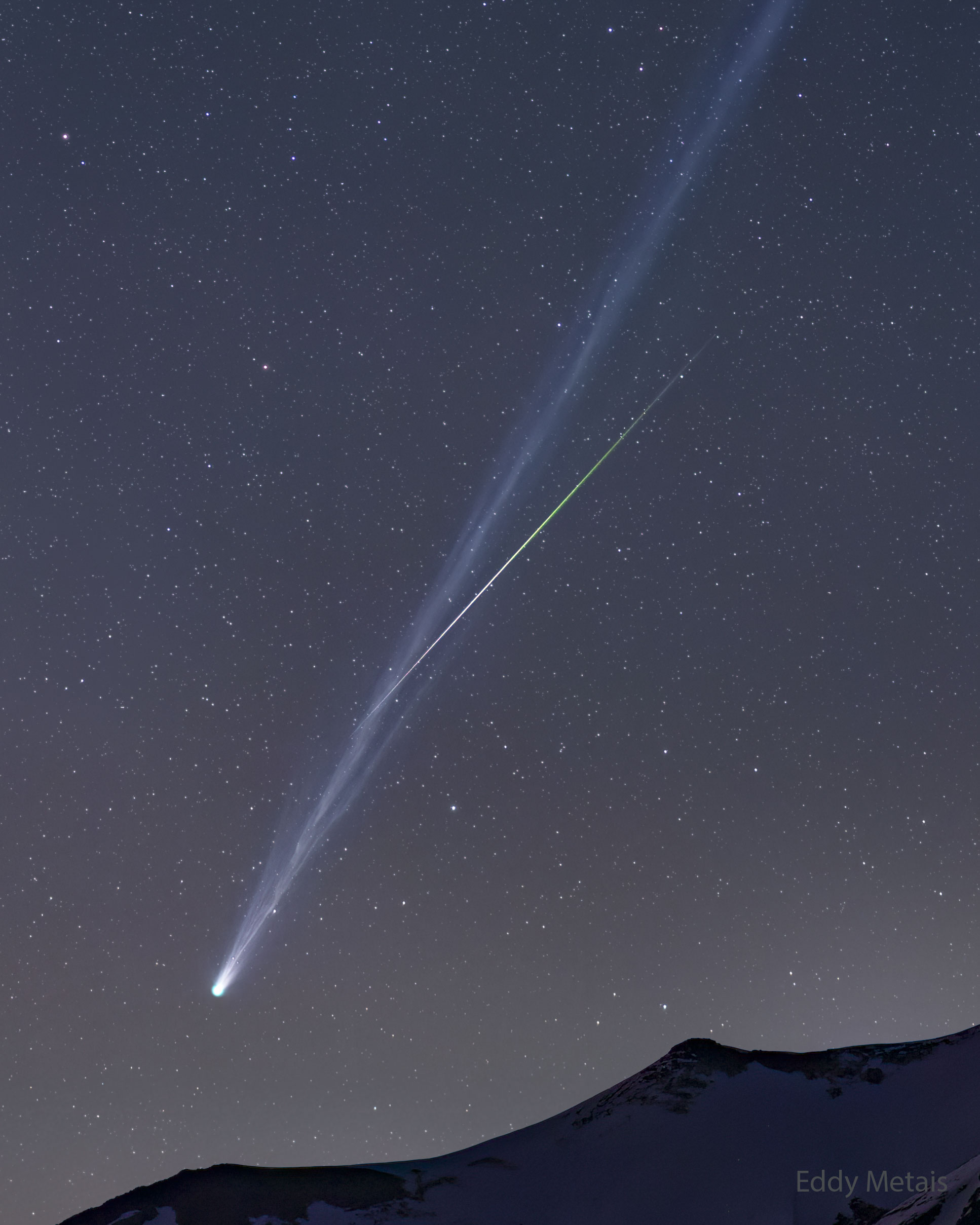
Comet PanSTARRs and Rainbow Meteor
Explanation: Did this meteor come from that comet? Probably not. Although many meteors do originate from comets, there are thousands of comets that have visited the inner Solar System recently, and matching meteors to them can be tricky. And to be clear, the pictured comet is far behind the streaking meteor. Comet C/2025 R3 (PanSTARRS) was captured from Hautacam, France in April when the giant space iceberg sported impressive ion (blue) and dust tails. Sand-sized rocky debris that enters Earth’s atmosphere typically appears as meteors, while the colorful foreground streak here may indicate a complicated composition. This month three notable meteor showers will reach their peaks. Over the next few days, the Southern Taurids will be reaching their apex, while the Northern Taurids will top out about a week later. Both originate from Comet 2P/Encke. November is most famous for the Leonids Meteor Shower, though, which originates from Comet 55P/Tempel-Tuttle and will reach its crescendo in about two weeks.
Tomorrow’s picture: open space
| Date | November 3, 2026 |
|---|---|
| Credit & Copyright | Eddy Metais |
| Authors & editors: | Robert Nemiroff, Jerry Bonnell, Cecilia Chirenti, Keighley Rockcliffe |
| A service of: |
ASD at NASA / GSFC, NASA Science Activation & Michigan Tech. U. |
Source: APOD: 2026 November 3 – Comet PanSTARRs and Rainbow Meteor