Medicine


Multi-region m6A epitranscriptome profiling of the human brain reveals spatial and temporal variation and enrichment of disease-associated loci

Nature Neuroscience, Published online: 09 December 2025; doi:10.1038/s41593-025-02112-z Epitranscriptomic (m6A) profiling across five human brain regions and developmental stages uncovers region-specific and age-specific dynamics, preferential enrichment in disease-associated genes, and colocalization with disease risk loci.
Convergent information flows explain recurring firing patterns in cerebral cortex

Nature Neuroscience, Published online: 08 December 2025; doi:10.1038/s41593-025-02128-5 Reproducible cortical firing patterns arise from hierarchical modular networks shaped by distance-dependent connectivity rather than attractor dynamics, suggesting that cortex is prewired for scaffold coordination and learning.
Patterned wireless transcranial optogenetics generates artificial perception

Nature Neuroscience, Published online: 08 December 2025; doi:10.1038/s41593-025-02127-6 This work presents a fully implantable wireless optogenetic device that delivers spatiotemporally patterned cortical stimulation through the skull and generates artificial perception in mice.
Is addiction the next frontier for GLP-1 receptor agonists?

Image credit: Denis Pobytov / DigitalVision Vectors / Getty Glucagon-like peptide-1 receptor agonists (GLP-1RAs) have revolutionized the treatment of obesity and type 2 diabetes. Medicines such as semaglutide (Ozempic and Wegovy) and tirzepatide (Mounjaro/Zepbound) are remarkably effective at inducing substantial weight loss and improving markers of metabolic health. In addition to their metabolic effects, these … Read more
Intrathecal onasemnogene abeparvovec in treatment-naive patients with spinal muscular atrophy: a phase 3, randomized controlled trial
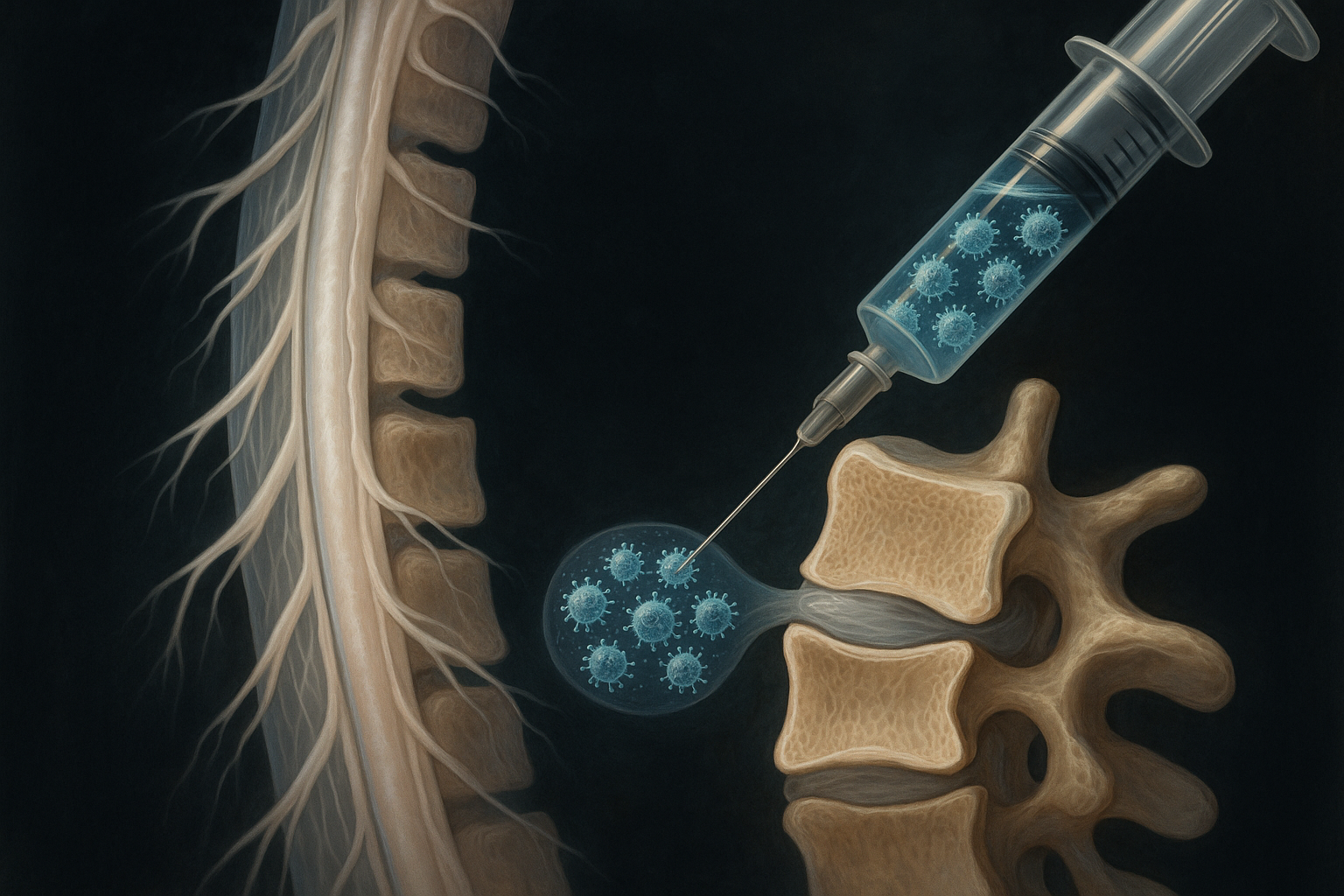
Abstract STEER (NCT05089656) was a 52-week, phase 3, multicenter, randomized, sham-controlled, double-blind trial evaluating intrathecal onasemnogene abeparvovec (OAV101 IT), a one-time gene transfer therapy, in patients with spinal muscular atrophy (SMA). Participants ranged in age from 2 years to <18 years, were treatment-naive and were able to sit but never walked independently. Primary efficacy endpoint was change … Read more
Intrathecal onasemnogene abeparvovec for treatment-experienced patients with spinal muscular atrophy: a phase 3b, open-label trial

Abstract Intrathecal onasemnogene abeparvovec (OAV101 IT) may enable a one-time gene transfer therapy, addressing an unmet need across the broader spinal muscular atrophy (SMA) population. STRENGTH (NCT05386680) was a 52-week, phase 3b, single-arm, open-label, multicenter study evaluating OAV101 IT in participants with SMA aged 2 to <18 years who discontinued nusinersen or risdiplam. The primary objective … Read more
A lifespan clock tells the biology of time

A full‑lifecycle clock derived from millions of routine clinical records reveals that human development and aging form a continuous physiological trajectory, enabling early disease detection and mechanistic insights for preventive and precision health. Access through your institution Buy or subscribe This is a preview of subscription content, access via your institution Access options Access through … Read more
The striatal indirect pathway mediates hesitation

Nature Neuroscience, Published online: 05 December 2025; doi:10.1038/s41593-025-02135-6 Hesitation—pausing in the face of uncertainty—is ubiquitous in daily life and disrupted in several psychiatric disorders. Unlike other forms of response inhibition, hesitation is mediated by indirect, but not direct, pathway striatal neurons.