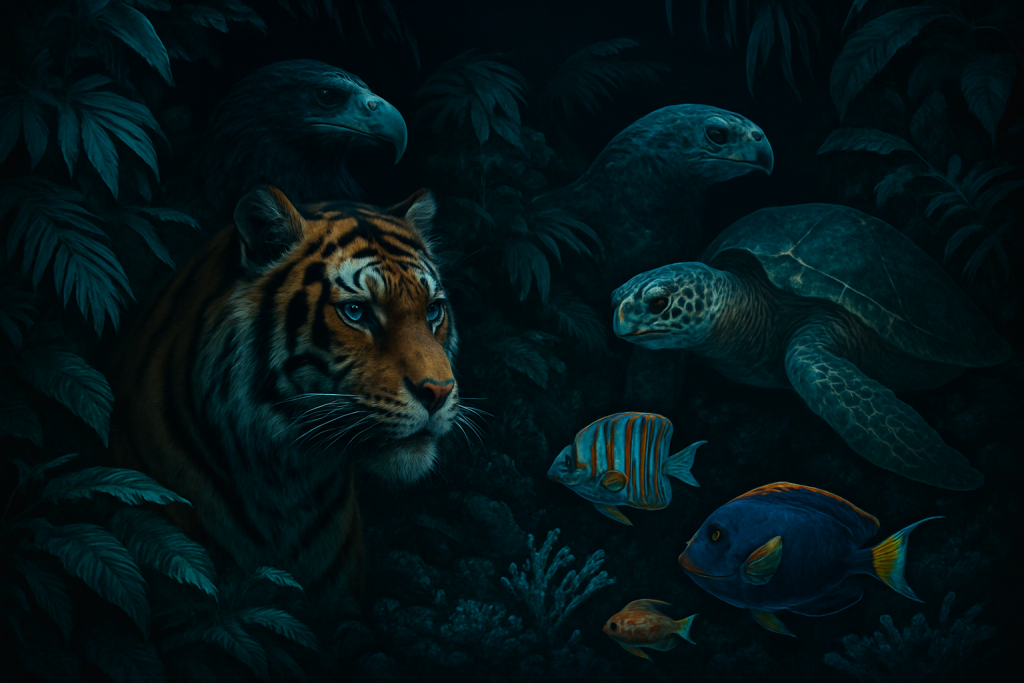
Image generated by AI
AI Insight
Biodiversity encompasses the variety of all living organisms and their ecosystems, functioning as an interconnected web in which each species contributes to overall ecological stability through mechanisms such as functional redundancy. Ecosystem services supported by biodiversity, including water purification, climate regulation, and pollination, are estimated to be worth trillions of dollars annually and are foundational to human food security. Approximately 25 percent of modern pharmaceuticals are derived from plant compounds, yet less than 1 percent of tropical plant species have been evaluated for medicinal potential, underscoring the scientific value of species preservation.
Why it matters
The ongoing loss of species directly threatens agricultural systems, medical research pipelines, and the natural infrastructure that societies depend on for clean water and coastal protection. Conservation efforts represent a cost-effective investment compared to engineered alternatives such as water treatment facilities, with implications for public health, economic resilience, and long-term human survival.
Understand the Science
Imagine a world where forests fall silent, oceans lose their color, and crops fail because the insects that pollinate them vanish. This isn’t science fiction—it’s the reality we face without biodiversity. Biodiversity refers to the variety of all living organisms on Earth, from microbes to whales, and the ecosystems they inhabit. Conservation is humanity’s effort to protect this living wealth before it disappears forever.
How It Works in Nature
Biodiversity operates as an interconnected web where each species plays a specific role. A forest isn’t just trees; it’s also fungi that help trees absorb nutrients, insects that pollinate flowers, predators that control herbivore populations, and decomposers that return nutrients to soil. This functional redundancy—where multiple species perform similar roles—creates resilience. If one species declines, others can partially compensate. When biodiversity drops below critical thresholds, ecosystems destabilize. Pollinator collapse, for instance, threatens food security for billions of people who depend on crops that require insect pollination, from almonds to apples.
From an evolutionary perspective, biodiversity represents millions of years of adaptation and genetic innovation. Each species carries unique genetic solutions to survival challenges—solutions that took eons to develop. When species go extinct, we lose irreplaceable biological information that could hold answers to future problems.
Medical and Scientific Relevance
The connection between biodiversity and human health is profound and direct. Roughly 25 percent of modern pharmaceutical drugs are derived from plants found in rainforests, yet we’ve tested less than 1 percent of tropical plants for medicinal properties. Aspirin came from willow bark; a compound from Pacific yew trees treats certain cancers. Loss of biodiversity means losing potential cures for diseases like Alzheimer’s, diabetes, and antibiotic-resistant infections.
Beyond medicine, biodiversity underpins ecosystem services worth trillions annually: water purification, climate regulation, soil formation, and pest control. Wetlands alone filter water naturally and prevent floods. Mangrove forests protect coastlines from storms while serving as nurseries for fish populations. The economic argument for conservation is compelling—restoring a wetland costs far less than building water treatment facilities.
Key Takeaways
- Biodiversity creates ecosystem stability through functional redundancy and genetic diversity, supporting all life on Earth.
- Wildlife conservation protects potential sources of future medicines and maintains critical ecosystem services worth trillions of dollars.
- Protecting biodiversity is ultimately an investment in human survival, food security, and medical breakthroughs we haven’t yet imagined.
Explore TED Talks on Biodiversity and Wildlife Conservation:
TED content is used under CC BY-NC-ND 4.0. © TED Conferences, LLC.